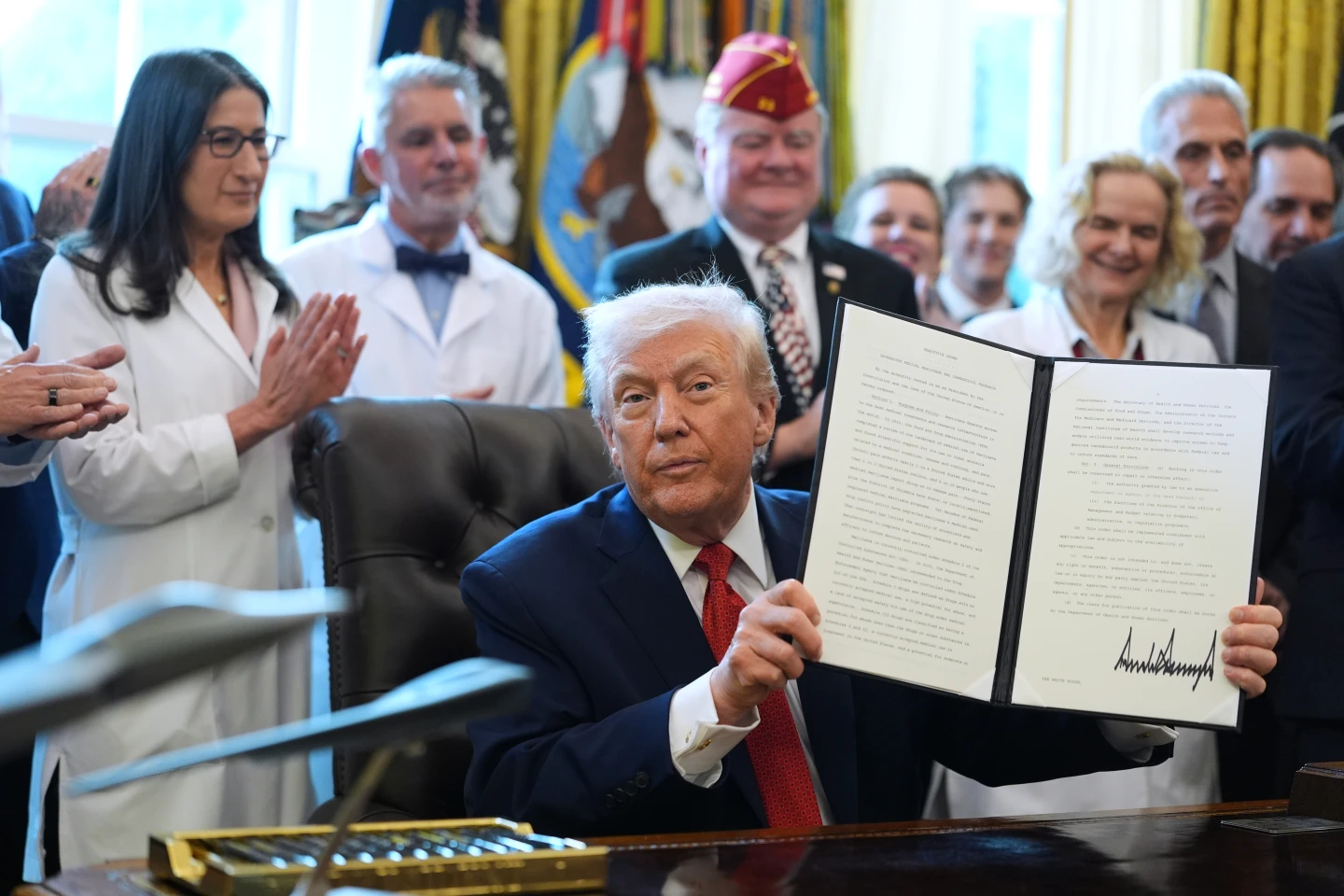
WASHINGTON (AP) — In a notable shift in federal drug policy, President Donald Trump signed an executive order that could reclassify marijuana, deeming it a less dangerous drug. This change would allow for increased avenues of medical research into cannabis and potentially align federal laws with the more permissive approach many states have adopted.
The reclassification would change marijuana's status from a Schedule I drug, which includes substances like heroin and LSD, to a Schedule III substance, similar to ketamine and some anabolic steroids. While this does not legalize marijuana for recreational use across the United States, it could significantly alter how the drug is regulated and lessen the tax burdens faced by the cannabis industry.
Trump highlighted the public support for the move, stating he received numerous calls urging him to make this change, particularly for patients in pain. He remarked, “We have people begging for me to do this. People that are in great pain.”
Interestingly, Trump's successor, President Joe Biden, had also proposed reclassifying marijuana. However, Trump’s proposal has not been met with unified backing within the Republican Party, as several members voiced their opposition, cautioning against changes to current standards.
Typically, a reclassification process like this demands a lengthy public comment period, drawing considerable feedback from across the U.S. Trump's signing of the executive order is anticipated to expedite the ongoing review by the Drug Enforcement Administration (DEA), although the timeline for completion remains unclear.
Despite the federal stance, many states have moved forward with legalizing recreational or medicinal marijuana, creating a stark contrast with existing federal laws that can still lead to prosecution for marijuana-related offenses.
Polling data from Gallup has shown a dramatic increase in public support for marijuana legalization, rising from just 36% in 2005 to 68% in 2022. This growing acceptance reflects a changing societal perspective on cannabis.
Additionally, Trump’s order calls for expanded research and access to CBD, a hemp-derived product, highlighting its potential benefits, although these still spark debate among experts. A new Medicare initiative would allow older adults to acquire legal hemp-derived CBD at no cost if recommended by their healthcare provider.
Despite the supportive public sentiment, a letter from over 20 Republican senators urged Trump to maintain marijuana's Schedule I status, arguing that a downgrade would undermine safety and health initiatives. They expressed concerns about the implications of rescheduling, particularly regarding the influence of foreign markets and potential risks to American health.
While Trump has not previously committed to further reforms regarding marijuana decriminalization, he has indicated consideration of reform during his presidency. His administration has notably focused on addressing other drugs, such as fentanyl, and promoting drug-related military actions.
___
Barrow reported from Atlanta. Associated Press writer Seung Min Kim contributed to this report.