US lawmakers say files related to convicted sex offender Jeffrey Epstein were improperly redacted ahead of their release by the Department of Justice (DOJ).
Members of Congress on Monday began a review of the unredacted versions of the approximately three million pages of files released under the Epstein Files Transparency Act (EFTA) since December.
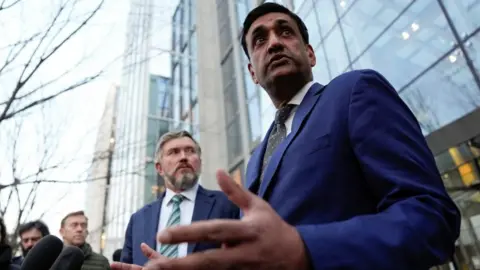
The core issue is that they're not complying with... my law, because these were scrubbed back in March by Donald Trump's FBI, Democratic Representative Ro Khanna stated. A document has since been unredacted, with Deputy Attorney General Todd Blanche asserting that the DOJ is committed to transparency.
The files' redactions were called into question last week after Epstein's victims' lawyers reported that email addresses and images revealing the identities of potential victims were included without proper redaction. Survivors have deemed the release outrageous, emphasizing that they should not be further scrutinized.
While the DOJ contends that deletions were due to technical or human error, lawmakers noted specific instances where names were incorrectly redacted. Khanna observed that some names were crucial for public awareness of potentially implicated individuals.
After the viewing of the unredacted documents, both Massie and Khanna asserted that every name listed within a critical document had been redacted, except for Epstein’s and Ghislaine Maxwell's. This included individuals who may be incriminated by their inclusion in the files.
Khanna remarked, Trump's FBI scrubbed these files in March, continuing the call for the DOJ to remove obstructions to information on powerful figures implicated in Epstein's case.
Critiques of the DOJ have intensified, with lawmakers expressing frustration over their access to the documents. Jamie Raskin, a representative, highlighted the restricted access as a form of a cover-up, indicating that it would take years for Congress to comb through the unredacted documents with limited resources.