In brief
Hours after President Trump proclaimed an energy ceasefire in Ukraine, Russian forces struck six energy facilities, according to Ukrainian President Volodymyr Zelensky. The attacks raise questions about the treaty’s implementation and the strategic importance of energy infrastructure. Analysts note that both sides have amplified attacks in the months leading to winter. European and US officials have expressed divided views on the ceasefire’s viability and effectiveness.
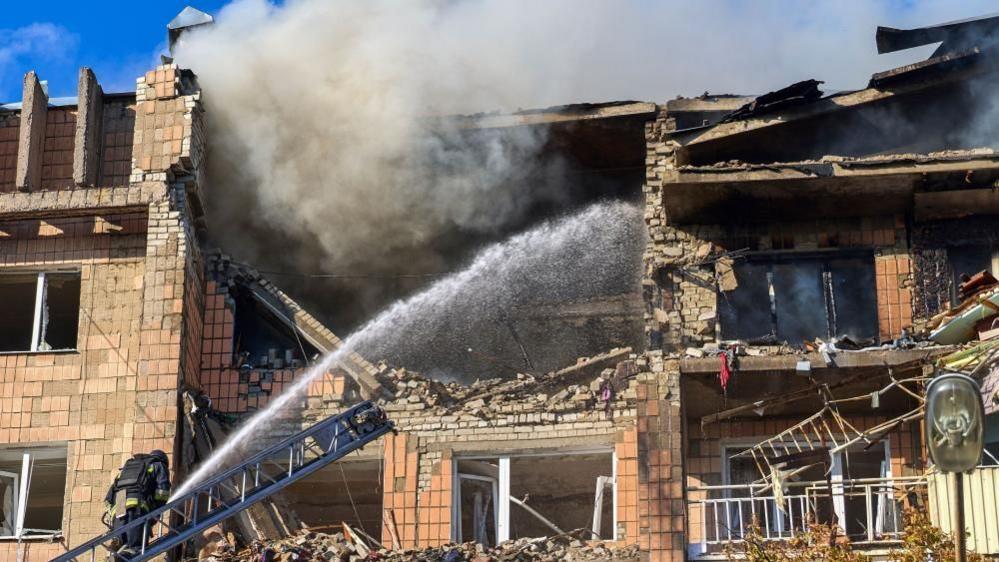
Six Ukrainian energy sites were hit by Russian strikes within hours of President Donald Trump announcing a ceasefire, Ukrainian President Volodymyr Zelensky told reporters, a move that has cast doubt on the practicality of the agreement.
Zelensky’s statement highlighted that the Russian attacks destroyed gas stations, power grids in Izyum and western Ukraine, and left 33 people injured. He delivered the indictment on Fox News, saying, "We did not attack, while Russia attacked our gas stations, energy infrastructure, and other facilities." The Ukrainian leader implied the assault was a direct response to the truce, even calling it "Putin’s answer to President Trump."
In contrast, Russia’s Foreign Minister Sergei Lavrov dismissed the ceasefire as a "respite" that Ukraine does not deserve, underscoring that attacks on energy infrastructure can be justified to weaken the enemy’s war‑financing capacity. Moscow maintains that its strikes are aimed at military‑supporting installations, not private or civilian facilities.
The episode occurs amid a broader pattern. BBC Verify data released last year shows a sharp uptick in both Ukrainian and Russian attacks on energy sites in 2026 – 273 strikes on Russian-controlled oil and gas assets, more than double the 2025 figure. Armed Conflict Location & Event Data project (ACLED) reports 2.4 times as many Russian attacks targeting Ukraine’s energy network in 2026 alone.
Western leaders have split over the ceasefire’s feasibility. U.S. President Trump claimed the truce was binding because “I said you agree”, and had been “effective immediately”. US officials also hinted at an unorthodox concession: a temporary easing of sanctions in exchange for a pat‑down of Russian diesel exports to the U.S. and global markets, a move Zelensky described as a "gift" to Vladimir Putin.
European voices diverged. UK Prime Minister Rishi Sunak championed the ceasefire, saying Britain “strongly supports President Trump's call for a sustained energy ceasefire”。 France, Canada and many EU members voiced cautious optimism. However, EU foreign policy chief Kaja Kallas insisted a useful ceasefire must be proven by both parties, and Estonia’s foreign minister called the arrangement “not working”.
The conflicts around energy infrastructure underscore a strategic calculus: while diplomats underline humanitarian concerns, combatants read them as tactical opportunities. Analysts predict that as winter approaches, both sides will increase pressure on the opposite side’s supply lines, potentially making a lasting ceasefire an elusive goal.
In sum, the Russian strikes following the Trump‑endorsed ceasefire highlight real‑world tensions between diplomatic agreements and battlefield realities, placing Ukraine’s energy security, the integrity of international agreements, and the broader war narrative under sharper scrutiny.