In brief
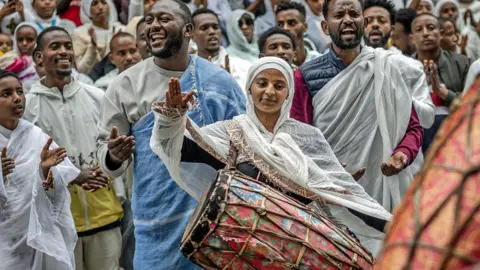
Ethiopians have welcomed their New Year, 2018, with joyous festivities that reflect their distinct cultural identity. The celebrations are marked by song, dance, and traditional rituals, emphasizing the country’s unique calendar system that dates back to differing interpretations of the birth year of Jesus Christ. Amidst the festive atmosphere in Addis Ababa, vendors sell traditional items and locals gather for communal feasts, illustrating a deep sense of community and cultural pride.
Ethiopia is celebrating the start of its new year - 2018. The country operates on a different calendar, resulting in a seven-year difference from the Western calendar. As celebrations unfold, one can see vibrant scenes filled with music, dance, and cultural displays. Traditional yellow flowers, known as 'adey ababa,' are popular during this time, marking the festivities alongside other local customs.
The Ethiopian calendar is based on different calculations regarding the birth year of Jesus Christ. Unlike the Gregorian calendar, where 2025 is celebrated, in Ethiopia, it's 2018. This unique aspect enriches the cultural identity and adds depth to the celebrations that unfold across the nation.
The festivities, known as Enkutatash, aren't solely religious; they encompass an entire social celebration where families gather, friends are invited, and traditional dishes are served. Markets in cities like Addis Ababa bustle with vendors selling food items and decorations, and the aroma of traditional stews fills the air.
This year's New Year celebrations hold special significance, as they follow the formal launch of the Grand Ethiopian Renaissance Dam, reinforcing feelings of unity and national pride among Ethiopians.