In brief
Karl Bushby ended the 28‑year Goliath Expedition by walking 50,000 kilometres from Chile to his childhood home in Hull, England, after a final swim across the English Channel. Along the way he faced detentions, visa hurdles, and a global financial crisis that stretched the effort from an expected 12 to 28 years. Now he plans a speaking tour and a documentary production to share his journey.
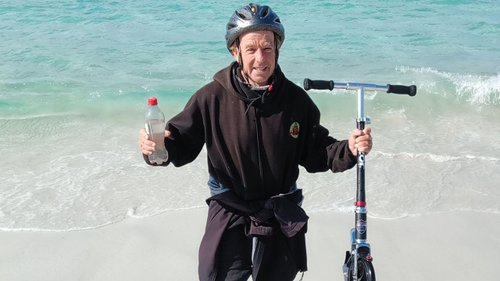
On 2 November 2026, Karl Bushby, 57, concluded the Goliath Expedition—a 28‑year walk that covered 50,000 kilometres from Chile to England—and was welcomed into his childhood home in Hull by his mother, Angela, outside her terraced house atop a banner that read Welcome Home Son.
He arrived after a final leg that included a swim across the English Channel, the last major obstacle before he could finish the last stretch of the route in England. The banner and the cheering crowd in Hull’s city centre underscored the emotional nature of the return, with Bushby joking to the audience about the long wait.
The expedition began in November 1998, when Bushby left Punta Arenas in southern Chile with a tent, a few hundred dollars and a cheap plastic camera. His plan was to travel by foot, without using motorised transport, in an unbroken route that would bring him back to Hull.
From the highlands of South America, he trekked north through the Americas, crossed the ice of the Bering Strait from Alaska into Russia, and navigated the jungles of the Darien Gap between Colombia and Panama—a dense, often dangerous passage that threatened his supplies and safety.
In Russia, Bushby was detained after crossing an unguarded border and later faced repeated visa problems that forced him to navigate bureaucratic hurdles in several countries. He also suffered funding setbacks, especially when the 2008 global financial crisis eroded his major sponsors.
In his own words, Bushby said, “They say it takes a village, but literally it took a world to get me here.” He followed that statement with an acknowledgement that strangers, individuals, and nation-states had helped him complete the journey, saying that he had a “big team” that supported him.
During the expedition, Bushby crossed the Caspian Sea by swimming, then continued into Mongolia and China before reaching Europe. He faced harsh winters in the Arctic, the logistical challenges of transporting supplies across remote regions, and the physical strain of walking long distances in extreme climates.
The journey also included a 12‑year expectation that ballooned to 28 years due to delays, funding issues, and the 2008 recession. Bushby humorously remarked to the crowd in Hull, “Sorry to keep you waiting. Is that it, is it done?” as he approached the final stretch.
After returning to Hull, Bushby announced plans for a speaking tour around England and a feature‑length documentary about the Expedition that is currently in production. He also said he would engage with local communities and share his experiences in schools and public events.
Special supporters lined the streets of Hull, forming a makeshift parade that turned into a celebration as Bushby trekked through the city. His mother, Angela, embraced him with tears of relief, welcoming her son back after decades of searching.
According to the completed route, Bushby logged the most extensive foot voyage documented in contemporary history, covering all five continents and re‑entering his homeland after local warm welcomes, street banners, and community support.
With the final swim and the last kilometre completed, Bushby closed a chapter that had begun in a small town and ended in a city that had seen the young man grow into the man we witness today: a story of perseverance, global citizenship, and the power of international cooperation.
All that remains is the transcription of his journey into speech and film, as he intends to remind listeners and viewers that the world, despite its challenges, can be traversed on foot, drawing people together across borders.