
In brief
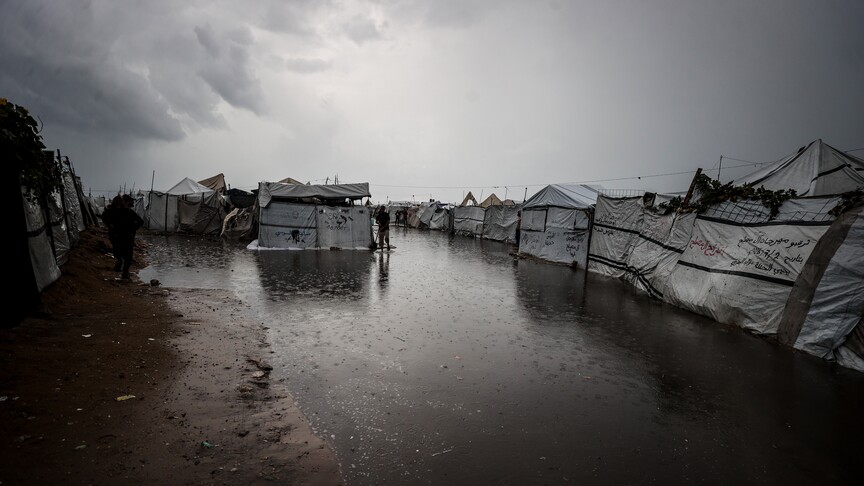
Heavy rain has inundated shelters in the Gaza Strip, placing displaced families in immediate danger. The UN’s OCHA notes that most of Gaza’s population remains in precarious tents and that emergency supplies are insufficient, calling for urgent winter materials, heavy machinery, and additional funding to support the humanitarian response.
Heavy rains have flooded shelters in the Gaza Strip, putting displaced families living in flood‑prone areas and damaged buildings at "immediate risk," the UN Office for the Coordination of Humanitarian Affairs (OCHA) warned on Saturday, according to Anadolu Agency.
An OCHA statement shared on the US social‑media platform X noted that most of Gaza’s 2.1 million residents remain displaced, with many sheltering in deteriorating tents that offer limited protection against worsening weather conditions. The agency said
"We are deeply concerned for families already affected and those most exposed to the worsening conditions,"
It added that the flood threat could expose a large number of families to further danger if the water continues to rise.
Displacement and shelter conditions
Over 75,000 displaced Palestinians are believed to be sheltering in more than 100 damaged and overcrowded agency buildings in Gaza, according to reports from the United Nations Relief and Works Agency (UNRWA). These facilities are increasingly vulnerable to the storm surge, as their structures and roofs have sustained significant damage during the conflict. The packing of tents and makeshift shelters has made them difficult to sustain against the rising waters.
Shortage of emergency supplies
Humanitarian organizations have mobilised to distribute emergency supplies and to assist affected families, but available stocks remain "insufficient," OCHA warned. It said that months of funding shortfalls and restrictions have severely constrained preparations and response capacity in the region. The agency called for the immediate entry of winter supplies, heavy machinery, engine oil and spare parts needed to keep humanitarian vehicles and generators operational, noting that these items are critical for maintaining life‑saving services in the flooded shelters.
OCHA emphasized the urgency of additional humanitarian funding, stating
"More humanitarian funding is urgent,"
and that without it the ability of aid agencies to deliver life‑saving assistance could be compromised.
Humanitarian response and challenges
In the wake of the flooding, aid groups have stepped in to deliver water, food and medical supplies to displaced populations. However, logistical difficulties caused by damaged infrastructure and the continuing risk of flooding have hampered distribution efforts. The OCHA spokesperson highlighted that heavy machinery and spare parts are essential for clearing debris and restoring access to affected areas, yet procurement has been slowed by shortages in supply chains and limited transport capacity.
The situation in Gaza remains precarious as the UN office presses for an accelerated and targeted humanitarian response amid a mounting flood crisis that threatens to exacerbate already dire living conditions for the region’s displaced communities.


