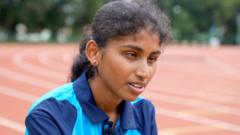
At the age of 15, Rakshitha was paired with her guide runner, Rahul Balakrishna, an experienced middle-distance competitor himself. Their bond blossomed over years of dedicated training, marked by trust and synchronized effort. "I believe in my guide runner more than myself," she notes, having won gold medals at the Asian Games. Their journey culminated in her becoming the first blind Indian woman to compete in the 1500m event at the Paralympics.
Meanwhile, Simran Sharma, another trailblazer in Indian para athletics, navigated her own path to success after initially competing without guidance as a partially sighted runner. Upon realizing the importance of a guide during her competition at the Tokyo Paralympics, she partnered with Abhay Kumar, a fellow athlete who had aspirations of his own. Their first competition was fraught with challenges, but they quickly learned the nuances of synchronizing their movements, leading to their eventual triumph as world champions.
Despite their successes, both athletes face concerns regarding the support and sustainability for their guide runners. While they currently navigate sponsorship deals to fund their guides, the absence of structured support and development opportunities poses a significant challenge. Advocates, including their guides, are calling for improved recognition and resources, emphasizing the potential for these athletes to inspire future generations in rural India.
As they prepare for upcoming international competitions, including the 2028 Paralympics in Los Angeles, both Rakshitha and Simran exhibit unwavering commitment to not only furthering their personal achievements but also encouraging youth from similar backgrounds to pursue sports. Their journeys underscore a critical narrative on the necessity of support systems within para sports while celebrating the remarkable human spirit that continues to rise against odds.
Meanwhile, Simran Sharma, another trailblazer in Indian para athletics, navigated her own path to success after initially competing without guidance as a partially sighted runner. Upon realizing the importance of a guide during her competition at the Tokyo Paralympics, she partnered with Abhay Kumar, a fellow athlete who had aspirations of his own. Their first competition was fraught with challenges, but they quickly learned the nuances of synchronizing their movements, leading to their eventual triumph as world champions.
Despite their successes, both athletes face concerns regarding the support and sustainability for their guide runners. While they currently navigate sponsorship deals to fund their guides, the absence of structured support and development opportunities poses a significant challenge. Advocates, including their guides, are calling for improved recognition and resources, emphasizing the potential for these athletes to inspire future generations in rural India.
As they prepare for upcoming international competitions, including the 2028 Paralympics in Los Angeles, both Rakshitha and Simran exhibit unwavering commitment to not only furthering their personal achievements but also encouraging youth from similar backgrounds to pursue sports. Their journeys underscore a critical narrative on the necessity of support systems within para sports while celebrating the remarkable human spirit that continues to rise against odds.