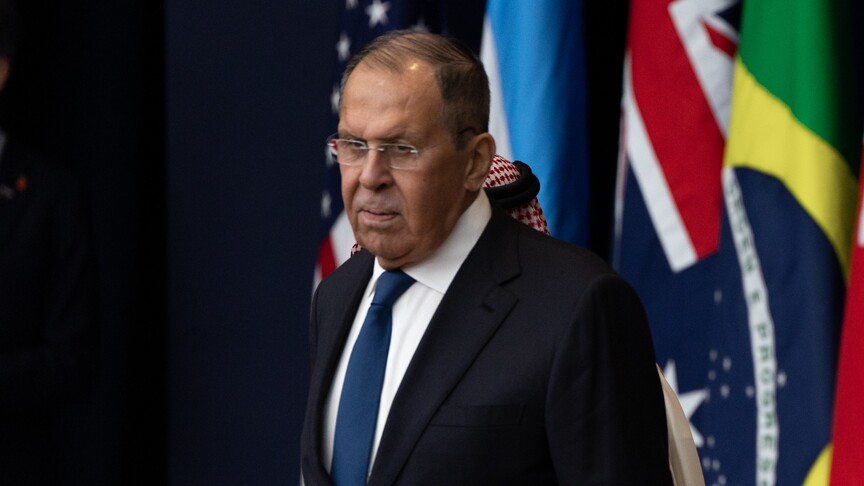
Sergey Lavrov told a press conference that he had a "not bad, though brief" conversation with U.S. Secretary of State Marco Rubio on the sidelines of the G20 Foreign Ministers’ Meeting in Atlanta on Friday, according to Anadolu Agency. The meeting took place as part of the U.S. G20 presidency, which sought to emphasize practical solutions to global challenges.
During the briefing, Lavrov said that Russia welcomed Washington’s willingness to maintain dialogue at various levels. He added that the two sides discussed cooperation in multilateral forums such as the United Nations, the G20, and the Asia-Pacific Economic Cooperation (APEC). Lavrov defended a diesel‑fuel deal between Russia and the United States, noting that Moscow had “no restrictions” on selling its energy resources and could support mutually beneficial arrangements. He acknowledged that the deal faced criticism in U.S. Congress and cautioned that it should not be seen as a breakthrough, as U.S. sanctions against Russia remained in place.
"Therefore, we do not see any real progress in practice," Lavrov said, highlighting his concerns about continued U.S. military assistance to Ukraine and intelligence sharing with Kyiv. He called for Russia and Washington to avoid letting disagreements spill into confrontation and to pursue projects where their interests coincide.
Marco Rubio gave a different emphasis at the same meeting. He urged G20 members to strengthen economic cooperation and to work together on practical solutions to shared challenges. Rubio focused on trade, fiscal and monetary policy, emerging technologies and energy, and praised Poland’s participation as a full member in the U.S. G20 process.
"Our interests may not always align, but we should always seek to work together to advance them when and where they do align," Rubio said, echoing the U.S. approach of concentrating the G20 on its core economic mission.
Both diplomats framed the same event from distinct angles. Lavrov centered on diplomatic dialogue, energy deals, and opposition to U.S. support for Ukraine, while Rubio foregrounded economic cooperation and the broader objectives of the U.S. G20 presidency. The meeting was held amid discussions about an upcoming APEC summit in China, where Lavrov indicated that a trilateral meeting of Russian, U.S., and Chinese leaders was viewed positively in all three capitals. The G20 foreign ministers’ meeting in Atlanta was a prelude to the G20 Leaders’ Summit scheduled for December 14‑15 in Miami, which will build on the foundations laid for shared priorities and long‑term economic prosperity.
Both parties highlighted the importance of maintaining dialogue and cooperation, but each underscored different priorities—Lavrov on energy diplomacy and military aid issues, and Rubio on economic policy and multilateral engagement—reflecting the broader range of concerns that shape the G20 agenda.