In brief
The Terra Nova, the ship that carried Captain Scott on his ill-fated expedition to the South Pole in 1912, has been extensively filmed underwater off the coast of Greenland, revealing key parts of the wreck still intact. The footage captures the ship's wheel, winch, and mast surrounded by marine life, highlighting both the historical significance of the vessel and the tragic legacy of the expedition. Discovered in 2012, this new reporting offers a deeper understanding of the ship's storied past, showcasing its transformation into a thriving reef and preserving the memory of those who endeavored to reach the South Pole.
One of the most famous polar shipwrecks has been filmed in detail on the sea floor for the first time.
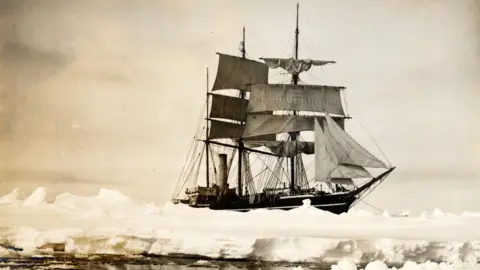
The Terra Nova carried Captain Scott and his men on their doomed expedition to reach the South Pole more than a century ago. The British party lost the race to the pole and met a tragic end on their return journey in 1912.
Recent footage reveals the Terra Nova colonised with sea life, while still showcasing significant remnants like its wheel, winch, and mast.
The wreck lies 170m down off the coast of Greenland and, after the polar expedition, the ship continued to serve until its sinking in 1943 while delivering supplies to US bases during World War II.
Discovered in 2012, this expedition marks the first extensive video documentation of the wreck. It was truly awe-inspiring to see these significant parts of the wreck in their intact state, commented Leighton Rolley from REV Ocean.
The Terra Nova, notable for its durable wooden structure, was designed to navigate icy waters effectively. Its expedition aimed to conduct scientific research while ambitiously aspiring to become the first to reach the South Pole. Although they successfully reached the pole in January 1912, they realized they had been beaten to it by a Norwegian team led by Roald Amundsen.
The ship played a critical role in sharing the tragic story of Scott's team, which also included Edward Wilson, Henry Bowers, Lawrence Oates, and Edgar Evans. They encountered extreme weather conditions on their journey back, resulting in the loss of crew members and ultimately the demise of Scott and the remaining team.
The wreck has become a thriving reef, inhabited by fish and corals, further drawing attention to the legacy of Captain Scott and his men, encapsulating the heroism and tragedy of their story.