In brief
In a contentious report release, Greenland’s justice minister said the government cannot confirm whether the 1960s–70s birth‑control programme for Inuit women meets genocide criteria. Two independent panels produced opposing conclusions: one found human‑rights abuses but lacked evidence of genocidal intent, the other declined to label the policy as genocide. Denmark has issued an apology and compensation, while Inuit victims call for greater representation in investigations. The case highlights ongoing tensions over colonial policies and the need for a comprehensive reconciliation path.
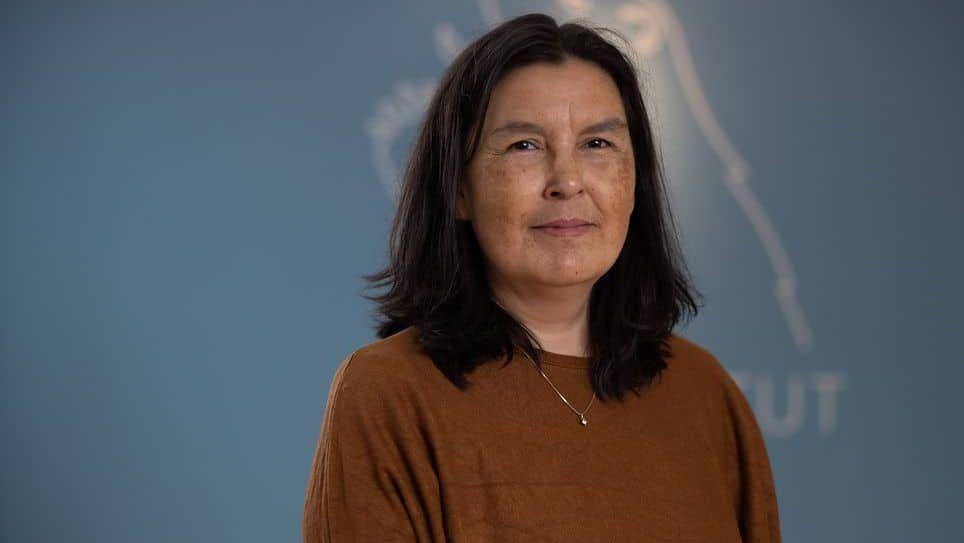
Greenland’s justice minister Marianne Paviasen told reporters on Friday that the government is not yet able to confirm whether the enforced birth‑control program carried out by Danish doctors in the 1960s and 1970s constitutes genocide. The announcement followed the publication of two reports commissioned by Greenland’s parliament, each offering a different assessment of the case.
The first report, prepared by two experts – a lawyer from Alaska and a law professor at the University of Copenhagen – concluded that Inuit women suffered human‑rights violations due to the policy, but found insufficient evidence to label the practice as genocide “on the basis of contraceptive practices alone.” The authors highlighted that any inference of genocidal intent would need to be established by a court, noting other historical actions such as the relocation of Inuit children to Danish families.
The second report, compiled by former head of the Danish Institute for Human Rights and a psychologist who worked in Greenland, agreed that women were wronged but could not be shown to have a disproportionate impact on the Inuit population, concluding no evidence of intent to destroy a nation or people. The stark divergence—“one says there was no genocide at all, the other that there could have been”—prompted Paviasen to emphasize that the topic remains open for debate.
The policy itself involved the insertion of intra‑uterine devices (IUDs) in approximately 4,500 Greenlandic women and girls—some as young as 13—between 1966 and 1970, in an effort to curb population growth that had accelerated since the 1950s. Many women have since reported being fitted with IUDs without their knowledge or consent, underscoring the program’s coercive nature.
Following the reports, Danish Prime Minister Mette Frederiksen apologized in August 2025 for “systematic discrimination” and pledged cooperation with Greenland to address the issue. Denmark also enacted a compensation law, awarding 300,000 Danish crowns (approximately $46,800) to each woman who was affected by the policy. Greenland’s Prime Minister Jens‑Frederik Nielsen announced plans to set up a “reconciliation commission” to further investigate the legacy.
The debate draws on international legal definitions of genocide, such as that in the UN Convention on the Prevention and Punishment of the Crime of Genocide, which includes “imposing measures intended to prevent births” within a protected group. Yet the specificity of intent and the broader context of colonial power dynamics continue to challenge conclusions.
Inequities in representation are a central concern expressed by Inuit leaders. A former victim, Henriette Berthelsen, criticized the selection of experts, arguing that no Inuit representatives were included in the panels, thereby biasing the investigation. Victim testimonies stress personal loss and call for Ukraine's perspectives in shaping the narrative.
The case in Greenland adds to a series of global reckonings with colonial medical history, and illustrates how legal frameworks and political gestures intersect in resolving past injustices. As both governments work toward an agreed path, the outcome will likely influence the broader discourse on colonial reparations and normative definitions of genocide worldwide.