Afghan Evacuees in Qatar: Voices of Betrayal and Uncertainty
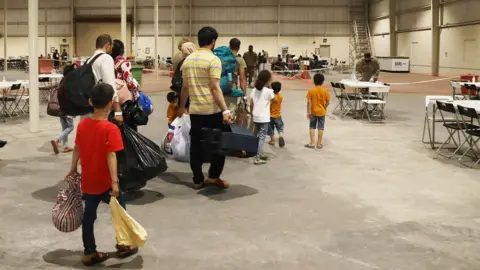
For 18 months, Alia has been waiting in a transit camp in Qatar for her promised resettlement to the U.S. But now that route appears to have closed for good. Where she and hundreds of other Afghan evacuees will end up next is unknown.
Going back home to Afghanistan is not an option, as it is too dangerous. With the recent hostilities between the U.S. and Iran, evacuees feel increasingly unsafe in their current location. We have been betrayed. Not by the American people, but by those in government who had promised to take us to safety in America, Alia, who worked as a lawyer in Afghanistan, laments.
Alia is part of a group of over 1,100 individuals evacuated by the U.S. who are currently stuck at Camp As-Sayliyah (CAS) in Doha, originally a U.S. army base where many were processed for resettlement post-Taliban takeover.
Earlier this year, the Trump administration announced the impending closure of the camp, causing anxiety and uncertainty for evacuees, especially as Qatar has faced attacks linked to Iranian forces, making their situation even more precarious. Many, including Latif, who contributed to the U.S. efforts in Afghanistan, express their distress: I am under so much stress that it's made me ill. My wife is also unwell. This is not human rights.
The evacuees are clear in their message; their predicament is not simply due to bureaucratic delays, but rather a deep-seated sense of betrayal. There’s a palpable fear for survivors seeking a sense of safety in a hostile political climate.
The possibility of returning to Afghanistan is terrifying for many, given their previous roles against the Taliban. U.S. government officials have attempted to communicate options for voluntary returns with financial incentives, yet many evacuees reject the notion of going back to a country of danger and repression.
Shawn VanDiver, a U.S. military veteran, highlights the commitment those evacuated had to the mission in Afghanistan and advocates for their urgent relocation to the U.S. I don't know how any future partners can trust us if we don't keep our word to the Afghans who stood by us for 20 years, he says, calling for action amidst a backdrop of increasing tension and despair.