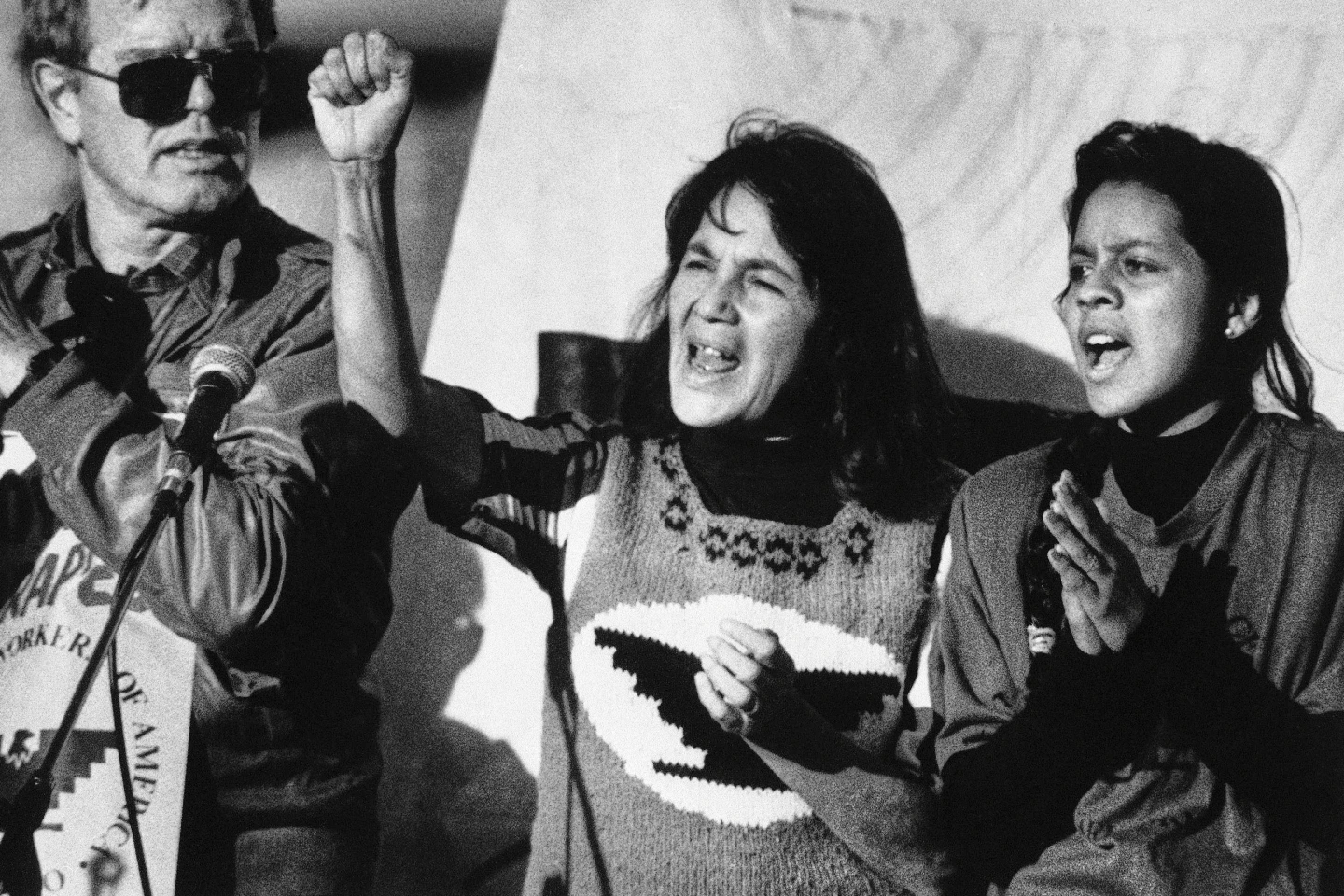
PHOENIX (AP) — Mary Rose Wilcox and her husband marched and fasted alongside César Chávez, contributing to his efforts in establishing a radio station in Phoenix and celebrating his legacy through their restaurant. However, when allegations of sexual abuse against Chávez surfaced recently, Wilcox described the experience as a punch to the gut. By the next morning, Chávez’s images were removed from the restaurant walls.
Wilcox's response reflects a broader sentiment among those who have long admired Chávez for his dedication to farmworkers' rights but are now grappling with transformative allegations. This turmoil is prompting many in the Latino community, including leaders and advocates like Dolores Huerta, to call for serious reconsideration of Chávez's legacy.
The allegations were labeled inexcusable by many local leaders, while emphasizing that the significance of the farmworker movement extends beyond its prominent figures. Chávez, who passed away in 1993, has long been a symbol of hope for labor rights advocates.
As memorial events and celebrations for Chávez's birthday on March 31 are being reconsidered in places like California and Texas, there are calls to rename schools and streets that celebrate his legacy. The California Museum, for the first time, has decided to remove him from the state’s Hall of Fame.
Huerta, co-founder of the United Farm Workers and a leader within the labor movement, shared her own painful experiences with Chávez, stating she stayed silent for decades fearing it would harm the movement. However, the recent revelations pushed her to speak out, detailing encounters of being manipulated and forced against her will by Chávez, which resulted in pregnancies she kept secret.
The New York Times reported that Chávez allegedly groomed and sexually abused young girls involved in the labor movement, adding layers of complexity to his legacy. Community discussions around his past are shaping the narrative of someone once celebrated as a visionary.
Chávez's family expressed shock and sadness regarding the allegations, emphasizing support for the victims. Meanwhile, the United Farm Workers union has distanced itself from Chávez's annual celebrations and pledged to address the troubling allegations earnestly.
Wilcox stated poignantly about the duality of Chávez: There’s two things: Chávez the man and Chávez the man who we didn’t know. The one we knew did good things and the one we did not know is like a monster. The public grappling with Chávez's legacy exemplifies a conflict between admiration and the moral accountability necessitated by serious allegations.
Golden reported from Seattle. Figueroa reported from Austin, Texas, and additional reporting was contributed by journalists from Albuquerque, Sacramento, and Los Angeles.