In brief
A vast undersea necropolis, discovered in the Diamantina fracture zone, stretches over 1 200 km and lies 7 km beneath the water’s surface. With fossils ranging back 5.3 million years, it contains a previously unknown extinct species, Pterocetus diamantinae, and hosts a rich community of deep‑sea life. The find, achieved through 32 dives and 485 samples, has excited marine biologists, paleontologists and those studying deep‑sea biodiversity worldwide.
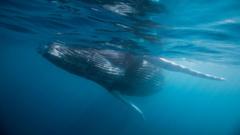
A silent, 1,200‑kilometre stretch of the sea floor below the southeastern Indian Ocean has now yielded a breathtaking fossil field that could rewrite the stories of ancient marine life. Scientists calling the discover a “whale graveyard” report finding the remains of dozens of whales, with some skeletons dating back 5.3 million years.
The find was made within the Diamantina fracture zone, a chain of ridges and trenches that sits on the ocean’s bed. Over 32 dives, research teams from China, Italy and New Zealand recovered 485 fossil sites and active whale falls, including the skull of a long‑lost beaked whale, Pterocetus benguelae, as well as a new species named Pterocetus diamantinae to honour the location.
Lead researcher Xiaotong Peng described the site as “far beyond anything we had imagined” in terms of size, depth and age. The community of creatures that thrives around the carcasses shows that deep‑sea ecosystems are more complex than previously thought, with jellyfish, worms, crustaceans and other organisms feeding on the decomposing whales.
The largest carcass found was a five‑metre‑long Antarctic minke whale, offering a glimpse into the scale of the deaths that shaped the graveyard. The diversity of fossils suggests an ancient, perhaps unique, ecosystem that could help scientists understand how marine life adapted to deep‑sea conditions millions of years ago.
According to Stephen J. Godfrey of the Calvert Marine Museum, the discovery is “a truly unique” and “trailer for the first in a series of epic movies,” underscoring how much more there is to uncover in the abyss. Scholars point to the difficulty of accessing such deep‑sea sites, but consider the graveyard a priority for future submersible dives that could seek other fossils and novel species.