India's southern state of Tamil Nadu has a long, peculiar political tradition: here, cinema doesn't merely entertain, it also governs. From extremely successful political stints of MG Ramachandran - popularly known as MGR - and Jayalalithaa to the more ambivalent experiments of Rajnikanth, Kamal Haasan, Khushbu, and Vijayakanth, the state has repeatedly seen cinema icons turn into full-time politicians. MGR and Jayalalithaa even became chief ministers.
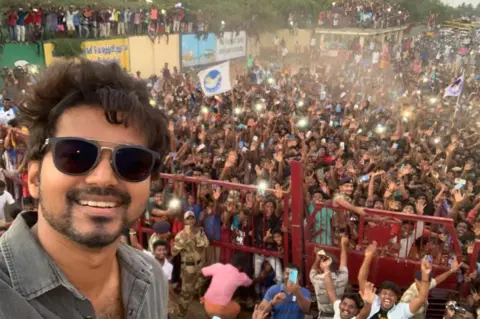
Now Tamil superstar C Joseph Vijay, known as 'Thalapathy' Vijay (General Vijay), is the latest to join this list. He launched his political party, Tamilaga Vettri Kazhagam (TVK), in 2024, and soon after announced that he would retire from films to pursue politics full-time. His upcoming film this month, Jana Nayagan (The People's Hero), would be his farewell release, he said.
Vijay's reasoning was clear: politics is not something one can dabble in. Tamil Nadu's voters, he argued, deserve nothing less than full commitment. And the state's political history supports that calculation. MGR and Jayalalithaa withdrew from active stardom before consolidating power. But Kamal Haasan's hybrid approach, which involves being active in both cinema and politics, has yielded limited electoral results. Tamil politics has little patience for half-measures.
It is against this unforgiving backdrop that Jana Nayagan arrives, saturated with political imagery and support, opening in nearly 5,000 cinemas across India and overseas. At 51, the star is stepping away from a career that many actors would be reluctant to leave, remaining one of Indian cinema's most bankable stars.
Chennai-based film critic Aditya Shrikrishna noted that Vijay's appeal rests not only on his acting but also on his significant fan base. 'Dancing, comedy, and a keen understanding of populist cinema are his strengths,' he said.
However, Vijay’s political platform is yet to emerge clearly. Analysts point out that his party is untested electorally, lacking distinct socio-economic policies and stable secondary leadership. With Tamil Nadu poised to vote in April and May, the critical question emerges: can a cinematic superstar truly translate fame into electoral viability?
As Vijay pushes forward, he must navigate the dual expectations of his urging fan base while responding to critiques regarding organizational readiness and depth of policies. Will his star charisma resonate enough to bridge the gap between fandom and political loyalty in Tamil Nadu's challenging electoral landscape?
Now Tamil superstar C Joseph Vijay, known as 'Thalapathy' Vijay (General Vijay), is the latest to join this list. He launched his political party, Tamilaga Vettri Kazhagam (TVK), in 2024, and soon after announced that he would retire from films to pursue politics full-time. His upcoming film this month, Jana Nayagan (The People's Hero), would be his farewell release, he said.
Vijay's reasoning was clear: politics is not something one can dabble in. Tamil Nadu's voters, he argued, deserve nothing less than full commitment. And the state's political history supports that calculation. MGR and Jayalalithaa withdrew from active stardom before consolidating power. But Kamal Haasan's hybrid approach, which involves being active in both cinema and politics, has yielded limited electoral results. Tamil politics has little patience for half-measures.
It is against this unforgiving backdrop that Jana Nayagan arrives, saturated with political imagery and support, opening in nearly 5,000 cinemas across India and overseas. At 51, the star is stepping away from a career that many actors would be reluctant to leave, remaining one of Indian cinema's most bankable stars.
Chennai-based film critic Aditya Shrikrishna noted that Vijay's appeal rests not only on his acting but also on his significant fan base. 'Dancing, comedy, and a keen understanding of populist cinema are his strengths,' he said.
However, Vijay’s political platform is yet to emerge clearly. Analysts point out that his party is untested electorally, lacking distinct socio-economic policies and stable secondary leadership. With Tamil Nadu poised to vote in April and May, the critical question emerges: can a cinematic superstar truly translate fame into electoral viability?
As Vijay pushes forward, he must navigate the dual expectations of his urging fan base while responding to critiques regarding organizational readiness and depth of policies. Will his star charisma resonate enough to bridge the gap between fandom and political loyalty in Tamil Nadu's challenging electoral landscape?