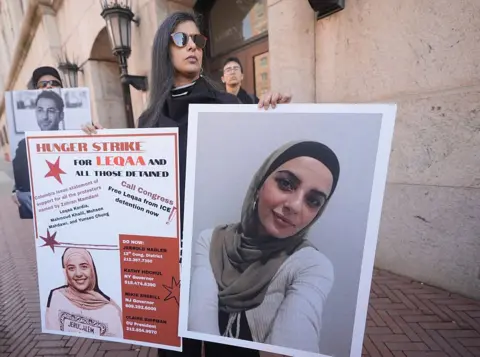
A Palestinian woman who was detained during Gaza war protests at Columbia University has been released after a year in immigration detention in Texas, her lawyers say.
Leqaa Kordia, 33, was among more than 100 demonstrators arrested outside the New York City college's campus in April 2024, but she was released.
She was arrested again in March 2025 during a routine immigration check-in. The Department of Homeland Security (DHS) said she had overstayed her student visa, which was terminated in 2022 for lack of attendance.
Federal officials also launched an investigation into funds she sent overseas, which she said was for her family. She has not been charged with a crime.
I don't know what to say. I'm free! I'm free! Finally, after one year, Kordia told reporters after emerging from the detention centre near Dallas on Monday.
DHS has alleged Kordia provided financial support to individuals living in nations hostile to the US. Her cousin told CBS that she had sent money to relatives overseas. An immigration judge found overwhelming evidence that Kordia was truthful about the funds, reports the Associated Press.
At her third bail hearing on Friday, an immigration judge described the government's arguments against her release as disingenuous and ordered that she be released on $100,000 bail.
A DHS spokesperson said in a statement: The facts of this case have not changed: Leqaa Kordia is in the country illegally after violating the terms of her visa. The Trump administration is committed to restoring the rule of law and common sense to our immigration system, and will continue to fight for the arrest, detention, and removal of aliens who have no right to be in this country.
There have been allegations of poor conditions during Kordia's detention, including being chained to a bed and suffering health issues like seizures. Her case has sparked discussions regarding the balance between immigration enforcement and individuals' rights to advocate for political causes, highlighting the complexities inherent in the U.S. immigration system.
Kordia's attorneys assert that she was unlawfully targeted by the government due to her activism. Her family expressed relief at her release after a challenging year and acknowledged the impact on their lives during this time.
As discussions around immigration policy and free speech continue, Kordia's case serves as a poignant reminder of the intersection of legal systems and personal advocacy in the current political climate.