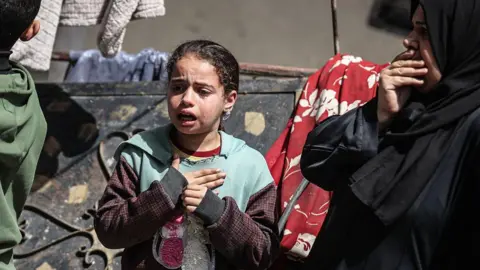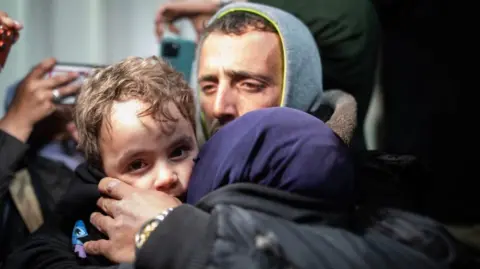
Two Gazan women recently passing through the newly reopened Rafah crossing with Egypt detailed a troubling experience involving a local militia and Israeli security forces. Lamia Rabia, traveling with her children, described how they were escorted from the border to a checkpoint where members of the Abu Shabab militia conducted searches.
Rabia noted that the militia members, identified as affiliated with the security process, conducted searches without speaking, before Israeli forces questioned them. This coordination raised eyebrows, and inquiries to the Israel Defense Forces (IDF) regarding their relationship with the militia have so far gone unanswered.
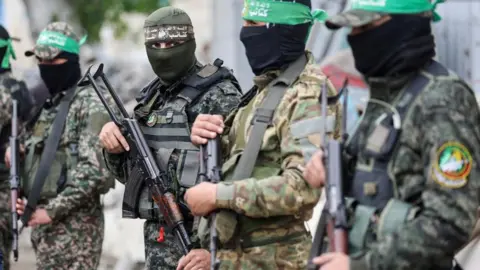
The Abu Shabab militia, known for its anti-Hamas stance and support from Israel, operates under Israeli military control in Rafah. Reports indicate that these militia members engaged in thorough security checks despite their contentious reputation among the local populace and human rights observers.
One of the returnees, who asked to remain anonymous, recounted a chilling encounter where militia members allegedly mistreated them, coercing cooperation in exchange for potential assistance in their travels. This account adds to the concerns regarding the safety and rights of individuals navigating the crossing.
As the women revealed further details, allegations of confiscation by European monitors at the crossing surfaced, with reports of many personal items being taken under vague pretexts, compounding the distress of those crossing. Items seized included perfumes, electronics, and even cash limits imposed on individuals entering Gaza.
Despite assurances from an EU spokeswoman that monitors were present solely to observe operations, testimonies of confiscations have raised uncomfortable questions about accountability and the operational authority at the crossing, complicating an already strained humanitarian landscape.
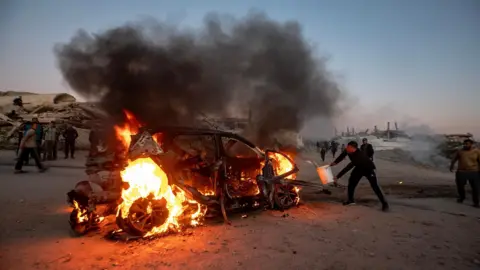
As successful crossings remained minimal—only 12 individuals from a planned fifty were allowed passage—the chaotic situation at Rafah starkly illustrates the tensions involving various military and governance factions in Gaza. The EU has expressed intentions to increase support for better coordinating the flow of people through the crossing amid ongoing reports of harsh treatment.
As evacuations continue, the implications of militia involvement raise serious concerns about the future of humanitarian efforts in the region, spotlighting the urgent need for transparent and accountable processes for those seeking refuge and medical care.