In brief
Diwali, known as the festival of lights, brings millions together in celebration across India. While families decorate their homes, exchange sweets, and light lamps, the festivities aggravate air pollution, particularly in northern India's winter months. The Supreme Court has permitted the sale of 'green crackers' aimed at minimizing pollution. This year's celebrations highlight the cultural importance of Diwali while acknowledging the ongoing environmental impact associated with traditional firecracker use.
Millions of Indians are celebrating Diwali, the festival of lights, one of Hinduism's most significant and widely observed festivals.
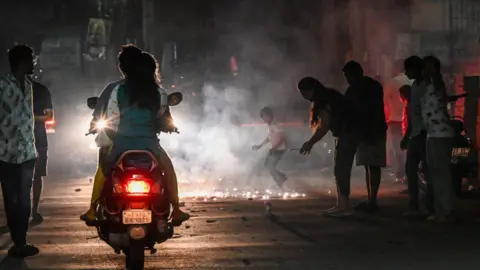
While lamps and firecrackers light up homes and streets during the festival, they also worsen air pollution - a problem especially pronounced in northern India, where winter months already bring poor air quality.
This year, the Supreme Court has permitted the sale and use of green crackers in the capital, Delhi, to help curb air pollution, ending a ban on crackers that has been in place since 2020.
Green crackers claim to emit 20–30% less pollution than traditional firecrackers, but critics doubt their actual effectiveness in protecting the environment.
In recent years, several states have restricted or banned firecrackers to combat rising air pollution, but the rules are often flouted, further worsening air quality in the days after Diwali.
Food plays a central role in the celebrations. Families prepare a variety of traditional Indian sweets which are shared with friends and neighbours. Festive meals often include rich curries, savoury snacks, and special breads.
In the days leading up to the festival, people clean and decorate their homes, shop for new clothes, and buy traditional sweets to exchange as gifts with friends and family.
Many also create traditional and colourful rangoli designs outside their doors to invite luck and positivity. On Diwali itself, families worship Lakshmi, the Hindu goddess of wealth.
Diwali's appeal goes beyond religion, drawing people from different communities and faiths to join in the celebrations.
Across India's cities and towns, markets bustle with shoppers buying sweets, gifts, decorations, and firecrackers, giving a significant boost to the economy each year.