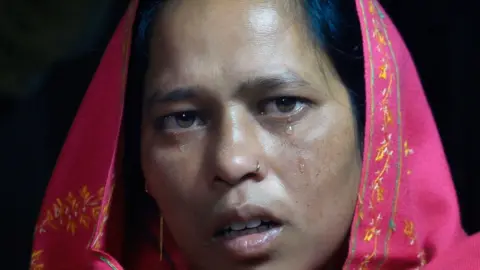
Violence has erupted in Bangladesh following the death of a prominent leader of the youth movement that ousted former Prime Minister Sheikh Hasina.
Sharif Osman Hadi was shot by masked attackers while leaving a mosque in Dhaka last week and died of his injuries on Thursday while being treated in Singapore.
The shooting came a day after authorities announced a date for the first elections since the uprising in 2024, which Hadi had been planning to contest as an independent candidate.
As news of his death emerged, hundreds of his supporters gathered in a square in the capital to protest.
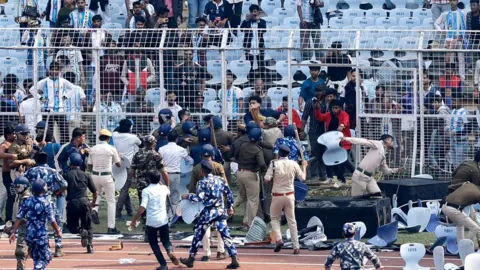
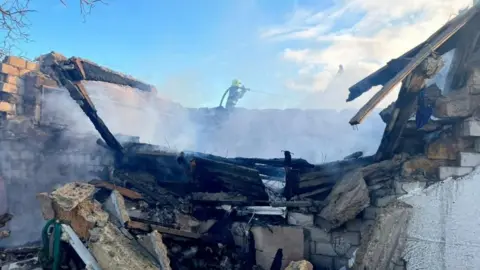
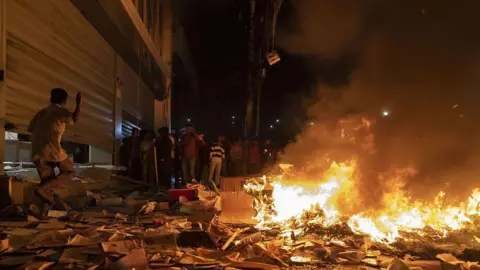
Later on, demonstrators vandalised the offices of prominent Bangladeshi newspapers The Daily Star and Prothom Ali, with one building set on fire.
Hundreds of people have gathered here and carried out the attack, a police officer told BBC Bangla.
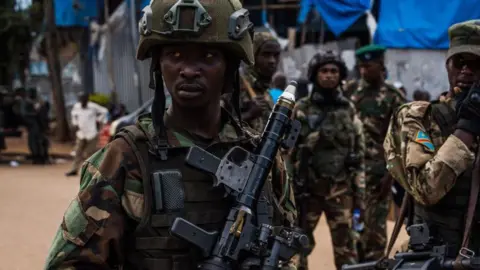
Troops were deployed to the scene, while firefighters rescued journalists trapped inside the building.
Hadi, 32, was a senior leader of the student protest group Inqilab Mancha and an outspoken critic of neighbouring India where Hasina remains in self-imposed exile.
Bangladeshi political parties have mourned his death and urged the interim government to bring the perpetrators to justice.
Nobel laureate Muhammad Yunus, who heads the caretaker government, called Hadi's death an irreparable loss for the nation and emphasized that threats to democracy will not be tolerated.
The interim government declared a day of national mourning on Saturday.
After Hadi was shot, Yunus described it as a premeditated attack aimed at disrupting the upcoming election. The situation remains tense, with ongoing investigations into the incident as several detentions have been made.
Hasina fled to India on August 5 last year after weeks of student-led protests, which ended her 15-year rule marked by increasing authoritarianism.
In November, she was sentenced to death for allowing lethal force against protesters, bringing the casualties to over 1,400 during the unrest.