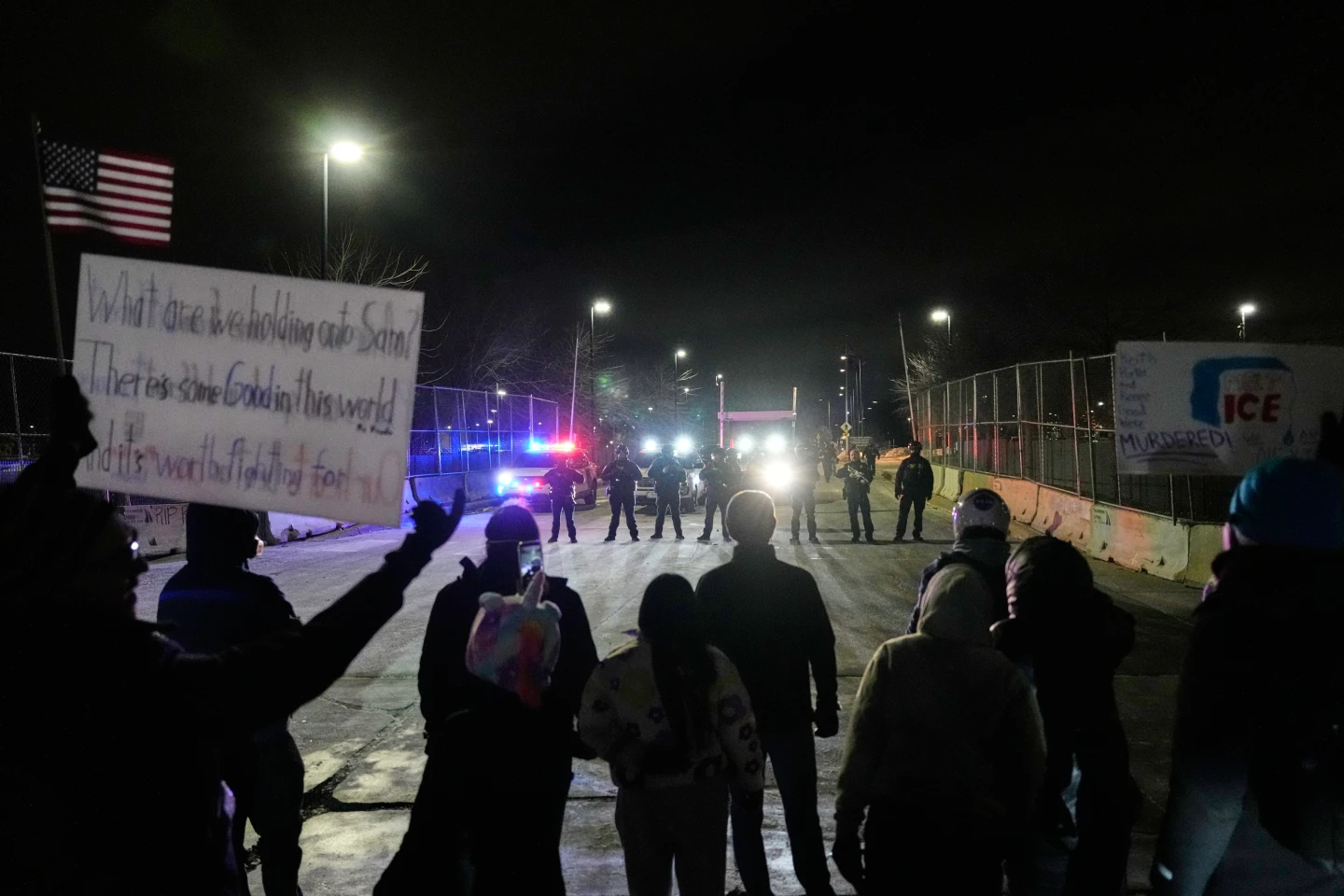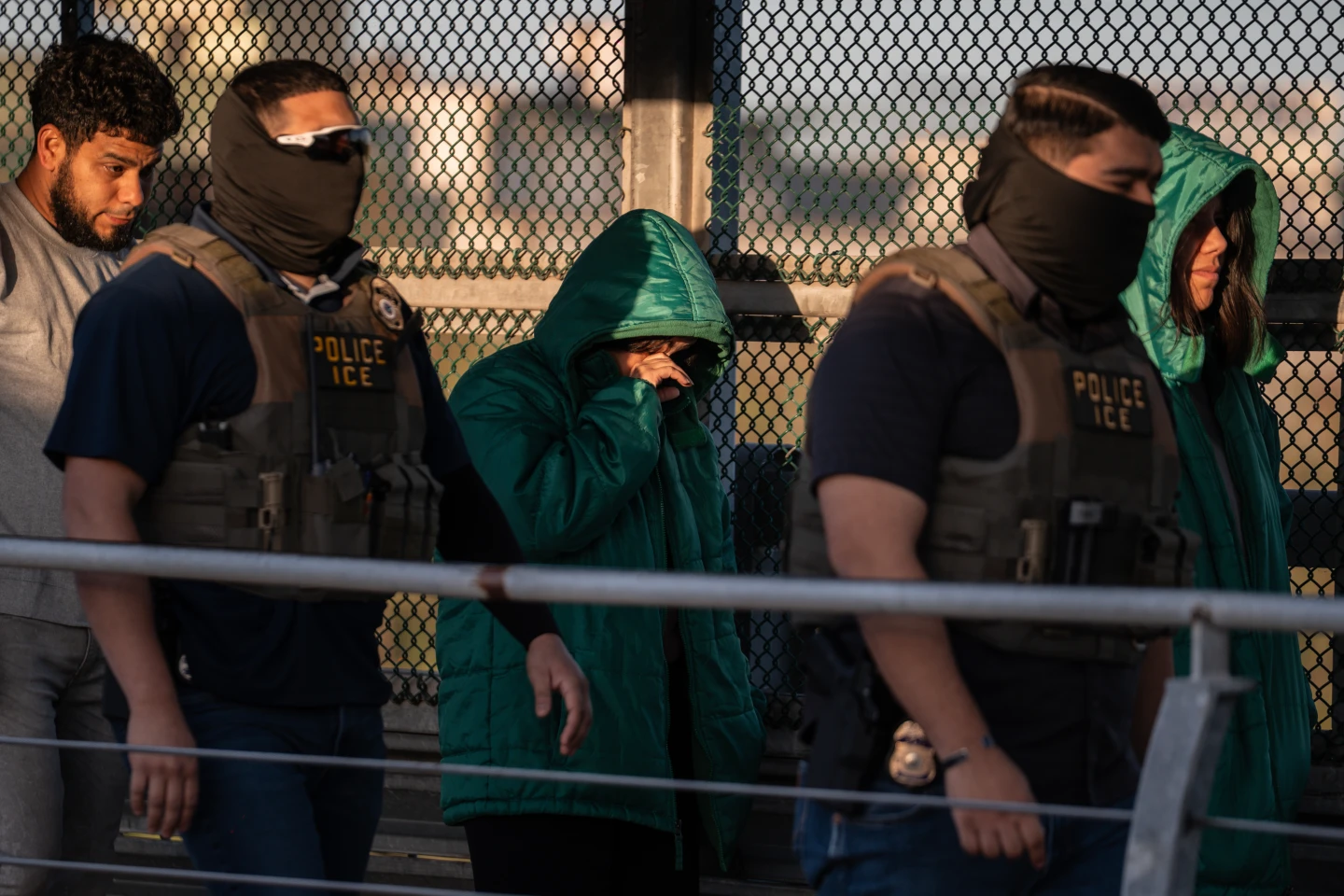
MINNEAPOLIS (AP) — Immigration officers with guns drawn arrested activists who were following their vehicles on Tuesday in Minneapolis, demonstrating that tensions remain high after the recent departure of a prominent commander involved in immigration enforcement.
According to an Associated Press photographer present at the scene, at least one individual wearing anti-ICE slogans was handcuffed while lying face-down on the ground.
Federal agents have increased targeting of immigration arrests within communities rather than staging in more public settings, leading to intensified reactions from activist groups. Recent alerts within activist circles now focus more on sightings rather than actual detainment events.
Following reports of aggressive encounters where officers reportedly knocked on doors, activists accompanied these federal vehicles through southern Minneapolis. Activists claim that agents ordered them from their cars at gunpoint and threatened to use pepper spray against reporters attempting to document the incident.
Legal representatives highlighted that a federal judge previously established limits on how agents could handle individuals trailing them if they were not obstructing; however, these limitations have recently faced setbacks following court rulings.
The arrests come on the heels of a broader enforcement strategy that has seen a marked increase in residential immigration arrests, with government agents warning that interference with operations could lead to serious repercussions.
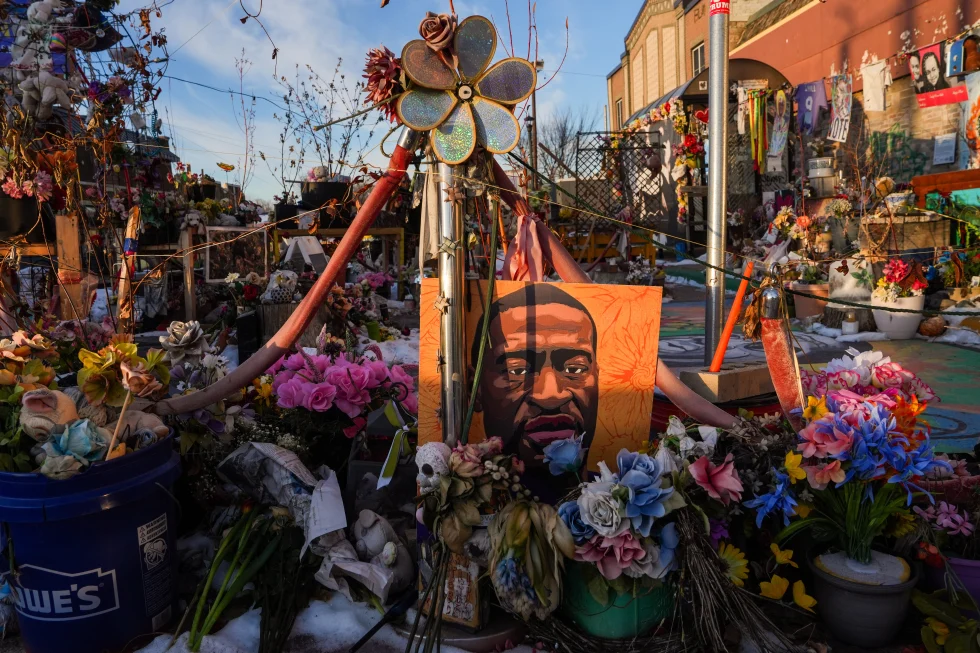
Public outcries have intensified following the recent fatal shootings linked to enforcement actions, including the deaths of local residents, further complicating relations between communities and law enforcement agencies tasked with immigration enforcement.
Meanwhile, activists continue to confront and challenge these enforcement strategies, raising questions regarding civil rights, safety, and accountability within immigration practices.
Cases involving activists and confrontations with officials solicit broader discussions around the implications of immigration policy at the community level, emphasizing an ongoing struggle for equity in treatment and representation.