In brief
In the wake of Uganda's government-mandated internet shutdown during a tense election period, individuals across various sectors are feeling the repercussions. Mobile business operators like Mirembe Tracy faced a complete loss of income, while students like Aaron Benitez encountered disruptions in learning and communication. Critics argue that the shutdown is a tactic to suppress dissent. The situation highlights the crucial role of digital connectivity in modern Ugandan life, and the long-term effects may extend well beyond the immediate aftermath of the elections.
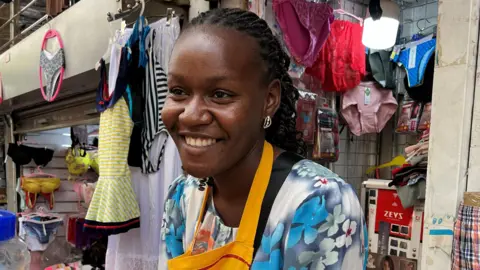
Mobile money agent Mirembe Tracy laments that her business in Uganda's bustling capital Kampala was paralyzed when the government shut the internet during last week's fiercely contested general election.
All withdrawals were disconnected, she tells the BBC, adding that she gets nearly all of her income from withdrawal commissions.
Without it, her income dropped to zero.
In one week I can earn up to 450,000 [Ugandan] shillings (£96; $130). That money is what I use to pay rent. Losing it was a total loss, she says.
For two days either side of the election, there was nothing she could do but stay at home - she could only sell prepaid airtime credit, which she says does not give a commission.
Uganda's communications authority ordered the nationwide shutdown to ensure peace, protect national stability and prevent the misuse of communication platforms during a sensitive national exercise.
The opposition said it was a move to cover up voter fraud and stop its agents from sharing the results from polling stations.
Either way, it brought many aspects of modern life to a halt.
Online businesses that rely on mobile money transactions were most affected by the blackout, with some coming to a standstill while others reverted to cash-based transactions.
Kampala is famous for its ubiquitous boda boda (motorcycle) taxis, with many operators earning their income through online ride-hailing apps.
The co-founder of SafeBoda told local media that the platform's entire server was down during the internet suspension, with many riders forced off the road and other businesses that depend on the service deprived of their income.
Namukwaya Olivia, who sells traditional cultural clothing and depends heavily on Instagram, TikTok and WhatsApp to reach customers, says she did not make any deliveries during the period.
We could not send pictures, we could not receive orders, and we could not make deliveries, the businesswoman says.
She adds that the effect of the shutdown was immediate, and made it difficult to cover basic costs.
We couldn't pay rent during that period, she says. Even now, things have not fully recovered because customers still struggle to access us online.
Journalist Ngabo Amon says his smartphone, a work tool for him, became largely useless. You have a phone, but there is nothing to do with it, he tells the BBC.
He could no longer research stories, follow election developments or send material to his newsroom.
He says everyday life transformed into anxious stretches of waiting for the internet to be restored.
Some households reverted to watching television to keep themselves occupied, either watching live, or buying downloaded old movies from shops.
People bought what they could afford, went back home and just watched, because there were no other options, Ngabo says.
Some young people found it difficult to cope.
Ronnie Mwesigwa, 20, says he lost contact with friends and had no access to online entertainment.
I couldn't communicate with anyone, and even gaming was gone, he says. It was not a good situation.
For students, the blackout disrupted both communication and learning.
Aaron Benitez, a final-year school pupil, says he was unable to contact his family during a period of uncertainty.
I needed to know what was happening with my family and what was going on in the country, he tells the BBC. But I could not connect with them at all.
Online learning also came to a halt. Teachers could not send notes or assignments, and group discussions normally held online were canceled.
The government partially restored the internet after Museveni was declared the winner on Saturday.
Some platforms, especially social media, remain slow or restricted, pushing many young people to reconnect using a VPN (virtual private network), which can disguise their online location.
For many, the shutdown was not just a temporary inconvenience but a stark reminder of how deeply digital access shapes their everyday life.