India could soon get a lot thinner - at least in theory.
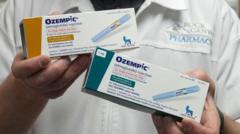
On Friday the patent on semaglutide - the molecule behind Danish drugmaker Novo Nordisk's blockbuster weight-loss drugs Wegovy and Ozempic - expires in the country.
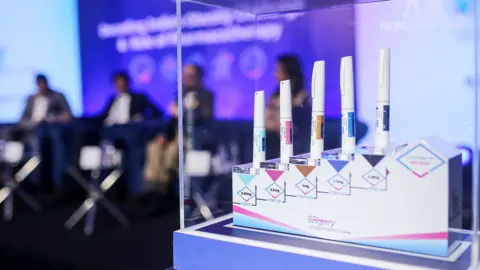
This will allow domestic pharmaceutical companies to release cheaper copies or generics, triggering a rush of competition that could slash prices by more than half and rapidly expand access for people in India, and eventually in other countries too.
Investment bank Jefferies has called it a potential magic-pill moment for India, predicting the semaglutide market could eventually reach $1bn domestically with the right pricing and uptake.
Analysts expect around 50 branded semaglutide generics to enter the market within months - a familiar pattern in India's fiercely competitive pharmaceutical industry. When the diabetes drug sitagliptin went off patent in 2022, about 30 branded versions appeared within a month and nearly 100 within a year.
India's pharmaceutical industry, currently worth about $60bn, is expected to double by 2030. Much of it is built on generics - a manufacturing muscle that now sets the stage for fierce competition over semaglutide. What has until now been an expensive injection largely confined to affluent patients could soon become far more common.
Originally developed to treat diabetes, these drugs are now being hailed as game changers for weight loss, offering results that few previous treatments could match. Semaglutide belongs to a class of medicines known as GLP-1 receptor agonists, which mimic a hormone that regulates appetite and blood sugar.
By boosting insulin release and slowing the emptying of the stomach, the drugs make people feel full sooner and stay full longer. Originally developed for diabetes, they have become some of the most sought-after weight-loss treatments in the world.
Several Indian drugmakers are already preparing to make the move. According to Sheetal Sapale, vice-president at research firm Pharmarack, major firms including Cipla, Sun Pharma, Dr Reddy's Laboratories, Biocon, Natco, Zydus and Mankind Pharma are readying branded generics, with many more likely to follow. Prices are expected to fall sharply.
Current monthly treatment costs are steep: Ozempic typically sells for 8,800 - 11,000 rupees ($95-$119; £71-£89), while Wegovy can cost 10,000-16,000 rupees ($108-$173). Sapale expects generic competition to push that down to roughly 3,000-5,000 rupees ($36-54) per month. Lower prices could transform the market.
India's anti-obesity drug sector - covering both injectables and oral medicines - has already grown rapidly, from roughly $16m in 2021 to close to $100m, according to Pharmarack. Demand accelerated after the launch of Rybelsus in 2022, the first oral version of semaglutide.
The surge reflects a broader health shift.
India already has more than 77 million people with type-2 diabetes and one of the world's largest populations of overweight adults. Urban lifestyles, carbohydrate-heavy diets and sedentary habits have helped drive both conditions. For doctors, cheaper GLP-1 drugs could soon add a powerful new tool to treat them.
Weight-loss drugs are also moving beyond endocrinology clinics. Cardiologists use them to help patients shed weight before procedures such as angioplasty, orthopaedic surgeons to ease stress on joints before knee surgery, and chest physicians to treat conditions such as obstructive sleep apnoea.
Muffazal Lakdawala, a Mumbai-based bariatric surgeon, says these drugs could dramatically expand treatment for India's large population of patients with diabetes and obesity.
Until recently, he notes, access was limited: injectable GLP-1 drugs were expensive and difficult to obtain, while the oral drug Rybelsus was the only widely available option.
It is great that these will become cheaper so that more of the diabetic and obese Indian population can access them, he says. But he adds a warning: The quality of the drugs being made here must be very tightly regulated.
The enthusiasm for these medicines comes with significant caution. GLP-1 drugs are powerful but not risk-free. Side-effects can include nausea, vomiting and digestive problems; rarer complications include gallstones or pancreatitis. Rapid weight loss without adequate protein intake or exercise can also lead to muscle loss.
Doctors say many patients misunderstand the role of the drugs. Some expect dramatic weight loss within weeks, influenced by social-media hype and celebrity endorsements.
A successful weight-loss regimen depends not only on the drug but also on right patient selection. Mumbai-based diabetologist Rahul Baxi emphasizes the importance of considering related conditions such as diabetes or high cholesterol, alongside lifestyle factors. If a patient's diet remains unhealthy, the drug alone may not suffice.
Moreover, weight loss often reverses once the drugs are discontinued. Appetite can rebound strongly as the body resists losing fat. Some patients arrive seeking a quick fix and may wish for drastic weight loss in short timeframes.
As lower prices become more common, concerns about misuse are likely to rise. Physicians report cases of patients being prescribed high doses by trainers, beauty clinics, or online pharmacies dispensing drugs after cursory consultations. Such practices could expand with greater access to cheaper generics.
More access to cheap drugs means a higher chance of abuse, says Bhaumik Kamdar, a Mumbai-based chest physician. Access calls for more responsibility - and stricter regulation. I am cautiously optimistic about these drugs.
The government is also attempting to moderate the narrative. India's drug regulator recently cautioned firms against direct-to-consumer promotions for prescription weight-loss drugs, emphasizing that they should only be used with medical oversight.
As regulators and medical professionals gear up for a dramatic shift in the landscape of weight-loss medications, the path forward aims to balance affordability with responsible use and effective treatment.