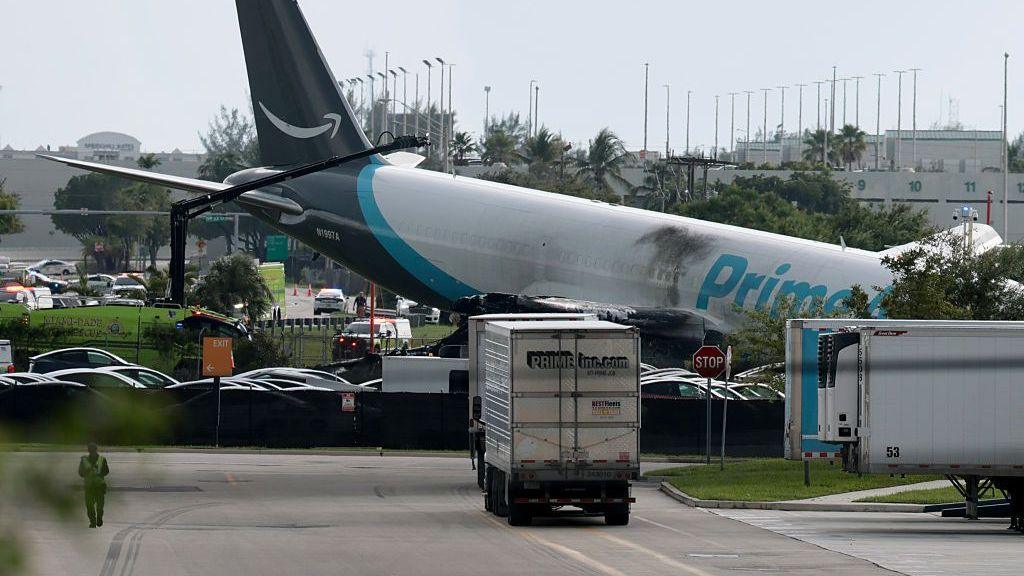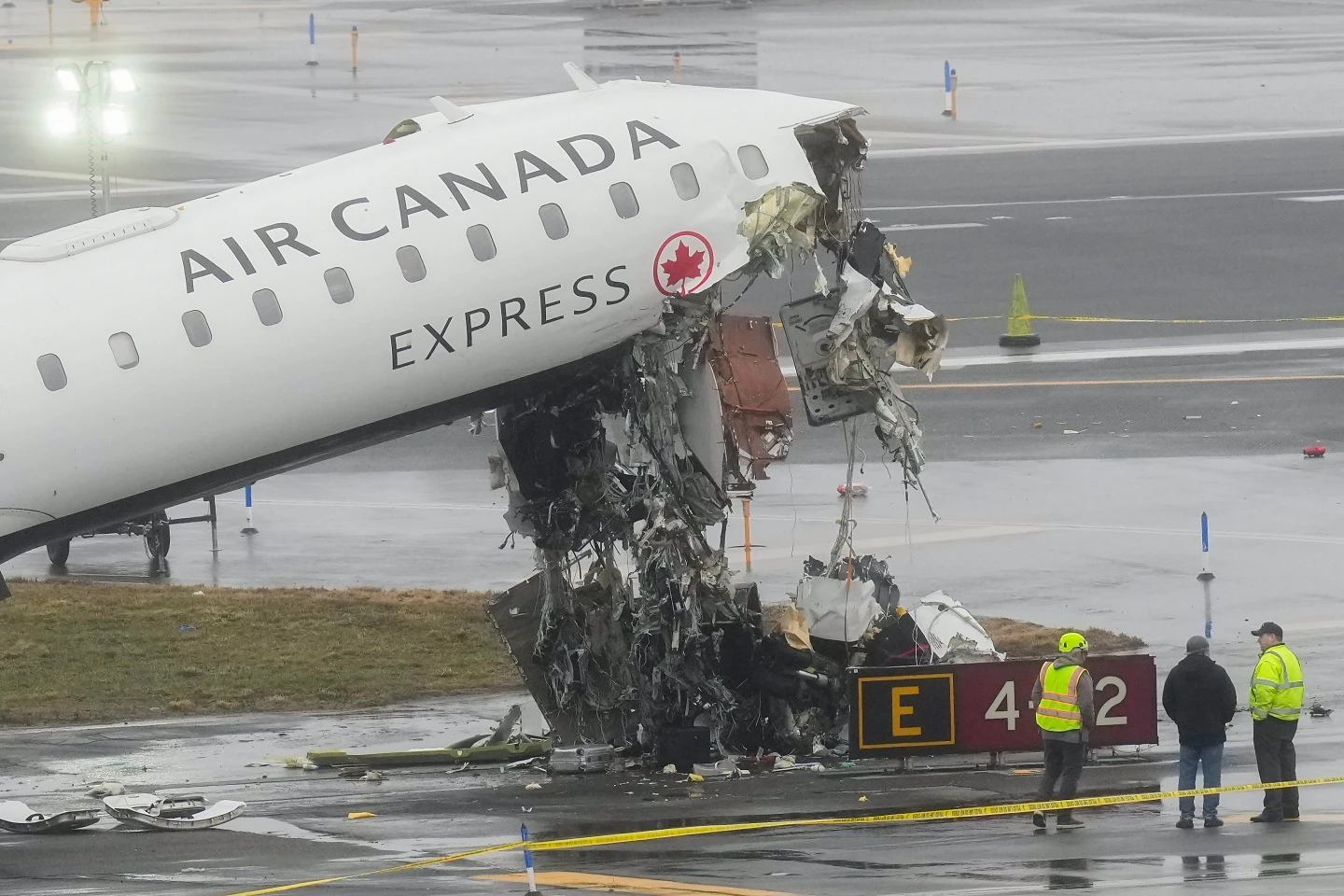
NEW YORK (AP) — A firefighter whose truck collided with an Air Canada jet last month on a runway at LaGuardia Airport in New York, killing both pilots, heard an air traffic controller warn 'stop, stop, stop', but didn’t initially know it was directed at him, according to federal investigators' preliminary report released Thursday.
The National Transportation Safety Board (NTSB) indicated that a crash prevention system failed to alert the control tower, and that the runway entrance lights, which signal to vehicles that they should stop, were operational until roughly three seconds before the collision occurred. The report further divulged that these lights are designed to turn off just moments before an aircraft enters an intersection.
The turret operator of the fire truck recalled hearing the air traffic controller specifically mention 'Truck 1, stop, stop, stop' after the initial warning, only realizing the urgency of the moment once he saw the airplane's lights on the runway ahead.
At that moment, the fire truck was already on the runway while Air Canada Express Flight 8646 was in its landing descent.
The aircraft, a CRJ900 regional jet from Montreal with over 70 people on board, tragically claimed the lives of pilots Antoine Forest, 24, and Mackenzie Gunther, 30. Meanwhile, approximately 40 individuals, including those within the fire truck, were taken to hospitals with injuries.
Among the survivors was a flight attendant who, despite being thrown from her seat during the impact, managed to escape the wreckage.
Before the crash, the fire truck was part of a convoy responding to an emergency situation involving a hazardous odor reported from a United Airlines jet. The air traffic control tower at LaGuardia was experiencing unusually high traffic that night, as delays had led to a significant increase in arrivals and departures.
Investigators have cited the failure of the ASDE-X surface surveillance system as a critical factor in the accident. This system, crucial for preventing runway incursions, did not function effectively since the fire truck was not equipped with a transponder needed for the alarm to activate. The presence of other emergency vehicles nearby further complicated the situation, thwarting the system's ability to alert controllers of the potential disaster.
The unfolding events of that night were marked by a flurry of communication, as emergency response protocols clashed with the operational demands of the busy airport, ultimately culminating in this tragic incident. This collision marks the first fatal accident at LaGuardia Airport in 34 years, raising serious questions about current safety practices amidst high-stakes operations.