Israel has become the first country to formally recognize Somalia's breakaway region of Somaliland as an independent nation.
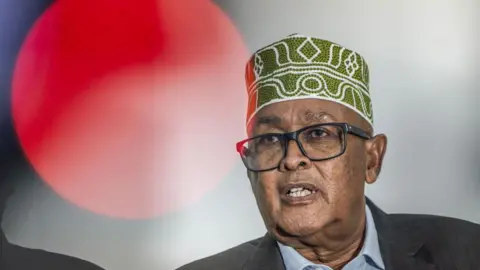
Prime Minister Benjamin Netanyahu stated that Israel intends to immediately expand cooperation in agriculture, health, and technology. Somaliland's president, Abdirahman Mohamed Abdullahi, lauded the development as 'a historic moment.'
This recognition by Israel could motivate other nations to follow suit, enhancing Somaliland's diplomatic standing and access to international markets.
However, the move has met with strong condemnation from the foreign ministers of Somalia, Egypt, Turkey, and Djibouti, who issued a statement reaffirming their 'total rejection' of Israel's announcement.
Abdullahi emphasized Somaliland's commitment to join the Abraham Accords, positioning it as a step towards regional and global peace. He highlighted intentions to foster partnerships and promote stability across the Middle East and Africa.
The agreement between Israel and Somaliland includes establishing 'full diplomatic ties, appointing ambassadors, and opening embassies,' as stated by Israeli Foreign Minister Gideon Saar.
In reaction, Egypt's foreign minister engaged in separate calls with counterparts from Somalia, Turkey, and Djibouti to address the implications of Israel's recognition.
The ministers collectively expressed support for Somalia's unity and warned against unilateral actions that could destabilize the region or create alternative entities undermining Somalia's institutional integrity.
Israel has historically sought to strengthen ties in the Middle East and Africa, with recent military conflicts being viewed as impediments to democratic engagement.
Somaliland, which declared independence in 1991 following a war against the former Somali government, plays a strategic role in the Gulf of Aden and has long dealt with international isolation while maintaining its own institutions like currency and law enforcement.