In brief
Across Israel, the far‑right National Security Minister Itamar Ben Gvir is drawing a growing share of first‑time voters, with over 16 % of newcomers showing intent to back his party or its ally. Social‑media engagement and a narrative that blends security rhetoric with promises of national strength appear to resonate more strongly with 18‑22‑year‑olds than older voters. Despite strong backing from segments of the population, Ben Gvir’s positions on annexation and settlement, as well as a history of incitement, keep him highly controversial. The outcome of the forthcoming general election may hinge on how effectively young voters turn out to the polls, potentially altering Israel’s political balance.
When Israel’s far‑right National Security Minister, Itamar Ben Gvir, reached voting age, he was turned away from the army for being too politically extreme. Thirty‑three years later those same views remain, yet he has become a member of the prime minister’s inner circle of ministers.
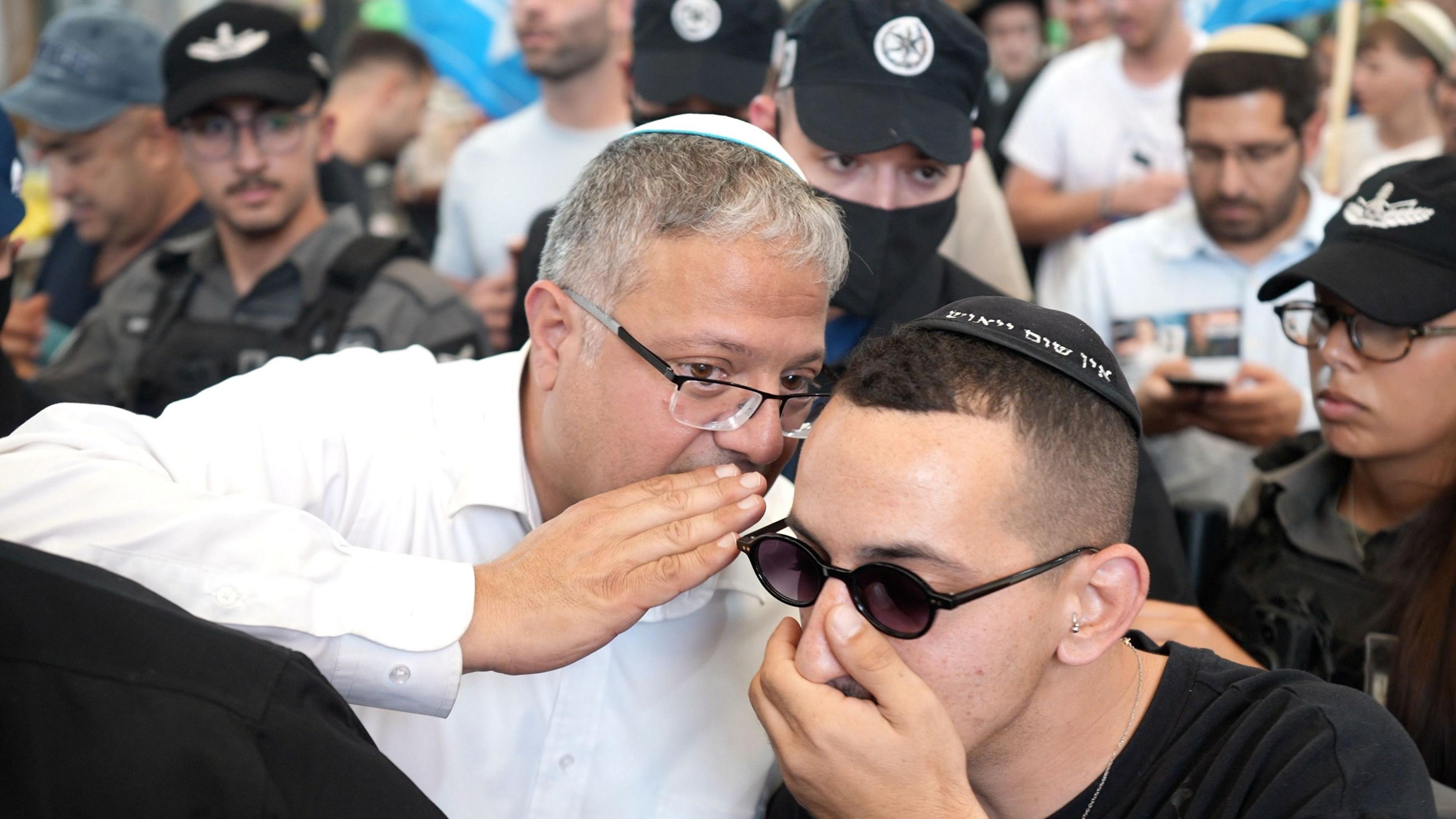
Ahead of next week’s general election, Ben Gvir is surrounded by a band of youthful supporters in the mixed Jewish‑Arab city of Ramle, where he urges first‑time voters to head to the polls.
A recent survey reported that more than half a million Israelis will cast ballots for the first time, with polls suggesting a tight race that could be decided by the turnout of younger voters. Around 16 % of new voters indicated a preference for his party or its ally, while almost three‑quarters of them feel “right or centre‑right.”
Ben Gvir’s message to young voters stresses security, an image of a strong Israel, and promises that the state’s army will safeguard them. Echoes of the October 7 attacks still shape the generation’s view of politics and the need for decisive action.
The far‑right’s platform, which calls for annexation of the West Bank, settlement expansion in Gaza, and the “voluntary emigration” of Palestinians, remains condemned by many in Israel and has led to sanctions by several western governments.
While some shopkeepers in Ramle threw sweets at the campaign, others expressed unease about the politician’s rhetoric, noting the city’s mixed demographic. Yet younger voters often recount how the recent conflict reinforced their perception that Israel’s security and identity are under threat.
Political analyst Dahlia Scheindlin argues that 20‑year‑olds are broadly more right‑wing than older Israelis because they have been socialised into a debate that accepts extreme measures such as annexation.
In terms of media reach, Ben Gvir was historically the most viewed figure on TikTok and Instagram; more recently, his former prime minister Ne Bennet has moved up the charts on these platforms.
Students in Tel Aviv have noted that once the national and regional discussions intensified, they were previously disengaged from politics, highlighting the pivotal role of voters cast for the first time.
Though the young electorate is showing a shift toward the right, Israel remains split over who should be seen as the guardian of the nation’s security and who might pose an existential threat. The 2027 general election will thus serve as a referendum on Israel’s future trajectory.