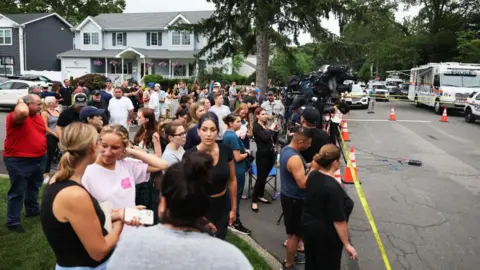
Massapequa, its residents proudly proclaim, is a cop town. Perched on Long Island's idyllic South Shore, it is just an hour's journey via train from Manhattan. The community is home to New York Police Department (NYPD) detectives, multi-generational police families, officers from Nassau and Suffolk Counties, and members of myriad other law enforcement agencies.
And when body parts started to be discovered in 2010 on Gilgo Beach—not far from where local teens work as lifeguards and families gather in the summer—it became clear that a serial killer had been active on Long Island for years. The rumor mill went into overdrive. Was he local? Was he still hunting? And was he, after operating for so long without getting caught, perhaps even wearing a badge?
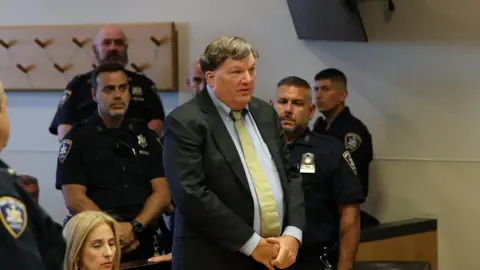
The 2023 arrest of architect Rex Heuermann put to rest those theories—his admission in court this week to the murders of eight women has brought further closure to Long Island police, they said. It's a great relief, said Craig Garland, a retired NYPD detective, Massapequa resident and Little League baseball organizer. There were people out there trying to pin this on a cop, and it brings great closure to the law enforcement community at large that this wasn't a cop that was a serial killer.
Heuermann, a 62-year-old married father-of-two, was arrested in July 2023 in Manhattan after authorities obtained his DNA from a discarded piece of pizza outside his mid-town office. His daily commute from Massapequa Park to New York City took him right past the local police bar Johnny McGorey's, a popular pub directly next to a rail station where officers drank and discussed the hunt for the murderer as Heuermann made his way to and from his unkempt house just a few streets away.
With many law enforcement families in the area, there was fear and speculation about whether the serial killer could be one of their own. He’s covering his tracks so well and, you know, is there a possibility it could be a cop? Garland recalled people speculating.
At Massapequa's St Rose of Lima Roman Catholic Church, which has a high percentage of police and first responder parishioners, Rev. Gerard Gentleman noted how the community moved quickly from shock to a sense of empathy. People reached out, saying: 'What are we doing for [Heuermann's] family? Can we do anything?' the pastor said. And we did. We had some offerings to them... obviously, there was also concern: 'My goodness, this was happening right here in our town. He was among us.'
While police may feel vindicated and the community might feel safer, the scars left by this grisly chapter remain profound. Azzata emphasizes that although a guilty plea may provide some semblance of justice, true closure is elusive for the families of the victims, highlighting a somber reality—that those left behind continue to grapple with the devastation inflicted by such heinous acts.