In brief
In a tense telecast before Brazil’s run‑off, president Lula and Senator Flávio Bolsonaro traded personal attacks that left analysts worried about a rise in abstention. The debate, focused more on insults than policy, split voters along ideological lines and intensified existing rivalries stemming from Bolsonaro’s father’s conviction. While Lula promised transparency and challenged Bolsonaro on crime rates, Bolsonaro targeted the Workers’ Party’s alleged corruption and linked the candidate to militias. Experts suggest the combative tone may polarise the electorate further, potentially hurting voter turnout in the decisive Sunday vote.
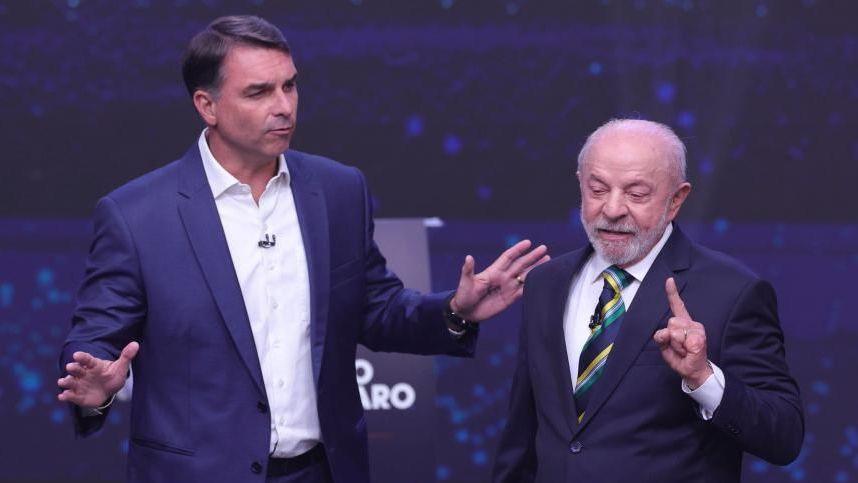
The televised debate between President Luiz Inácio Lula da Silva and Senator Flávio Bolsonaro, held a week before Brazil’s Sunday run‑off, was dominated by personal insults rather than substantive policy discussion.
Polls had shown the two candidates neck‑and‑neck, and the broadcast was expected to sway undecided voters. Instead, the commentators exchanged barbs that highlighted deep ideological divides. Analysts warn that such aggression could encourage the already high level of abstention expected in the final election on 20 October.
In the first round on 4 October, Bolsonaro edged out Lula with 47 percent of the vote to Lula’s 45.2 percent, forcing a second round. The president of Brazil, who had served since 2003 and won a 2022 re‑election, said he would “win in extra time” and pledged to open his own and his family’s records to judicial scrutiny.
Bolsonaro, campaigning on a hard‑line approach to crime, challenged Lula to explain increasing crime statistics during his tenure. He also alleged that “the majority of convicts vote for Lula,” despite lacking evidence. In return, Lula made a reference to Bolsonaro’s father, former president Jair Bolsonaro, who was sentenced to more than 20 years in prison for attempting to overthrow Lula after the 2022 election.
The exchange most vividly captured the personal nature of the debate: Bolsonaro held up a piece of paper on which he had written the word “CORRUPTO” in the initials of the Workers’ Party and prompted Lula to stand beside him. Lula replied that he did not want to be near him, emphasizing a desire to distance himself from the Bolsonaro family and militia connections, and Bolsonaro responded with, “Maybe it’s better to keep my distance so my wallet isn’t stolen.”
Figures from pollster AtlasIntel said the event contained no meaningful policy discussion, and the format was chaotic, with both candidates pacing the studio while each was speaking. Political analyst Lucas Aragão noted a subtle shift in Bolsonaro’s demeanor, appearing calmer and seemingly getting “under Lula’s skin.”
The debate’s hostile tone has already drawn criticism from Brazil’s political spectrum. Left‑leaning observers argue that such personal attacks delegitimize the democratic process, while right‑leaning supporters claim they expose corruption within Lula’s party. A third perspective focuses on voters’ frustration and the possibility that the sharp rhetoric may drive rational voters to abstain.
The second debate, scheduled for Friday morning, will conclude just two days before polls open. As the country prepares for the decisive Sunday vote, political commentators and pollsters will monitor turning points in turnout, hoping to understand whether the aggressive display will indeed discourage the electorate or galvanise supporters on either side of the aisle.