In brief
The historic Shahi Bawarchikhana, located in Chota Imambara, Lucknow, is undergoing restoration to preserve its architectural splendor and its historical significance as a communal kitchen. Serving meals since 1837, the kitchen has evolved from catering to royalty to providing for thousands during Ramadan and Muharram, maintaining the traditions of serving the needy. The restoration focuses on using original materials and techniques, ensuring this vital piece of cultural heritage continues to thrive.
In northern India's Uttar Pradesh state, a team of workers is carefully restoring a centuries-old royal kitchen that once fed the rulers of the former princely state of Awadh.
Tucked within the sprawling complex of Chota Imambara - a mausoleum and congregation hall - this kitchen in Lucknow is a reminder of a different kind of royal legacy. Built in 1837 by former Awadh ruler Muhammad Ali Shah, the site once served not just the elite, but the public too.
At its peak, the meals here were prepared for both the royal household and ordinary people, especially during religious gatherings and special occasions. India no longer has royals and Awadh, once a princely state ruled by semi-autonomous Muslim nawabs, now exists only as a historical region in central Uttar Pradesh. Yet some traditions have outlived the kingdoms that created them.
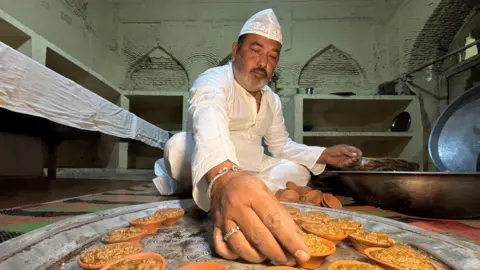
Nearly 200 years on, the kitchen is not just a relic but is still in use. It continues to serve food to thousands during the holy months of Ramadan and Muharram, continuing a practice of community service.
According to historians, in 1839, Muhammad Ali Shah gave 3.6m rupees to the East India Company, which was then responsible for maintaining the monuments built by the Awadh nawabs, while the kitchen would continue to run on the interest earned from the fund. Today, the kitchen is managed by the Hussainabad Trust - a state government-monitored body - which continues to use the interest to fund and manage the kitchen's operations.
The restoration project, which began last October, aims to return the kitchen to its original glory, using traditional materials and techniques, including slaked lime mortar, thin burnt clay bricks, and intricate wall carvings. This effort reflects not only a commitment to preserving architectural heritage but also to sustaining a cultural tradition that endures in the community.
Many locals have deep connections to this kitchen. For instance, Syed Haider Raza recounts visiting for decades during Muharram to receive meals, highlighting the kitchen's role in fostering community and continuity. The meals, recorded meticulously in historical documents, are still prepared following the standards laid out by the former rulers.
This restoration is multi-faceted, encompassing both physical and cultural preservation, reaffirming the kitchen's significance as a culinary institution that has served beyond just feeding people - it continues to embody a royal tradition of giving and community support.