The emerging strength of the far left and far right is creating awkward choices for mainstream parties after the first round of French mayoral elections.
In many big towns and cities, Socialists and centre-right Republicans are tempted to make electoral pacts on their outside flanks in order to beat the opposition in next Sunday's run-off.
But alliances with the National Rally (RN) on the far right or France Unbowed (LFI) on the far left carry big risks as well as opportunities.
Take Marseille. There, after round one, the incumbent Socialist Mayor, Benoît Payan, is only a whisker ahead of RN candidate Franck Allisio. But two other candidates have also qualified for round two, with lower scores: the Republicans' Martine Vassal and the LFI's Sébastien Delogu.
So should the Socialists enter a pact with LFI in order to save Payan? And should Vassal throw her lot in with RN in order to keep out the left?
Electorally the alliances make sense but the flipside is the damage to the mainstreamers' reputation if they cosy up to parties that they normally condemn.
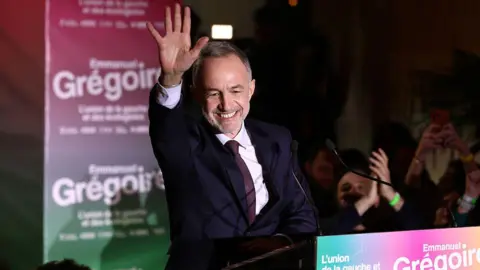
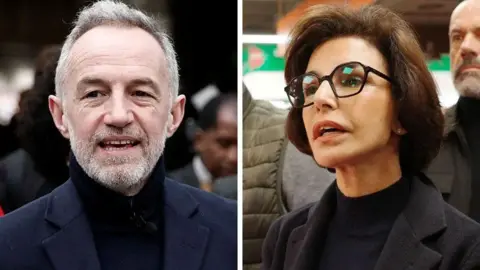
In Paris, Emmanuel Grégoire of the Socialist Party (PS) scored well in the first round, but among the qualifiers for round two is LFI's Sophia Chikirou. Grégoire has vowed not to make any pact with LFI but that sacrifice could cost him victory.
Opposing him is rightwinger Rachida Dati. She has vowed not to form a pact with the far-right Sarah Knafo, who scraped through to the second round, but without the Knafo votes, Dati is on a knife edge.
In the past the dilemma was confined to the right. RN was regarded as beyond the pale, so the centre-right faced hell and damnation on the few occasions it joined them in a tacit arrangement to keep out the left. But this year, the ostracism of the far-left LFI is a new feature of French politics.
Under its leader, Jean-Luc Mélenchon, LFI formed an alliance with the PS, Greens and Communists to give the left a strong showing in the last legislative election in 2024. But since then, the pact has unravelled. For many LFI opponents, the last straw was the murder of a far-right student in Lyon last month, allegedly by a far-left gang containing an LFI parliamentary assistant.
And then came what was interpreted as antisemitic joking by Mélenchon when in a speech he played with the pronunciation of Jeffrey Epstein - the disgraced, late US financier and sex-offender - apparently to emphasise the name's Jewishness.
All this makes impossible any formal alliance with LFI, which is why on Sunday evening PS leader Olivier Faure ruled out any national accord to join forces in next Sunday's second round.
Significantly though, Faure did not rule out local arrangements with LFI. And already in Toulouse the PS and LFI have announced they are merging their two lists in order to defeat the incumbent right-winger.
For the right, this all reeks of hypocrisy - and in the coming days the airwaves will be loud with cries of leftwing double standards. To which the left will reply: Clean out your own house and stop flirting with Fascists! If it sounds polarised, ill-tempered and fractious, that is because it is. In France as elsewhere, politics is increasingly determined by what happens on the outer fringes. If it is true of these municipal elections, how much truer it will be in next year's presidentials.