In brief
After Kenyan‑style mutiny in Niamey, Russia’s Africa Corps stepped in to rescue the junta’s Air Base 101, showing a new elite of Russian military support in West Africa. While Nigeria’s leaders claim protection for their governments, militant forces continue to target civilian areas, leaving the insurgency unresolved. Analysts note that Russia’s priorities – resource access, diplomatic clout and military presence – come at a cost to sustainability amid its war against Ukraine. The intervention underscores growing dependence on Moscow, while regional actors adjust their own security calculus. As Sahel governments withdraw from ECOWAS, the alliance’s resilience hinges on foreign partners with whom they can forge new ties.
Amid a mutiny seized Al‑agaani airport, Niger’s military junta handed the critical air base back to loyalists with help from Moscow’s Africa Corps. The intervention, publicised by Russia’s ambassador, helped the junta counter a violent takeover that threatened the country’s fragile stability. The move had a symbolic effect, announcing that the Nigerien leadership is no longer alone in the fight against threats at home.
The Africa Corps – distinct from the defunct Wagner mercenary group – remains under the Russian defence ministry’s direct control, sending 200 to 300 troops between Niger, Mali and Burkina Faso. Its task is to fight insurgencies, yet the recent mutiny proved it also safeguards the governments that host the corps. This dual role reveals Russia’s real‑time leverage over West African leaders who feel increasingly cut off from former colonial powers.
The security dilemma is two‑fold. On one side, jihadist attacks by al‑Qaida and Islamic state groups continue unabated. On the other, internal grievances among Niger’y soldiers stem from under‑equipping and unclear command lines. Analysts warn that the mutiny was a symptom of deeper concerns that Russia’s presence does not yet solve the insurgency, but it does grant the junta a safety buffer and a political lifeline.
Moscow’s policy is clear: establish anchors in politically unstable Sahel states that control valuable minerals – gold, uranium and other resources – while cultivating diplomatic allies to strengthen its global profile. The co‑operation deepens as leaders invest heavily in foreign recruitment, bringing new weapons and professional training to Niger’s elite. Yet such entanglements can backfire when campaigns become overstretched, especially against the background of the ongoing war in Ukraine where Russia’s supplies are stretched thin.
From a regional perspective, the Africa Corps’ presence shifts the security calculus of ECOWAS member countries and former colonial governments that maintain a military foothold in the Sahel. France, for instance, has withdrawn many troops while the new alliance of Sahel states quests for a new identity that rejects western interference but relies heavily on Russian assistance.
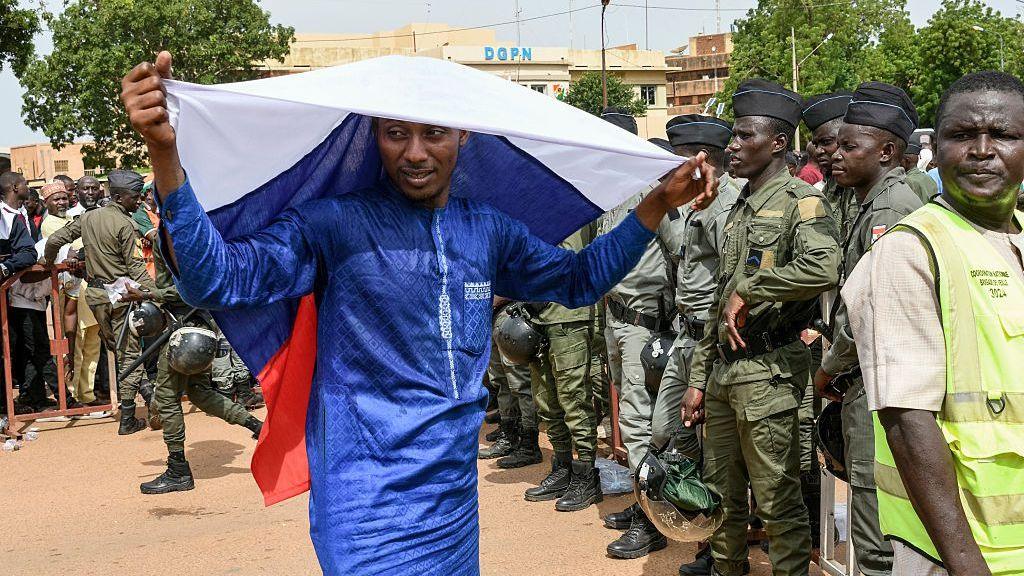
Despite this, local civilians and civilian groups remain ambivalent. They resent external intervention but also recognise the vital protection it delivers to their security apparatus. As Niger’s junta informs the public of the new partnership, the narrative of resistance against imperial equalities is reinforced, but with limited concrete advances on the ground.
While Russia may shield the Sahel governments for now, it has not supplied a long‑term strategy to address the persistent insurgency. The mutation of powers in northern Africa thus awaits fresh solutions – whether from the West, the United Nations or further Russian engagement – for a region still deeply torn by violence and political volatility.