In brief
BBC Verify has traced a Russian cargo vessel, the Mikhail Britnev, to a large convoy of military vehicles that entered Mali’s capital, Bamako, via Lomé. Satellite tracks show the ship left Baltiysk on 18 June, was escorted through the English Channel by a Russian warship, and returned to Togo two weeks later carrying trucks and armoured personnel carriers. The delivery reinforces the Kremlin’s support for Mali’s military government, which has faced a powerful Jihadist‑led offensive. Analysts say the shipment could enable Mali and Russian forces to launch counter‑attacks in the north, further cementing Russia’s African strategy despite sanctions. The move illustrates the complexity of enforcing sanctions when state actors maneuver through friendly ports and intermediaries.
BBC Verify traced the move of a Soviet‑era cargo ship, the Mikhail Britnev, as it travelled from Russia’s Baltiysk port to the Togo capital of Lomé, where it delivered a large convoy of trucks and armoured vehicles to the capital of Mali, Bamako.
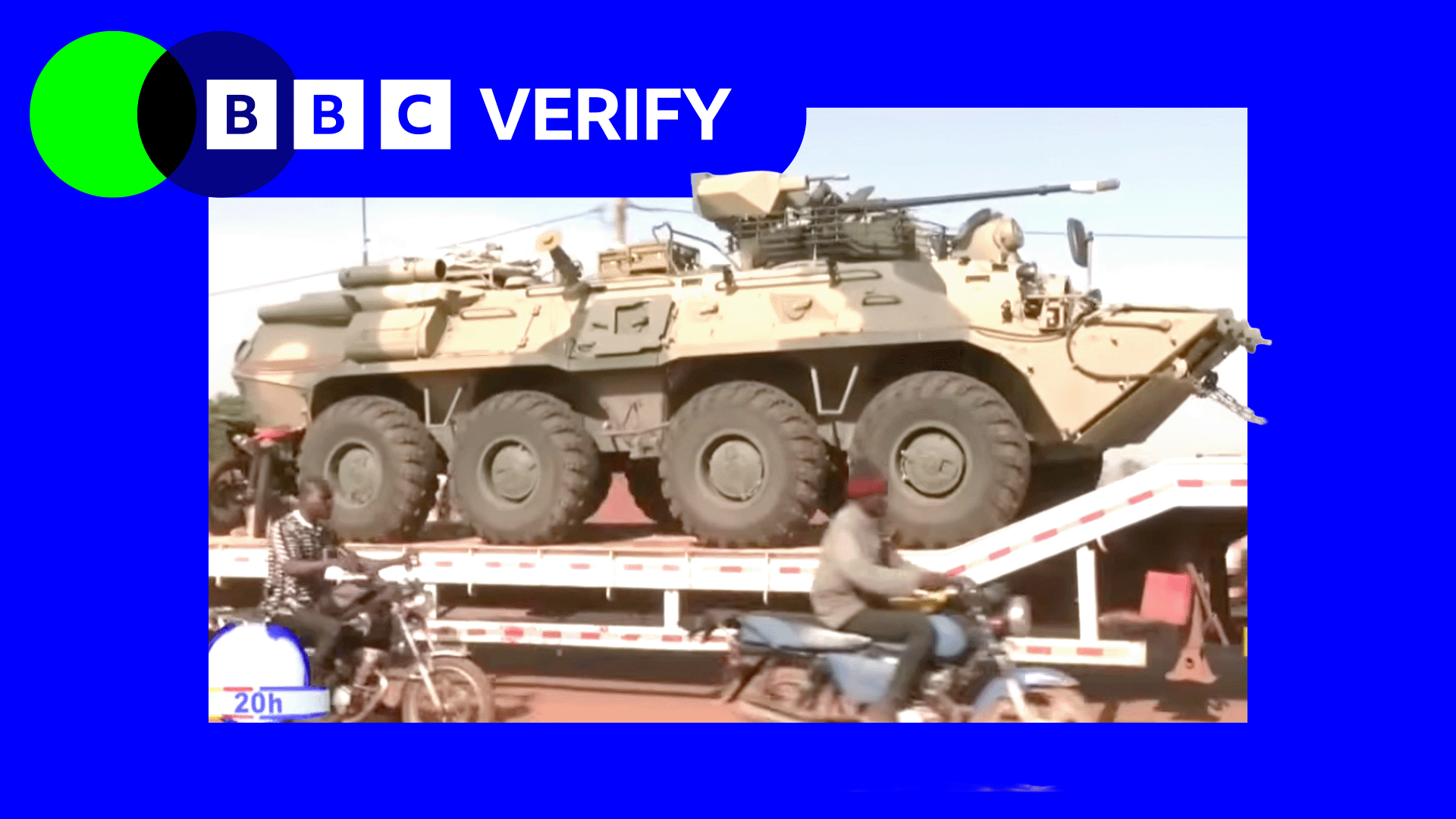
The footage released by Malian state TV on 25 July shows a column of military vehicles – including general‑purpose trucks, BTR‑style armoured personnel carriers and light infantry vehicles – being cross‑packed in the streets of Bamako. The convoy was seen to have come from Lomé, with satellite imagery suggesting the ships that carried the material entered Togo in the first week of July.
Ship‑tracking data confirms that the Mikhail Britnev left Baltiysk on 18 June, passed through the North Sea, entered the English Channel and was escorted by a Russian Ropucha‑class warship. The vessel switched off its transponder when it entered the English Channel and re‑activated it only after arriving at Lomé.
The sanctions on the ship were imposed by the United States in 2024, but the ship appears to have breached them by employing neutral ports and a covert route that was not monitored by shipping registries.
Mali’s military junta has struggled in recent weeks to stem the advance of a Jihadist‑led rebellion. The Kremlin’s continued provision of equipment, including this latest delivery, is seen as a move to shore up the junta’s battlefield capability. Experts say the surplus of vehicles may allow the allied forces to plan and launch new offensives in the North and reclaim territories ceded by rebels.
The shipment also illustrates a pattern of Russian arms logistics through Baltiysk, where previous vessels such as the bulk carrier Sabetta and an unnamed tanker have loaded military vehicles destined for West African allies. BBC Verify reports that these imports have occurred despite ongoing global pressure against Russia’s supply chain.
With the sanction‑defying shipment making global headlines, analysts at Janes Defence Intelligence, along with Charlie Werb of Aldebaran Threat Consultants, argue that the move strengthens Russia’s foothold in Africa. They note that Mali remains a strategic arena for the Kremlin’s Africa Corps, underpinning Moscow’s broader geopolitical ambitions in the region.
The incident underscores the challenges of enforcing sanctions when state actors collaborate with friendly governments and use masked shipping corridors to evade detection.