In brief
For the past weeks thousands of students have blocked schools in Paris and beyond, demanding better funding and a review of the education system. Prime Minister Sébastien Lecornu argues the demonstrations are being weaponised by the radical left, while activists claim they reflect deep‑seated economic frustrations. The protests have triggered a debate over France’s high public debt, ageing demographics and the balance of power between Paris and regional authorities. Analysts warn that the current electoral climate may be amplifying tensions, but many observers insist that the dissatisfaction of young people signals a broader socio‑political crisis. The outcome will shape France’s political future, its fiscal policy and the broader stability of the eurozone.
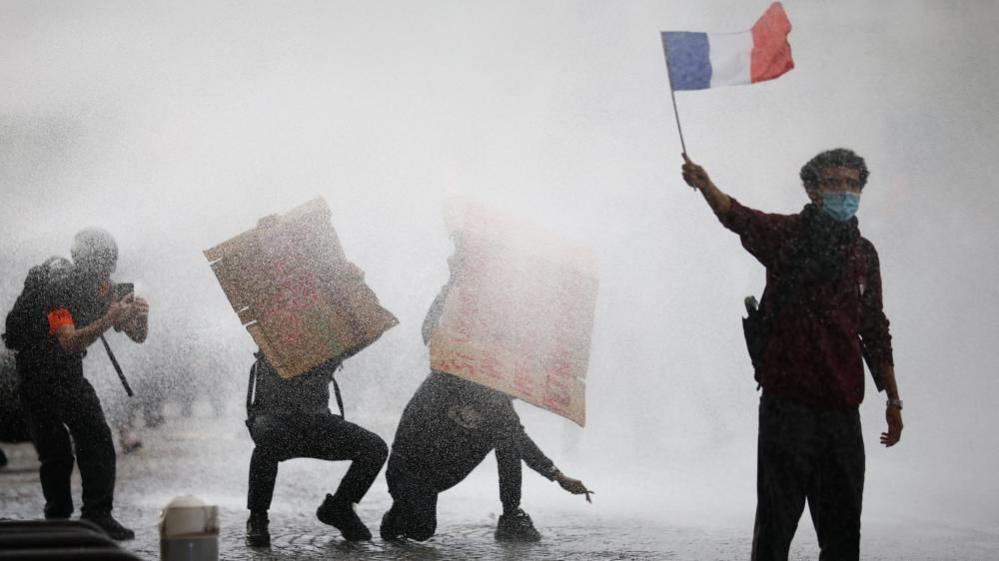
For the past three weeks a wave of student protests has swept across Paris, from the high schools of the 3rd district to the halls of the Sorbonne. Students were seen blocking entrance gates, and in some areas, families joined them to protect the children and ensure their safety.
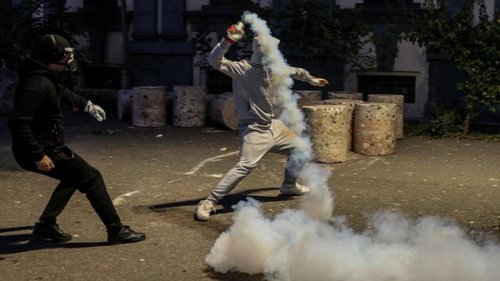
The national debate has turned sharply political. Prime Minister Sébastien Lecornu has warned that the radical left may be weaponising the protests for electoral gain, echoing his earlier accusation that the high‑school movement is a "movement of urban violence." He said the protests could be manipulated because the next presidential election is only a few months away.
The left‑wing group France Insoumise (LFI) has been accused of encouraging the demonstrations and then condemning any violence. Charismatic politician Jean‑Luc Mélenchon has found vocal support amid the street marches, with chantings of "Mélenchon for President!" echoing the echoing streets. Mélenchon himself points to promises of a wealth tax, a lower voting age and a genuine presence in schools as reasons for this support.
Opposition voices are sharply contrasting those positions. Marine Le Pen proposes cutting France’s €11bn subsidy to the European Union, arguing that the country should prioritize national sovereignty, while other right‑wing commentators stress the need to preserve public services without large tax hikes.
Economists warn that France faces a steep fiscal challenge, with public spending at about 57% of its GDP and age‑related pension costs putting further pressure on the budget. Anne‑Laure Delatte, a researcher at the Paris Dauphine University, says the only way for France to escape the debt trap is to shift from a presidentially dominated Fifth Republic to a more consensus‑oriented system that gives parliament greater influence.
At the local level, regional politicians argue that de‑centralising power could solve many of the education and budgetary woes. Senior senators such as Anne‑Catherine Loisier insist that local authorities must receive more control over funding so that schools meet local needs without national interference.
The protests are also a reminder of France’s long tradition of civic engagement. From the student uprisings of 1968 to today’s demonstrations, the French public has long mixed demands for social justice with direct action. Children of the 1968 movement, like Lola’s mother Sandrine, see themselves as heirs to that legacy and call for immediate reform rather than waiting for the presidential race.
Whether the protests are a sign of genuine systemic issues or a calculated political tool remains the core of the debate. Meanwhile, the upcoming elections may amplify the frustration of those who see their everyday lives as constrained by economic hardship and a political structure that is perceived as unresponsive. As the country watches, the outcome could signal a shift in France’s political architecture and its role within the European Union.