Tennessee officials called off the execution of Tony Carruthers on Thursday after medical personnel spent over an hour attempting to establish a backup intravenous line, a failure that sparked immediate debate about the reliability of lethal injection protocols. Governor Bill Lee announced the state would not attempt another execution for at least a year, citing the complexities of the procedure.
**State Perspective**: Tennessee officials maintained protocol compliance, noting that primary IV access was established but a backup vein could not be found as required by state law. 'We prioritized human dignity and medical safety,' said a Department of Corrections spokesperson. The state has faced scrutiny over drug testing failures in past executions, with an independent review revealing none of seven inmates executed since 2018 had undergone proper chemical testing. The pause reflects a pragmatic approach to procedural integrity rather than policy reconsideration.
**Legal Advocacy View**: The American Civil Liberties Union attorney representing Carruthers, Maria DeLiberato, described the ordeal as 'horrible to watch,' noting he 'wincing and groaning' during the failed attempts. 'This wasn't an execution—it was an experiment on a human being,' she said, stressing Carruthers' mental health claims and lack of physical evidence in his 1994 conviction. The ACLU argues the case raises fundamental questions about due process: three victims were killed in 1994 without DNA evidence, and Carruthers was forced to represent himself after complaining about court-appointed lawyers. 'The state's reliance on testimony alone creates dangerous gaps in accountability,' DeLiberato stated.
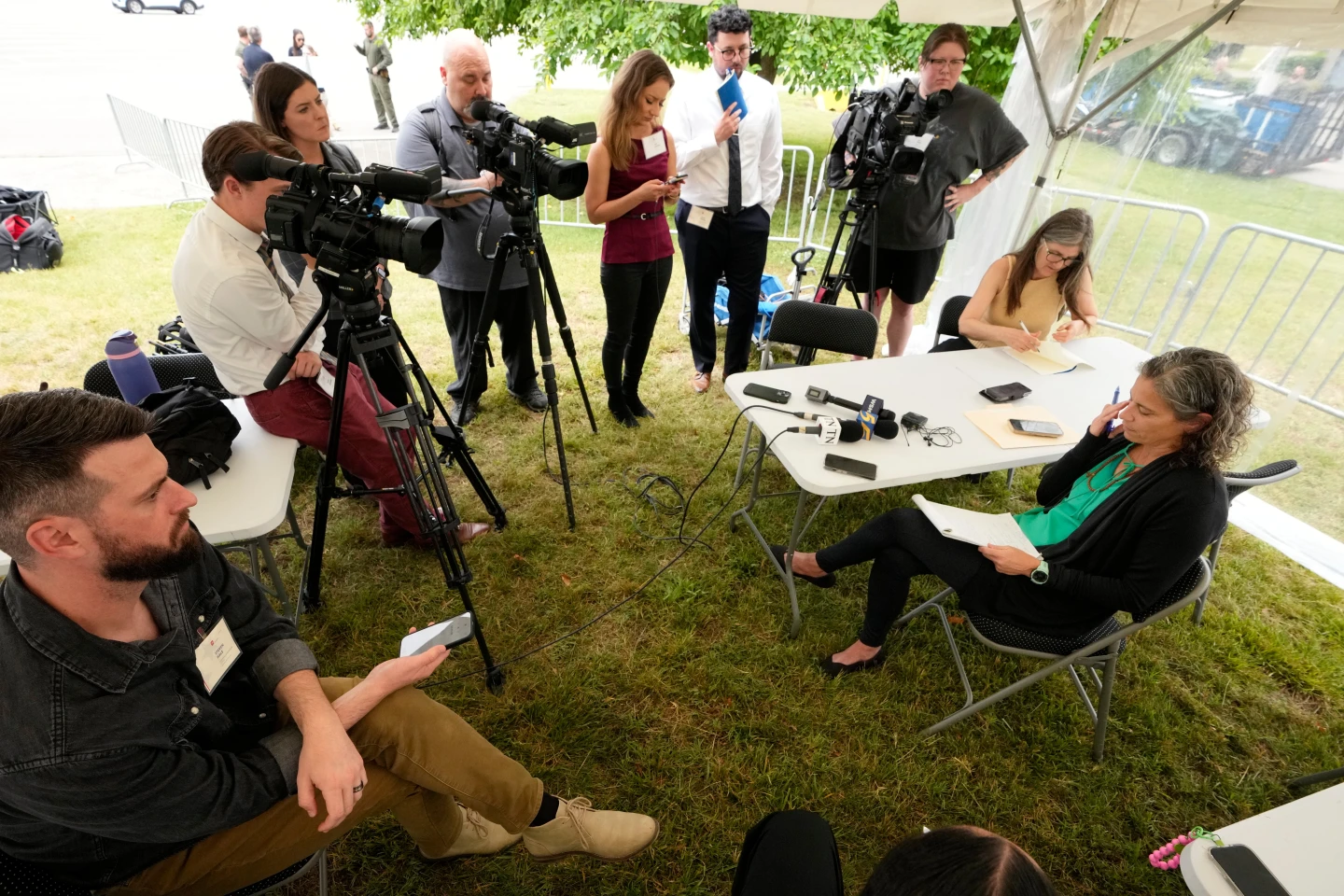
**Media and Public Access Debate**: The failure to establish IV lines exposed tensions over media observation. State law prohibits witnesses from seeing the IV insertion, a rule contested by news organizations. An Associated Press journalist reported hearing 'groans through a crack' beneath the execution chamber door during the failed procedure. 'We're fighting for transparency in one of the most consequential procedures in our legal system,' said a media coalition spokesperson. Critics argue the opaque process fuels distrust, while proponents maintain security concerns outweigh journalistic rights.
**National Context**: Tennessee's pause echoes a growing pattern across states. Since 2009, six executions have been halted due to IV complications: Alabama paused Kenneth Eugene Smith's execution in 2022 after eight attempts, while Idaho Governor Brad Little recently signed a bill making firing squads the state's primary execution method following Thomas Creech's failed attempts. The U.S. executed 47 prisoners in 2025—the highest since 2019—driven by Florida's 19 executions. However, legal challenges are mounting: the Death Penalty Information Center reports 15 states have pending cases challenging execution protocols.
**Broader Implications**: Carruthers' case underscores systemic flaws in capital punishment. His 1994 convictions relied on testimonies of people claiming he confessed, with no physical evidence linking him to the murders. Critics highlight that the state's new execution protocol—activated after a three-year pause due to drug testing failures—was rushed without addressing underlying issues. Meanwhile, mental health advocates argue Carruthers' competence for execution remains in question, citing his history of psychiatric issues.
**Political Realignment**: The incident reveals shifting dynamics in death penalty debates. Republican-led states like Tennessee are increasingly facing pressure to improve execution protocols, while Democratic states have expanded moratoriums. The National Association of Criminal Defense Lawyers recently urged states to adopt alternatives to lethal injection, noting IV complications have affected 23% of execution attempts since 2019. Yet legal scholars warn that legislative solutions may not address the inherent human costs.
**Future Outlook**: With the U.S. executing at a record pace but facing unprecedented legal challenges, Carruthers' case may signal a turning point. The governor's one-year pause gives states time to reassess procedures, though advocates warn this delay risks prolonging the suffering of inmates like Carruthers. 'This isn't about one failed execution—it's about a system that's broken,' said an execution rights reformer. 'The next step must be transparency and reform, not more technical fixes.'
As the death penalty debates intensify, Tennessee's decision offers a rare window for reflection. Yet with 10 more scheduled executions in 2025—including four in Florida this week—the nation's reliance on lethal injection remains as contentious as ever. The state's one-year pause may prove more than a temporary reprieve for Carruthers, but for the death penalty movement, it could be the beginning of a long struggle to redefine justice.}
**State Perspective**: Tennessee officials maintained protocol compliance, noting that primary IV access was established but a backup vein could not be found as required by state law. 'We prioritized human dignity and medical safety,' said a Department of Corrections spokesperson. The state has faced scrutiny over drug testing failures in past executions, with an independent review revealing none of seven inmates executed since 2018 had undergone proper chemical testing. The pause reflects a pragmatic approach to procedural integrity rather than policy reconsideration.
**Legal Advocacy View**: The American Civil Liberties Union attorney representing Carruthers, Maria DeLiberato, described the ordeal as 'horrible to watch,' noting he 'wincing and groaning' during the failed attempts. 'This wasn't an execution—it was an experiment on a human being,' she said, stressing Carruthers' mental health claims and lack of physical evidence in his 1994 conviction. The ACLU argues the case raises fundamental questions about due process: three victims were killed in 1994 without DNA evidence, and Carruthers was forced to represent himself after complaining about court-appointed lawyers. 'The state's reliance on testimony alone creates dangerous gaps in accountability,' DeLiberato stated.
**Media and Public Access Debate**: The failure to establish IV lines exposed tensions over media observation. State law prohibits witnesses from seeing the IV insertion, a rule contested by news organizations. An Associated Press journalist reported hearing 'groans through a crack' beneath the execution chamber door during the failed procedure. 'We're fighting for transparency in one of the most consequential procedures in our legal system,' said a media coalition spokesperson. Critics argue the opaque process fuels distrust, while proponents maintain security concerns outweigh journalistic rights.
**National Context**: Tennessee's pause echoes a growing pattern across states. Since 2009, six executions have been halted due to IV complications: Alabama paused Kenneth Eugene Smith's execution in 2022 after eight attempts, while Idaho Governor Brad Little recently signed a bill making firing squads the state's primary execution method following Thomas Creech's failed attempts. The U.S. executed 47 prisoners in 2025—the highest since 2019—driven by Florida's 19 executions. However, legal challenges are mounting: the Death Penalty Information Center reports 15 states have pending cases challenging execution protocols.
**Broader Implications**: Carruthers' case underscores systemic flaws in capital punishment. His 1994 convictions relied on testimonies of people claiming he confessed, with no physical evidence linking him to the murders. Critics highlight that the state's new execution protocol—activated after a three-year pause due to drug testing failures—was rushed without addressing underlying issues. Meanwhile, mental health advocates argue Carruthers' competence for execution remains in question, citing his history of psychiatric issues.
**Political Realignment**: The incident reveals shifting dynamics in death penalty debates. Republican-led states like Tennessee are increasingly facing pressure to improve execution protocols, while Democratic states have expanded moratoriums. The National Association of Criminal Defense Lawyers recently urged states to adopt alternatives to lethal injection, noting IV complications have affected 23% of execution attempts since 2019. Yet legal scholars warn that legislative solutions may not address the inherent human costs.
**Future Outlook**: With the U.S. executing at a record pace but facing unprecedented legal challenges, Carruthers' case may signal a turning point. The governor's one-year pause gives states time to reassess procedures, though advocates warn this delay risks prolonging the suffering of inmates like Carruthers. 'This isn't about one failed execution—it's about a system that's broken,' said an execution rights reformer. 'The next step must be transparency and reform, not more technical fixes.'
As the death penalty debates intensify, Tennessee's decision offers a rare window for reflection. Yet with 10 more scheduled executions in 2025—including four in Florida this week—the nation's reliance on lethal injection remains as contentious as ever. The state's one-year pause may prove more than a temporary reprieve for Carruthers, but for the death penalty movement, it could be the beginning of a long struggle to redefine justice.}