In brief
The rise of drone warfare among jihadist groups in West Africa is prompting alarm among security analysts. Acled reports that over 69 drone strikes have been executed by an al-Qaeda affiliate in Burkina Faso and Mali since the beginning of 2023. Despite government restrictions, jihadists are acquiring drones through smuggling. Analysts indicate that drone strikes enhance operational efficiency and pose a serious threat to regional stability.
Jihadist groups are increasingly carrying out drone strikes in West Africa, raising alarm that they are building the capacity to wage a war from the skies.
A leading violence monitoring organization, Acled, has recorded at least 69 drone strikes by an al-Qaeda affiliate in Burkina Faso and Mali since 2023, while two Islamic State (IS) affiliates have carried out around 20, mostly in Nigeria, which has been battling numerous insurgent groups for almost 25 years.
The latest drone attack took place in Nigeria's northeastern Borno state on January 29, when jihadists executed a two-pronged assault—using both armed drones and ground fighters—on a military base. The military reported that nine of its soldiers were killed in the assault by the Islamic State of West Africa Province (Iswap), identified by Acled as the most prolific IS African affiliate in drone warfare.
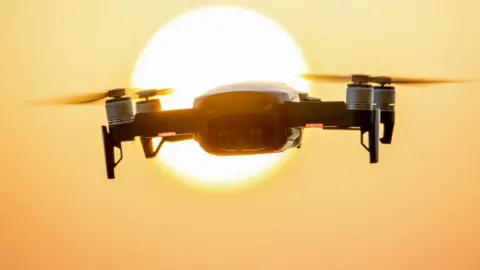
The jihadists have been utilizing commercially available, relatively inexpensive quadcopter drones rigged with explosives, also leveraging them for reconnaissance and surveillance missions to plan ground attacks, according to Acled senior Africa analyst Ladd Serwat.
Despite Nigeria's government maintaining strict controls on the import of commercial and hobby drones and prohibiting their unregistered use, jihadists have accessed these devices via smuggling networks across the region's porous borders, stated Malik Samuel, a Nigeria-based researcher at the Good Governance Africa think tank.
The growing use of armed and surveillance drones by violent extremist groups in the Sahel and Lake Chad region is deeply concerning, marking a significant shift, security analyst Audu Bulama Bukarti noted. Drones facilitate lower attack costs, minimize risks for militants, and allow strikes on military targets that were previously challenging to reach.
Since 2024, Iswap has reportedly conducted 10 drone strikes across northeastern Nigeria, northern Cameroon, southern Niger, and southern Chad—countries affected by the Nigerian insurgency. Additionally, the Islamic State of Sahel Province (ISSP) has executed similar numbers of drone attacks in West Africa.
In its latest attack, ISSP targeted the international airport in Niger's capital, Niamey, and nearby military bases, also on January 29, resulting in four military personnel injuries and the deaths of 20 assailants.
According to Serwat, various reports suggest ISSP might have employed mortars and RPGs, with indications that they also utilized explosive-laden drones, marking the first known drone attack of its kind in Niger.
The al-Qaeda affiliated Jama'at Nusrat al-Islam wal-Muslimin (JNIM) has emerged as the most active jihadist group using drones, having conducted 69 strikes within Mali and Burkina Faso, and even one into Togo.
JNIM's drone program has rapidly advanced, connecting networks across Mali and Burkina, with reports suggesting they are employing first-person view (FPV) drones used for real-time surveillance to deliver improvised explosive devices onto military positions in towns like Djibo.
As jihadists further adapt and evolve their combat strategies, there is significant concern that drone attacks might not only reduce casualties among their ranks but also enhance their effectiveness in targeting operations. Analysts emphasize that to counter these emerging threats, West African forces must engage in preemptive measures, including the destruction of drone assembly sites and procurement of anti-drone technology.
If left unchecked, these developments in drone warfare could elevate jihadists' operational capabilities and carry out high-impact assaults that exacerbate instability across West Africa.