Amid evolving threats in Europe, particularly following Russia's invasion of Ukraine, NATO member states are reassessing their military recruitment strategies. The landscape of military service is once again shifting, with nations reverting to some form of national service, either mandatory or voluntary.
Historically, large conscripted armies were commonplace in NATO countries during the Cold War, but their numbers have steadily declined. However, the ongoing conflict has reignited discussions around military preparedness and recruitment.
This article explores how various European countries are structuring their military service obligations:
Conscription in NATO Countries
Currently, nine NATO nations maintain mandatory conscription, including Denmark, Estonia, Finland, Greece, Latvia, Lithuania, Norway, Sweden, and Turkey. In Turkey, military service is compulsory for males aged 20 to 41 for up to a year, while Norway has extended conscription to both genders.
Croatia is set to reintroduce conscription for young men in 2025. Conversely, countries like the UK and Spain field professional armies without mandatory service. The UK's unique feature permits recruitment of individuals as young as 16.
Iceland remains an anomaly, lacking regular military forces, and instead relies on its Coast Guard for defense tasks.
Emphasis on Voluntary Service
On the other hand, numerous countries are pivoting towards voluntary military service. Belgium has initiated a scheme inviting 17-year-olds to earn up to €2,000 a month by joining the military. Meanwhile, the Netherlands has implemented a similar program aimed at bolstering its professional military. Poland, which boasts one of NATO's largest armies, has announced plans for large-scale military training for male civilians.
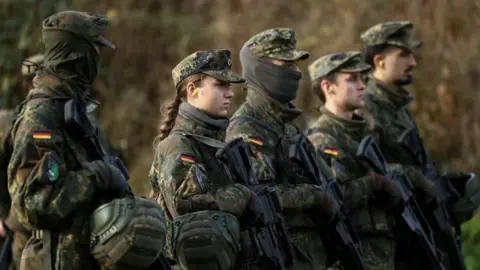
Germany, which ended its mandatory service a decade ago, is also exploring the option of voluntary military service amidst concerns about future security. Current legislators there are contemplating reinstating compulsory service if the number of volunteers does not meet operational needs.
In France, a new program will allow young volunteers to serve for ten months, receiving monthly compensation as part of the effort to enhance military readiness.
The Wider European Context
Outside NATO, countries like Austria and Cyprus maintain compulsory military service. In contrast, the Republic of Ireland and Malta have entirely professional military structures.
Recent public opinion polls indicate a significant divide in sentiments regarding military service, with younger generations exhibiting increasing resistance to mandatory conscription.
As Europe grapples with military recruitment and defense strategies, the balance between conscription and professional service remains a pivotal discussion point in the context of regional security.