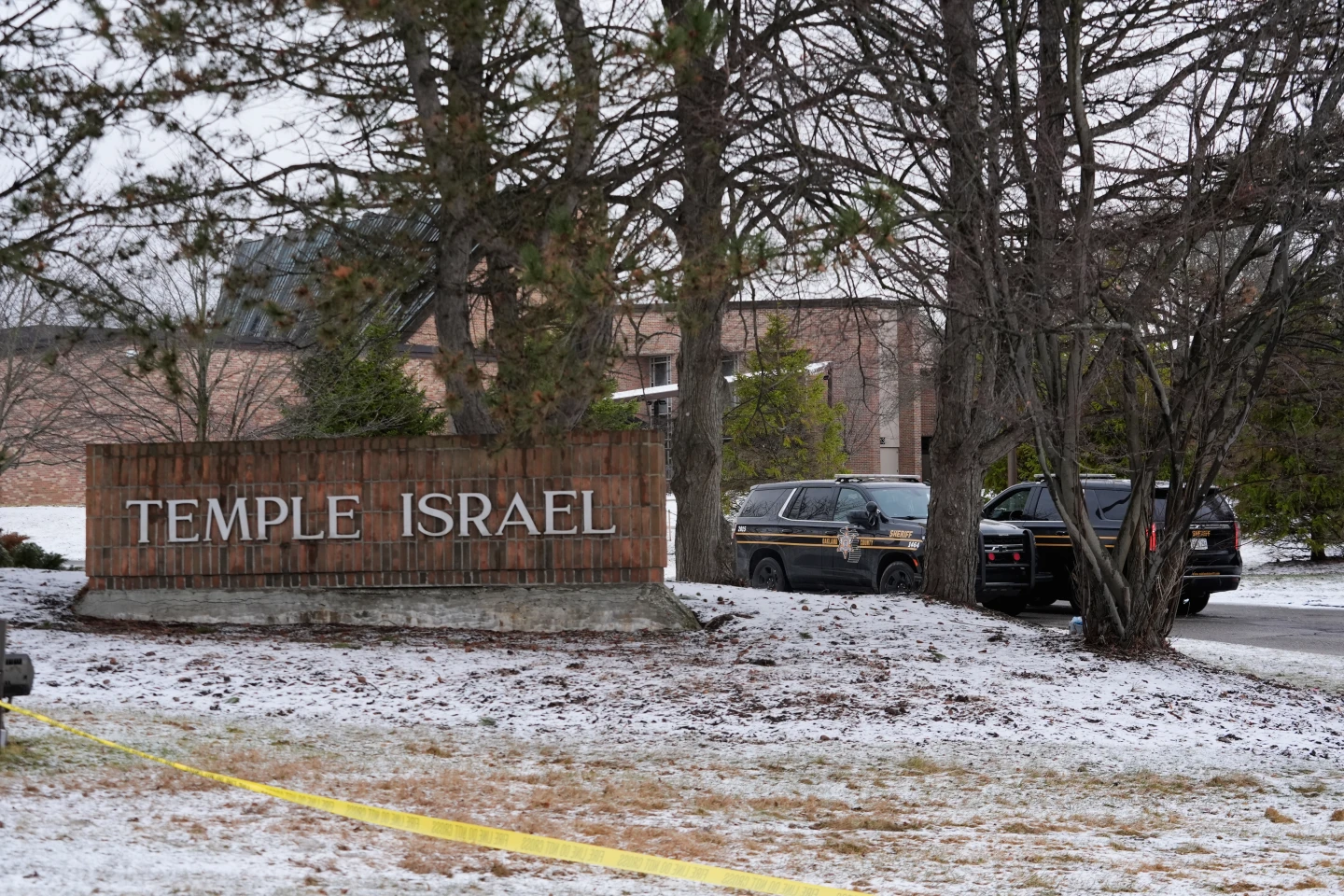
The emotional landscape for many U.S. Jews is currently marked by turmoil as they contend with an increase in antisemitic attacks and divisions over Israel's governmental policies in the Middle East. Notably, a recent attack involving a man who drove a truck into a Michigan synagogue reveals the dangerous conflation of political grievances and ethnic targeting.
Rabbi Rick Jacobs, President of the Union for Reform Judaism, denounced the idea of holding Jewish communities accountable for the actions of Israel, asserting that such actions resemble antisemitism rather than legitimate political protest. He stated that American Jews should not be scapegoated for the policies of a foreign government.
Jewish commentator Peter Beinart echoed these sentiments, condemning the Michigan attack while simultaneously criticizing the Israeli government’s policies regarding Gaza and the West Bank. This highlights how internal conflict over Israel's actions complicates the Jewish community's unified stance against antisemitism.
Security and Solidarity
The need for heightened security measures at synagogues is growing, costing communities over a million dollars annually. Events like anti-Israel protests have incited fear and incidents of violence that disproportionately affect Jewish institutions.
Despite the fear, many in the community assert their right to express a connection to Israel. A love for Israel is intrinsic to Jewish belief, stated a leader from Chabad-Lubavitch, who noted a rise in community solidarity following the attacks.
Complexities of Identity and Advocacy
As discussions surrounding Israel’s policies intensify, the distinction between anti-Zionism and antisemitism poses considerable challenges. Rabbi Elliot Cosgrove warned that the expectations placed upon Jews to defend or justify Israel’s actions foster an uncomfortable reality where dissent is often met with backlash.
As American Jewish voices grapple with their collective identity and the reality of international relations, they continue to advocate for a separation between political criticism and ethnic hostility, asserting that the two should never merge into scapegoating or violence.