In brief
In a recent push along the eastern Donbas front line, Ukrainian forces have reclaimed 277 sq km and forced Russian troops to retreat, a development seen as a breakthrough in Operation Vivaldi. The advance has been made possible by a mix of satellite‑based communications via Starlink’s military version, Starshield, and a hybrid of unmanned air and ground vehicles that can interdict Russian drones. However, days after the offensive ended, Kyiv reported that U.S. sanctions had unexpectedly limited its use of Starlink, sparking concern among troops for their future defensive capabilities. Despite the setback, morale remains high among Ukrainian soldiers who credit the operation with renewing hope for victory. Russian official statements have been muted, with defence briefings only noting the need to “repel attacks” in the Lyman region.
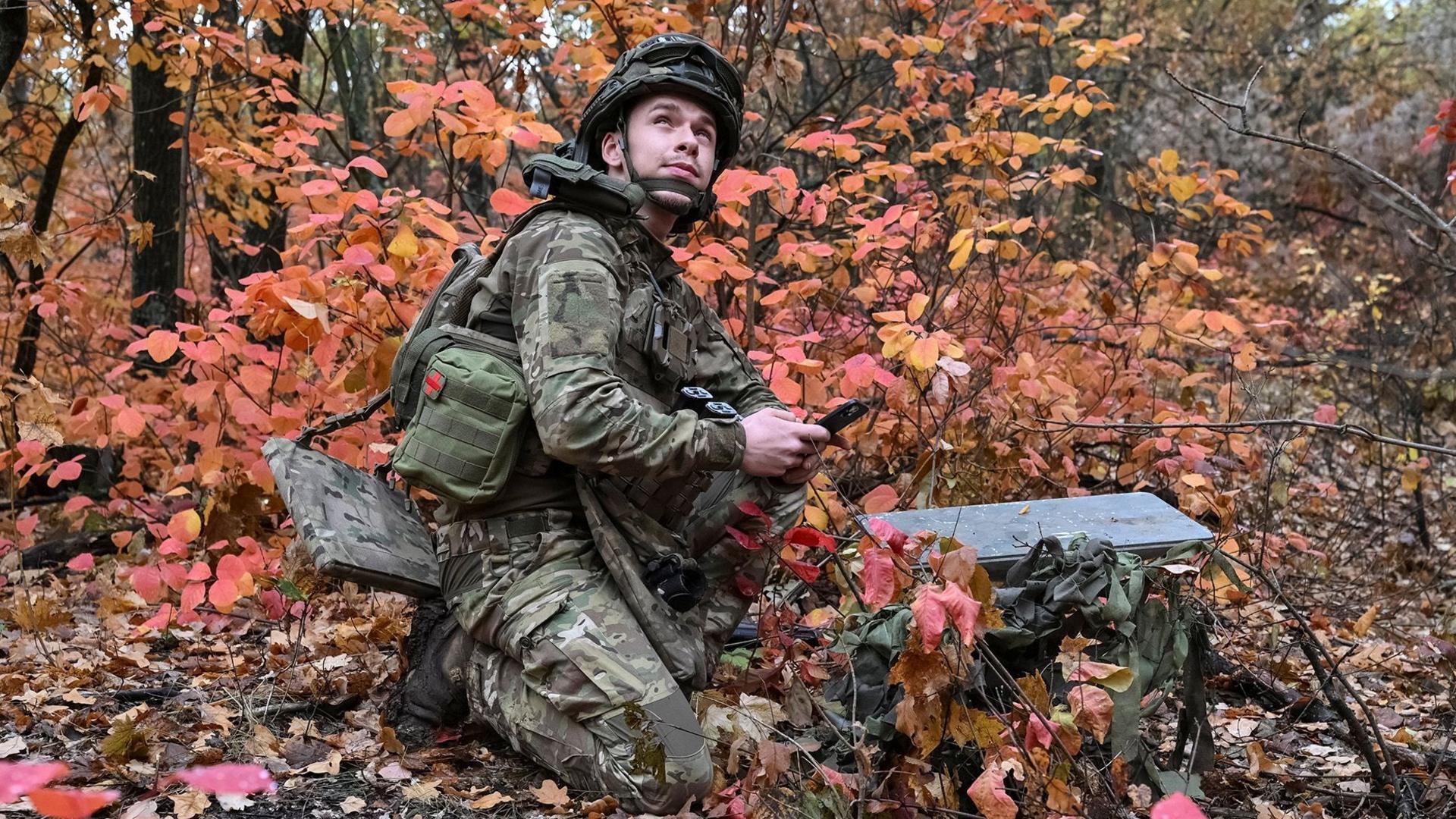
A Russian drone suddenly flew across the screen of a live‑view system inside a Ukrainian bunker, startling the commanders keeping watch over the battlefield. One of them, cigarette hanging from his lips, immediately ordered an interceptor drone to shoot the spotter down, warning the soldiers below of the danger even as they walked across open ground.
The incident is part of a broader counter‑offensive, Operation Vivaldi, for which Ukraine claims to have liberated 277‑sq‑km of the Donbas since the start of its three‑month push. The operation is named after the four‑season structure of the offensive, each stage akin to a movement in an Italian concerto, and is designed to blunt a Russian pincer meant to encircle key Ukrainian strongholds.
Key to the Ukrainian success has been the integration of Starshield, the military version of Elon Musk’s Starlink satellite network, which provides near‑real‑time broadband coverage across the front. Reporters captured a moment when a net‑laden Ukrainian drone descended on a Russian reconnaissance aircraft, raising the question of whether the stripe of restricters imposed by the United States had already begun to erode that advantage.
“Some of our numbers are getting louder,” says Commander Phoenix of the Revenge Brigade’s Silver Trinity unit, noting that he and his men spent months in preparation for an assault that demanded a complete mental shift from defending to advancing.
Drone‑based tactics have also been a moral boost for Ukrainian troops. One infantryman, known as Dealer, says he feels “strong, but good to finally be heading home.” "It’s an impressive operation. Over three months, we moved positions four times," he says with a quiet pride.
The conflict remains highly digital. From aerial reconnaissance to ground‑level command and even the delivery of supplies and evacuations, each phase relies on a continuous data-chain, only rooted in the presence of soldiers in the trenches. In a village occupied since 2025, the last remaining resident, 61‑year‑old Volodymyr Zamota, describes the devastation and the hope that new Ukrainian gains, including the “bridgehead” granted by the operation, may provide a springboard for future success.
The Ukrainian response has been one of angry consternation when the U.S. steps in to restrict Starlink. NASA, U.S. intelligence and Kyiv officials are presently negotiating how to keep communications and drone‑control open as Russian air power continues to threaten civilian infrastructure. Despite geopolitical friction, morale remains strong among the troops, who view Operation Vivaldi as the turning point that could lead Ukraine to eventual victory.