In brief
As Nicolás Maduro faces capture, faith leaders in Venezuela and the U.S. respond with calls for prayer and reflection. While many express joy about his ouster, there is an underlying anxiety about the future and the implications for Venezuelans abroad, particularly concerning legal protections. The church emerges as a crucial institution for promoting reconciliation and guiding the community through these turbulent times.
Faith leaders who minister to Christians in Venezuela and the Venezuelan diaspora in the United States are urging prayers for peace as they attend to congregations roiled by uncertainty and high emotions following the U.S. capture of deposed leader Nicolás Maduro.
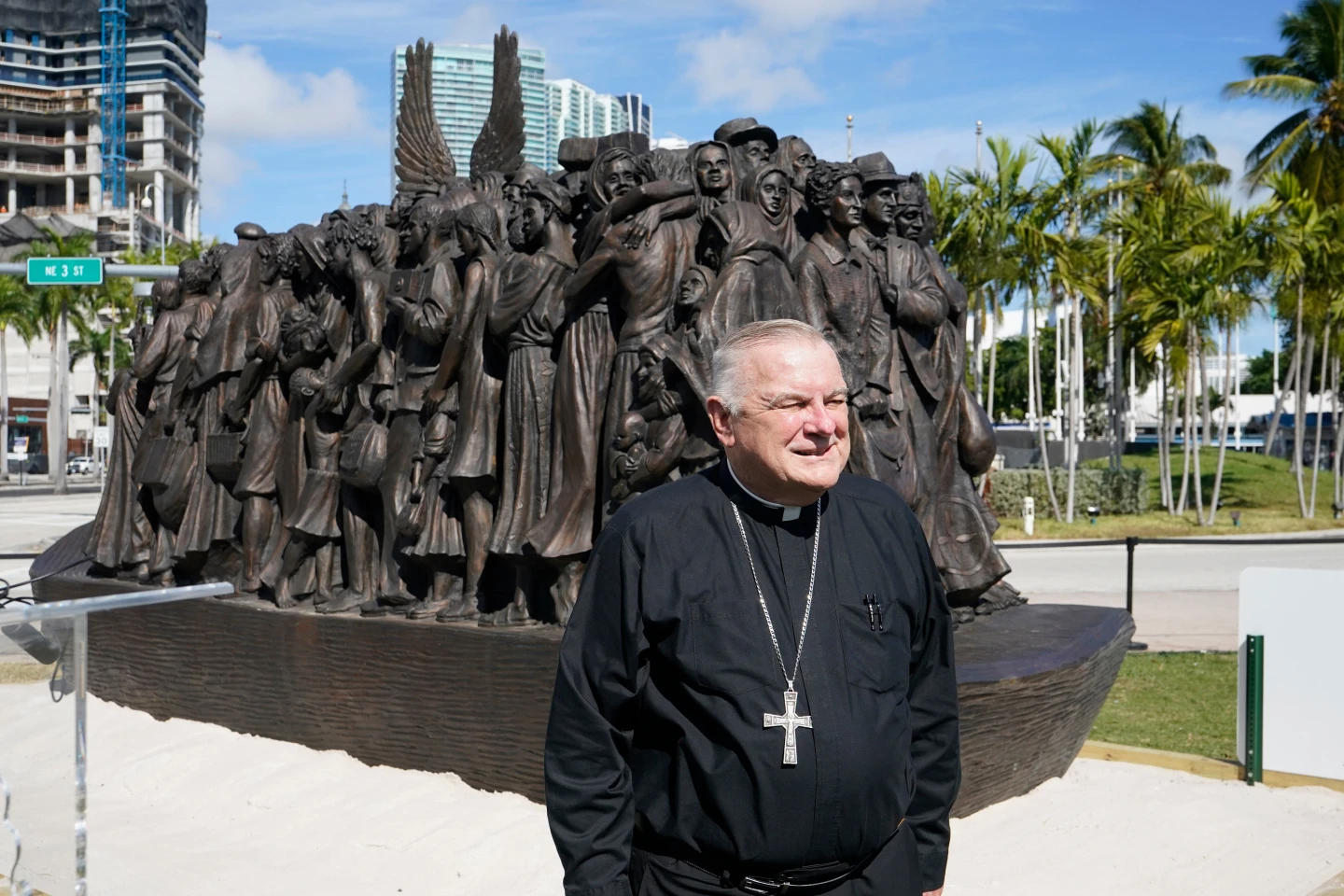
In Venezuela, initial statements from the Catholic bishops’ conference and the Evangelical Council of Venezuela were cautious, appealing for calm and patience, while many pastors in the diaspora welcomed Maduro’s ouster. The Catholic archbishop of Miami, who ministers to the largest Venezuelan community in the U.S., said there is an anxiousness about what is next, but he believes the church has a key role to play in helping the Catholic-majority country move forward.
About 8 million people have fled Venezuela since 2014, settling first in neighboring countries in Latin America and the Caribbean. After the COVID-19 pandemic, they increasingly set their sights on the United States, walking through the jungle in Colombia and Panama or flying to the U.S. on humanitarian parole with a financial sponsor.
Many have settled in South Florida, where they make up the country’s biggest Venezuelan community. Community members took to the streets waving flags in celebration after Maduro and his wife were captured in a U.S. military operation on Saturday.
But some have mixed feelings, Miami Archbishop Thomas Wenski said. Since the start of February, the Trump administration has ended two federal programs that together allowed more 700,000 Venezuelans to live and work legally in the U.S.
“People are happy because Maduro is out, but there’s still a lot of uncertainty,” Wenski told The Associated Press in a telephone interview. “As far as for those who are here in this country that have lost their temporary protective status, they’re anxious about returning unless there is a real change of the political and social situation in the country.”
Amid the rising uncertainty in Venezuela, interim President Delcy Rodríguez has taken the place of Maduro and offered to collaborate with the Trump administration in what could be a seismic shift in relations between the adversary governments.
Wenski said he hopes conditions for the Catholic Church in Venezuela improve now that Maduro has been ousted. “There have been over the years great tensions between the Maduro and Chavez regimes with the Catholic Church,” said Wenski, referring to Maduro’s predecessor, Hugo Chávez. “And still, in Venezuela, the church is perhaps the only institution that is independent of the government, that can speak quite courageously about the situation in the country.”
In Doral, a Miami suburb of 80,000 that has been nicknamed “Little Venezuela” or “Doralzuela” because of its large Venezuelan population, many prayed for the future of their native country during Sunday services a day after Maduro was captured. The Rev. Israel Mago, the Venezuelan born-pastor of Our Lady of Guadalupe in Doral, told worshippers to pray for “a fair and peaceful transition in Venezuela, so peace and justice can reign.”
At the end of the service, he invited the congregation to join him in a special afternoon vigil to pray for justice in their countries of origin, especially, he said in Venezuela, Cuba, and Nicaragua, where human rights advocates, exiled priests, and the U.S. government say the Nicaraguan government is carrying out a crackdown on religion.
In Philadelphia, members of the Venezuelan community gathered for a special Sunday service at the Cathedral Basilica of Saints Peter and Paul. Many carried Venezuelan flags and prayer beads or wore jerseys of the national soccer team. The gathering was organized by Casa de Venezuela and other Venezuelan nonprofits in the U.S.
As a baptized but nonpracticing Catholic, she still felt compelled to pray for her country in a service that she described as emotional. “This was a gathering to reaffirm our hope, our faith, to call on tranquility and calm. And I think the house of God, whichever religion it might be, is the right place,” she said in Spanish. Most of her family, she said, has been living abroad across the world, from “Japan to Colombia,” due to the political and economic crises in Venezuela. “I’m convulsed; I have mixed feelings. It was tough seeing our country being bombed. But it was necessary to remove Maduro for his drug crimes and human rights violations,” she said.