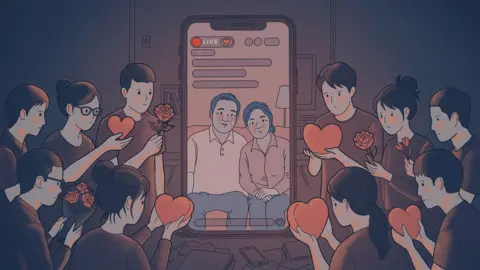
In Shanghai, Vincent Zhang, a 33‑year‑old web developer, often reaches for his phone during meals not to check work but to listen to a virtual child‑care routine hosted by a middle‑aged couple on Douyin.
The pair, known on the platform as Pan Huqian and Zhang Xiuping, have a following of nearly two million. They act as “virtual parents,” sending soft‑spoken messages asking whether Vincent is tired from work and study, and reassuring him that he has already endured a lot. Their videos, which feature them cooing and comforting in front of the camera, have become a virtual source of parental affection for many young Chinese.
Vincent explains that his real parents never say he is good enough. He says, "They never soften their criticism; they saw me as a labour‑force and not a kid who needs encouragement." Instead, the online couple ask him, "Are you happy today?" The relief comes from the digital warmth that he feels his physical family cannot provide.
Pan says he himself grew up under different circumstances. At 14 he left home to support a paralysed mother, and his Chinese parents had zero words of encouragement. He now creates his content with the intention of building a nurturing atmosphere for his daughter, who often appears in the couple’s videos. He sees the interference of corporate sponsorships as a side effect of the huge popularity and commercial success of these vlogs.
The phenomenon reflects wider tensions in China. Young people of the post‑reform generation grew up with the promise of stability, but today a sluggish economy and high youth unemployment rates have pushed many into burnout. State media now urges young people to practice traditional filial piety, but many, like Vincent, find strict parental expectations bruising rather than motivating.
Among those who feel the weight of “gourd soup literature,” a meme style that exaggerates parental criticism, Zhao Xuan, 28, turned to humour, turning the hard lessons into jokes. She says she has muted her family group chat and now uses memes to cope, believing that laughter can dilute the negativity of constant criticism.
Vincent’s comfort in virtual parenting underscores the growing craving for a less pressured family dynamic. He admits that these videos sometimes feel like algorithm‑driven content, but still offers a comparatively gentle environment to reflect on his own life.