In brief
Volkswagen’s board confirmed a plan to cut an additional 50,000 jobs, bringing total planned reductions to 100,000 by 2030. The German automaker, which owns brands such as Audi, Porsche and Skoda, is also weighing the future of four major German plants with excess capacity. Investors reacted positively, with shares rising about 7% on the announcement. The move follows declining sales, especially in China, and intensifying competition from Chinese EV makers. German union officials say VW is seeking fair solutions amid a crisis in the national car industry.
The board of German automotive giant Volkswagen has approved a plan to cut another 50,000 jobs as part of the biggest workforce reduction in the group’s almost nine‑decade history.
With this new proposal, the total number of roles VW plans to shed by 2030 reaches 100,000, doubling the initial 50,000 announced in March. The hundreds of millions of euros in savings are seen as a necessary step to make the company competitive in a market where Chinese automotive firms are gaining traction.
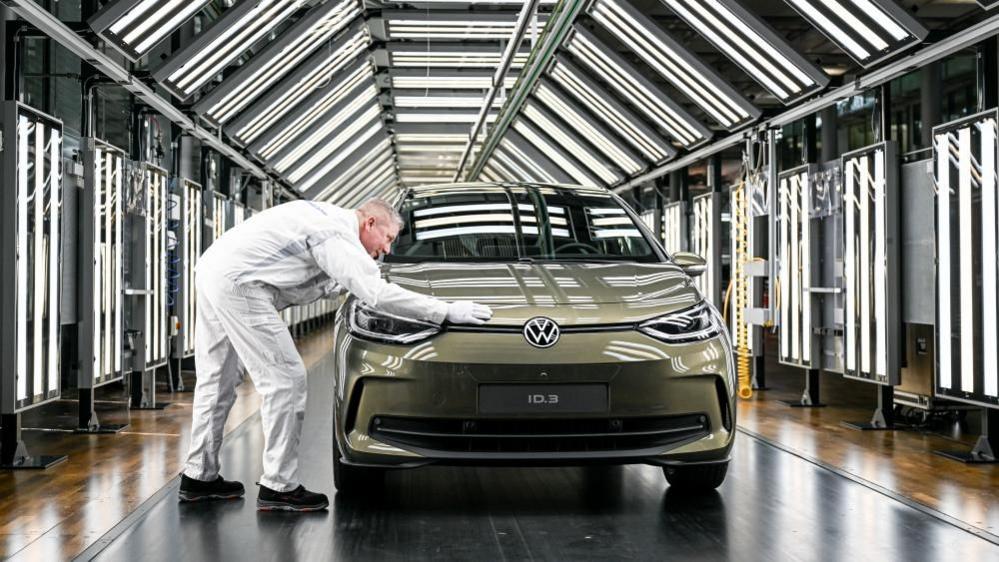
The conglomerate, which includes luxury and mass‑market brands such as Audi, Porsche, Skoda, Seat, Bentley and Lamborghini, is also considering the future of four German plants—Emden, Zwickau, Hanover and Neckarsulm—where production capacity presently outstrips demand. VW said it is “evaluating alternative uses” for these facilities, a move that could affect thousands of local jobs.
Chief executive Oliver Blume described the cuts as a “strong signal” that the firm is “taking responsibility for our entire workforce.” He added that the group requires “a fundamental adjustment of global workforce capability” to defend its market position as the industry shifts toward electrification and digitalisation.
In an encouraging response, shares of Volkswagen rose roughly 7% on the Frankfurt exchange following the announcement. Investors praised the cost‑cutting plan, though analysts warned that the company still faces risks from rapidly changing consumer preferences and ongoing trade tensions.
The reduction is part of a broader strategy to cut the number of models produced by 50% and to simplify product lines at 75% within the next nine years, aiming to focus on “the most compelling vehicles” and increase volume per model.
Union leaders, including Christianne Benner of IG Metall, have affirmed that Volkswagen is “fighting hard for good solutions” to address the “crisis situation.” Nevertheless, many employees acknowledge that the restructuring is inevitable given falling sales in markets such as China and the United States.
Competitive pressure from Chinese battery‑electric vehicle makers such as BYD, who have rapidly increased sales in Europe and South Asia, further complicates VW’s challenge. Meanwhile, the former United States president’s tariffs on imported cars are still felt today, contributing to a decline in domestic sales.
For more on Germany’s automotive industry crisis, see our feature on what it will take to fix it.