In brief
In 2026, the Defence Department announced that the execution of former Fort Hood attacker Nidal Hasan would be live‑streamed by firing squad, reviving a method last used in 1945. The decision follows a surge in botched lethal‑injection cases, including the 2025 mishap involving Christa Pike, and a broader shift toward alternative execution methods such as nitrogen gas, electric chair, and firing squad. Medical associations prohibit staff participation, yet the government faces pressure to restore the death penalty under President Trump’s influence. The move raises questions about human rights, procedural safety, and the effectiveness of capital punishment.
The United States is once again turning to firing squads for capital punishment, a method last used in 1945, after the Defence Department announced that it would livestream the execution of former Fort Hood shooter Nidal Hasan. The announcement comes amid growing concern over botched lethal‑injection procedures and a renewed federal push for the death penalty.
A review of the past five decades shows that 64 executions have been botched—51 involving lethal injection—out of 1,683 executions overall, according to the Death Penalty Information Center. The 2025 failure to kill Christa Pike, a woman convicted of murdering a classmate, highlighted the clinical and logistical challenges that have plagued the US system.
In response to repeated failures, state governments are exploring, and in some cases re‑authorising, historical and experimental methods. Firing squads have been reintroduced in several states; Alabama and Louisiana have begun using nitrogen gas, while nine states now permit electric chair executions, with South Carolina adopting it as the default method.
These methods raise ethical questions. The American Medical Association, along with numerous nursing and physician groups, openly forbids any medical professional from participating in executions, arguing that such involvement contradicts the oath to preserve life.
Political pressure—particularly from former President Trump, who re‑established the federal death penalty in 2025—has amplified calls to broaden the range of death‑penalty crimes. Trump’s administration frames capital punishment as an essential deterrent against violent crime, despite criticism over its execution practices.
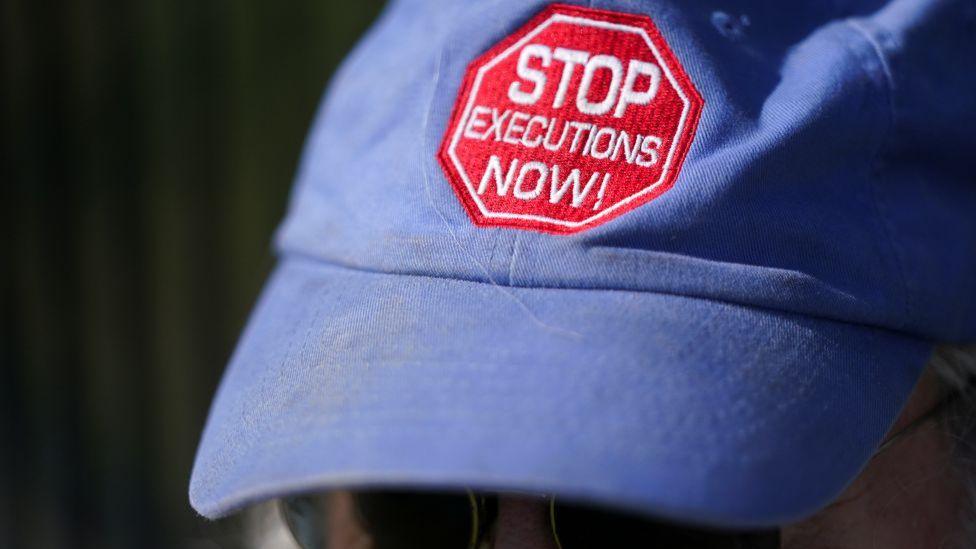
Public reactions have been mixed. Protesters, such as the individual seen in the accompanying image, continue to advocate for a halt to executions and greater transparency regarding punitive procedures.