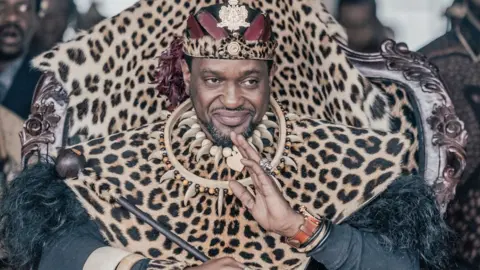
South Africa's Zulu king has raised eyebrows by using a highly derogatory term for foreigners and saying they must all leave the country during a much-hyped speech that was supposed to have been aimed at calming anti-migrant feelings in his home province of KwaZulu-Natal.
Warning: This story contains language some people may find offensive
Misuzulu kaZwelithini was addressing his supporters at the place where 20,000 Zulus warriors defeated a British contingent of 1,800 soldiers 147 years ago beneath the rocky outcrop of Isandlwana hill. The Battle of Isandlwana, fought during the Anglo-Zulu war, is a significant historical event for many Zulus, symbolizing a victorious stand against foreign invasion.
However, the ire of many of King Misuzulu's subjects is currently directed not at historical invaders but at migrants from neighboring countries such as Lesotho, Mozambique, and Zimbabwe who have moved to South Africa for work. According to official statistics, approximately 2.4 million migrants reside in the country, which constitutes about 4% of the population.
The 51-year-old monarch did not advocate violence but stated that all kwerekwere, a derogatory term for African migrants, must leave—even those in relationships with South Africans and their children. We must now sit down and discuss this because even if my nephew's father is a 'kwerekwere', the 'kwerekwere' must leave, only the child will remain, he said, prompting laughter from his audience.
Many online have pointed out the irony of his comments as King Misuzulu's own mother was from Eswatini and one of his wives is also from that neighboring kingdom. Nonetheless, such xenophobic attitudes have long been an issue in South Africa, leading to outbreaks of violence against foreigners.
Misuzulu's remarks echo similar statements made by his late father, Goodwill Zwelithini, who encouraged migrants to leave in 2015. Following the speech, he attempted to clarify his stance, claiming he was misquoted, but the South African human rights commission labeled his comments as hurtful and harmful.
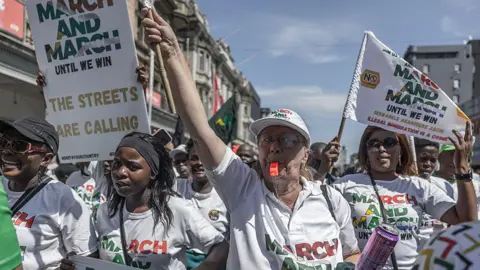
The issue of xenophobia remains a politically charged topic in South Africa, with rising tensions as some citizens believe that migrants are taking jobs and resources intended for locals, amid a high unemployment rate of around 33%. The sentiments expressed in the king’s speech have fueled support for new populist opposition parties and anti-migrant groups.
His call generated discussions not only around migration but also about historical sensitivities, including his desire to rename KwaZulu-Natal to remove Natal from its designation. This proposal echoes past calls for Zulu nationalism, raising concerns about potential ethnic tensions in a multi-cultural country.
Social commentators and experts have condemned the king's remarks as detrimental and as encouragement for citizens to take unilateral action against immigrants. The speech thus reflects the ongoing complexities and tensions surrounding the issues of migration, identity, and national unity in contemporary South Africa.