In brief
On November 4, a Seoul High Court upheld a suspended 18‑month prison sentence for ex‑President Yoon Suk‑yeol on charges of false statements during his campaign, potentially invalidating his 2022 election victory. The outcome could require the People Power Party to return 39.7 billion won in reimbursed election costs, according to Xinhua and Yonhap reports.
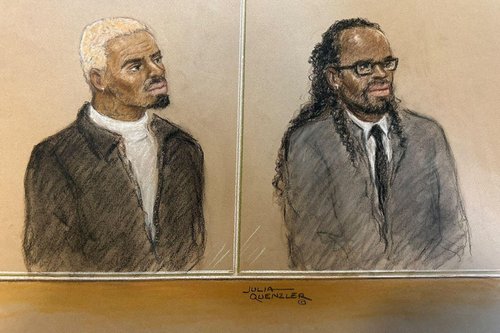
On Wednesday, a Seoul High Court affirmed a suspended 18‑month prison term imposed on former President Yoon Suk‑yeol for violating South Korea’s election law. The ruling, applied for the third time, centered on his 2022 campaign remarks, including false claims about a shamanist broker and a lawyer involved in a bribery investigation, which Yoon asserted were unfounded. By law, a fine exceeding 1 million won in the final judgment would invalidate an elected official’s victory, turning Yoon’s 2022 win into a nullity if this decision becomes final.
Xinhua reported that the appellate decision could trigger a refund of roughly 39.7 billion won—about US$30 million—in election expenses reimbursed to the People Power Party by the National Election Commission. The report emphasized that, while Yoon would remain ex‑president, his campaign’s legal status would be retroactively void.
In a parallel coverage from Yonhap, the agency noted that the appeals court’s confirmation of the suspended sentence mirrored the earlier Seoul Central District Court ruling. Yonhap added that the decision places the People Power Party at risk of returning nearly US$30 million in reimbursed expenses, underscoring the financial stakes for the ruling party. Though both outlets agree on the judicial outcome, Yonhap’s summary frames the ruling in terms of the party’s potential financial liability, whereas Xinhua focuses on the legal nullification of the election itself.
The appellate tribunal referenced earlier findings including Yoon’s prior life sentences for martial‑law declaration (February) and treason charges over drone infiltration (June). While those convictions are unrelated to the election dispute, they illustrate the broader legal scrutiny Yoon faces.
On the day of the court’s decision, political observers noted that the ruling could have far‑reaching implications for South Korea’s political landscape. Opposition parties have raised concerns that the invalidation would affect the legitimacy of the preceding administration, while proponents of the ruling have pointed to the adherence to election law.
According to the court’s statement, the decision briefly mentioned that Yoon’s appeal was dismissed, thereby confirming the lower court’s guilty verdict on all counts of violating the public official election law. The independent counsel Min Joong‑ki, who led an investigation into corruption allegations involving Yoon and his wife, had requested the appellate court to uphold the lower court’s ruling, a request satisfied by the judge’s order.
Though the ruling does not strip Yoon of any office (he is a former president), the legal validity of his 2022 presidency would become retroactively void if the decision is declared final. In that case, the People Power Party would be compelled to refund election costs amounting to 39.7 billion won—equivalent to about US$30 million—prompting internal party adjustments and potential legal disputes.
While the court’s statement did not disclose detailed reasoning behind the fine threshold, it reiterated that a penalty exceeding one million won automatically triggers an election invalidation. The decision, therefore, aligns with South Korea’s stringent electoral legal framework, as both Xinhua and Yonhap interpreted the outcome as a clear application of that rule.
In the broader context of South Korean politics, the ruling arrives amid other high‑profile developments, such as a Democratic Party leader’s reversal on a controversial claim and a special counsel's raid on the National Election Commission. These concurrent events underscore a period of intense scrutiny over the integrity of political processes and institutions.
As the legal proceedings continue, observers expect the Supreme Court to review the case if a final appeal is filed. The outcome will determine whether Yoon’s presidency—and the People Power Party’s campaign expenditures—will undergo a statutory audit under South Korea’s election law.