In brief
The Israeli election produced no definitive winner, with Netanyahu’s right‑wing coalition projected for 53 seats and the Arab bloc poised for a record 19 seats. While UPI highlights record voter turnout and political elite statements, Xinhua focuses on market reactions, and Al Jazeera provides detailed analysis of coalition dynamics and the role of Arab parties.
On 28 October 2026, Israel’s 2026 parliamentary elections ended with no party or bloc achieving a clear majority in the 120‑seat Knesset, leaving the formation of a new coalition uncertain.
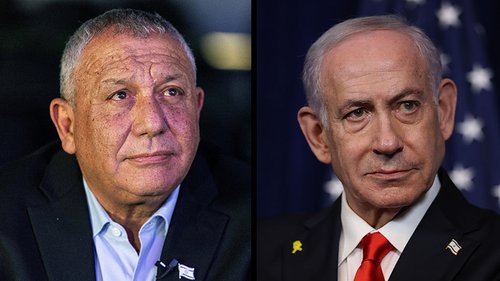
United Press International reported that Netanyahu’s right‑wing bloc was projected to win 53 seats, down 15 from the previous Knesset, while the opposition led by former military chief Gadi Eisenkot had 48 seats. UPI noted the Arab bloc would secure a record 19 seats—12 for the Joint List and 7 for Ra’am—surpassing the previous high of 15 seats in 2020. The election saw a historic 77.7% turnout, the highest since 1999, with nearly 5.7 million of 7.3 million eligible voters casting ballots. Eisenkot tweeted that “the preliminary poll results point to complete distrust in Netanyahu and the government of Oct. 7, of the Zionist majority and the majority of Israeli citizens.” Netanyahu, meanwhile, told his supporters that his bloc held a “decisive majority among the Jewish and Zionist public” and declared Likud “the largest party in Israel.”
In a separate report, Xinhua focused on the economic fallout of the unfinished results. Tel Aviv stocks fell sharply, with the TA‑35 index down 1.81%, the TA‑125 down 2.46%, the TA‑90 plunging 4.47%, and the TA‑Banks‑5 falling 4.85%. The paper cited Gad Lior, a senior analyst at the Israeli daily Yedioth Ahronoth, who said the sell‑off was driven by “political uncertainty” and fears that a new Netanyahu‑led government might struggle to address high living costs and a potential war with Iran. The shekel weakened 1.62% against the dollar, dropping to 3.128 per dollar. Joseph Freiman, CEO of Prico, explained that the shift in sentiment correlated with the evolving seat projections as the count progressed toward Netanyahu’s 53 seats versus Eisenkot’s 48.
Al Jazeera’s coverage emphasized the broader political stakes. The outlet highlighted that both the ruling bloc and the opposition held short of a governing majority, leaving the balance of power in the hands of the Arab (Ra’am and Joint List) parties with enough seats to cross the 61‑seat threshold. Al Jazeera described the election as a “battle between change and anti‑Palestinian sentiment,” noting that the high turnout among Palestinian citizens—over 80%—reflected discontent with the Likud‑led government’s policies post‑October 7. It outlined the procedural path: President Isaac Herzog would consult party leaders and then task a candidate with 28 days to build a coalition, subject to a possible 14‑day extension, and if no one succeeds, the Knesset could be dissolved for new elections while the incumbent cabinet would remain caretaker.
Early exit polls discussed by Al Jazeera were optimistic about the Arab bloc’s prospects. The paper reported a projected 17 seats (12 for Joint List, 5 for Ra’am) and highlighted that the turnout among Palestinian voters hit “the highest level in decades.” Mansour Abbas, leader of Ra’am, said he hoped the final results would allow the anti‑Netanyahu bloc to win the 61 seats required for a government: “With the numbers we have now, there is no government.” Al Jazeera also quoted former ambassador Alon Pinkas, warning that a government excluding Arab parties would be difficult because “the Arabs can’t be kept outside and only being considered and co‑opted when you need their votes.” He added that Arab‑led lists would demand positions that a Jewish‑led coalition might refuse.
In its most recent report, Al Jazeera confirmed that nearly 90% of ballots had been counted and that Netanyahu’s bloc was still a few seats short of a majority. It reiterated that the Arab bloc’s 19 seats would “hold the balance of power,” while noting that an additional 500,000 special double‑envelope ballots remained tallied, potentially altering the final distribution. The outlet emphasized that no Israeli party has ever won an outright majority and that coalition building is the norm. President Herzog had urged parties to avoid a government‑stalling vote. The article warned that if coalition talks fail, the Knesset could dissolve and trigger new elections, leaving Netanyahu as caretaker prime minister until a new government is formed.