In brief
Preliminary tallies from Israel's election indicate that neither Netanyahu’s bloc nor the opposition block secured an outright majority. Different media outlets report varying seat projections, with Netanyahu's coalition slightly ahead but still falling short. The results signal a hung parliament and the necessity of coalition talks.
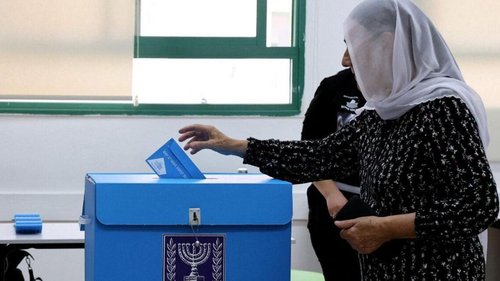
On Tuesday, October 27, 2026, Israel released preliminary results from its parliamentary election, revealing that no party bloc has secured the 61 seats required for a majority in the 120‑member Knesset. The vote count, covering 70.7% of ballots, signals a hung parliament and points to the need for extensive coalition negotiations.
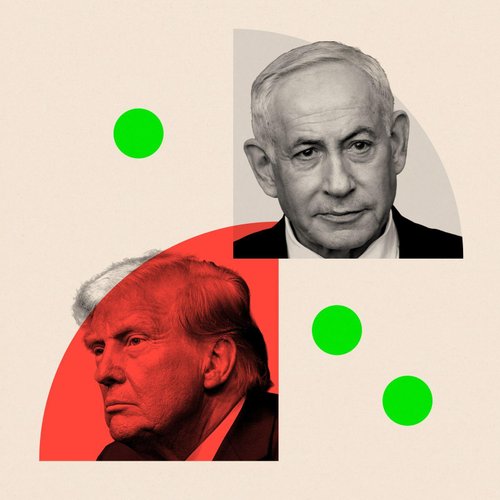
The Central Election Committee announced that the incumbent Prime Minister Benjamin Netanyahu’s coalition holds 54 seats, according to a report by Xinhua. The figure falls short of the 61 seats needed for a majority, a situation that aligns with preliminary projections coming from CNN, which estimate the same number of seats for Netanyahu’s coalition after 70.7% of votes were tallied.
Al Jazeera’s live updates indicate that Netanyahu’s bloc is “slightly ahead” of the main opposition. The outlet’s report, retrieved from its live blog, notes that while the coalition is leading on the current counts, the projections still leave it without a majority. The difference in phrasing underscores the ambiguity surrounding the final numbers until all votes are processed.
PBS News reported exit polls that suggest a different distribution. According to the American broadcaster, the opposition bloc received 52‑53 seats, with Netanyahu’s coalition at 50 and Arab parties holding 17‑18 seats. The PBS figures provide a broader perspective, illustrating the variance that can arise from early exit poll data compared with official tallies.
Across the media landscape, the shared narrative centres on the hung outcome, though each outlet’s figures differ modestly. Xinhua and CNN converge on a 54‑seat projection for Netanyahu’s coalition, while Al Jazeera describes the coalition as being only “slightly ahead” without specifying an exact seat count. PBS, by contrast, offers a full breakdown of exit poll estimates, highlighting the opposition’s advantage in preliminary reports.
The implications of these preliminary counts are significant. In Israel’s parliamentary system, a single party cannot typically hold an absolute majority; coalitions, sometimes across ideological lines, are the norm. The current projections suggest that no existing bloc can form a government unilaterally. Coalition talks will have to involve negotiations with smaller parties, including Arab-led factions, whose 17‑18 seats could become pivotal in determining the final shape of the next Knesset.
Some commentaries point to political fatigue among the electorate after days of campaigning, while others highlight the enduring challenge of forming stable coalitions in a fragmented political landscape. The reports from each outlet, although differing in detail, reinforce that the election outcome will likely remain unsettled until all votes are counted, and that the next phase will be negotiation‑heavy.
In the final analysis, the preliminary results showcase a clear pattern: a hung parliament and a required diplomatic process. Either coalition must now address the fact that the next Knesset will need to be built through alliances spanning a wide range of political positions. The media reports – Xinhua, CNN, Al Jazeera, and PBS – capture the various lenses through which the early data is interpreted, all converging on the same conclusion that a majority has yet to be decided.