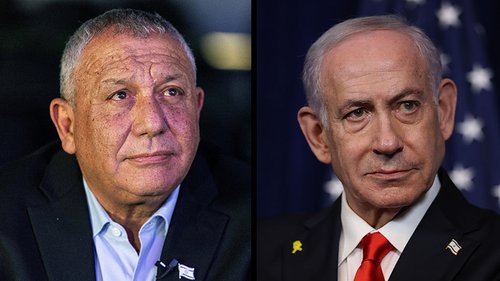
In brief
Israel held a snap election yesterday, and the exit polls indicate no party has a decisive lead sufficient to form a government on its own. The centre‑right bloc led by Gadi Eisenkot holds the largest number of seats but falls short of a majority, while the Likud party, led by Benjamin Netanyahu, remains the biggest single party in the Knesset. Under Israel’s proportional‑representation system, this deadlock means coalition talks will shape the next government, with many parties seeking partners across the political spectrum. Analysts suggest that former Prime Minister Netanyahu might return to office through a newly‑formed coalition, while the Blok 2024 coalition seeks to capitalize on its plurality to push forward its political agenda. The outcome will depend on negotiations, coalition agreements, and the willingness of parties to compromise on key policy points such as security, the economy, and the Israeli‑Palestinian conflict.
Israel’s national elections concluded with a deadlock: no single party emerged with an absolute majority, and the polls suggest a split in voter support.
Exit‑poll data point to the centre‑right coalition led by Gadi Eisenkot as holding the largest number of Knesset seats. However, the bloc still falls short of the 61 seats needed to unilaterally govern.
Simultaneously, the Likud party – traditionally heading the right‑wing establishment – remains the single largest party, following the votes of former Prime Minister Benjamin Netanyahu’s campaign.
In Israel’s proportional‑representation system, such a split demands coalition negotiations. Parties with similar policy orientations will need to form alliances, often involving significant compromises on domestic and foreign policy issues.
If the Eisenkot bloc secures partners from the left‑leaning and moderate spectrum, it could steer the next program with a coalition majority. Alternatively, Likud could negotiate a coalition with the Shinui or other centrist groups, potentially bringing Netanyahu back to the prime ministerial office.
The political landscape is further complicated by international scrutiny, the ongoing Israeli‑Palestinian conflict, and economic pressures that all parties must address. Recent expert commentary indicates that a coalition will likely favour security‑centric measures while grappling with economic reforms.
The next few weeks will see intensified coalition talks, with each party weighing the cost of concessions against the benefit of holding office. The outcome will shape Israel’s leadership and policy direction for the next four years.