In brief
Since the collapse of the Arbaat Dam and continued war in eastern Sudan, Port Sudan's water supply has fallen far below demand, leaving residents like Amina Khalafallah spending the entirety of their monthly earnings on water and resorting to street vendors amid rising prices.
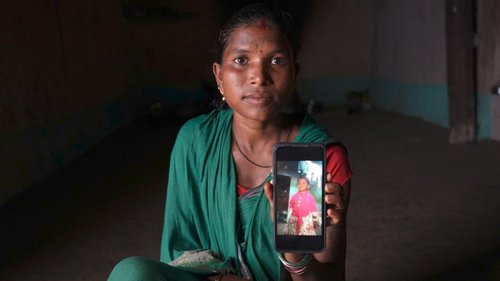
Port Sudan, 30 October 2026 – Amina Khalafallah, a resident of the Deim Mayo neighbourhood, is desperate to keep her four children alive while she pays an entire monthly salary for water. In a report by Al Jazeera, Khalafallah explains that she spends about 10,000 Sudanese pounds (≈$1 on the parallel market) each day on water, a cost that escalates during the hotter months. The total of 300,000 pounds (≈$30) per month equals the full amount she earns at her cafeteria job, with her husband’s remittances adding only a modest cushion.
In Sudan, the government’s ongoing conflict has driven average incomes back to levels seen in the early 1990s, according to the United Nations Development Programme, while the collapse of critical infrastructure has compounded the problem. After the August 2024 flooding destroyed the Arbaat Dam in the Red Sea Hills, the main source of water for half of Port Sudan’s daily needs, the city’s supply has been documented as meeting less than 40 percent of demand.
Because the city lacks a piped water network for Khalafallah’s home, she relies on street vendors who charge 1,000 Sudanese pounds for 18 litres. During rising summer temperatures vendors become harder to find and costs climb, forcing families to set aside their entire budgets for water before attending to other essentials, Khalafallah told Al Jazeera.
"We make sure to set aside money for water in the summer before covering our other household needs, even if that means going without some essentials," Khalafallah said.
The Food and Water shortages were further highlighted by the Asian Development Bank, which underscores that safe water access is among Sudan’s most urgent needs, with millions of children at risk of waterborne diseases. While the city itself remains relatively shielded from active fighting, the influx of displaced people has tightened already fragile infrastructure.
Port Sudan’s water distribution system relies on a network of water stations that feed street vendors. Ahmed Osman, a 30‑year‑old water station employee, noted that the surge in demand from new residents has overloaded the existing pipelines and the workforce that maintains them. He adds that the supply not only dwindles in quantity but is also of questionable quality, compounding public health concerns.
Recent restoration projects have aimed to revive the Arbaat Dam’s capacity and rehabilitate pipelines obstructed during the 2024 flood. While preliminary reports speak of progress, city officials admit that "the city’s water supply is still less than half of demand" and that public health officials warn that non‑adherence to safety standards can trigger outbreaks.
Given the ambitions of the African Development Bank to see safe water reach all citizens, the humanitarian community remains torn over the best strategy: whether to prioritize immediate relief via street‑vendor subsidies or long‑term infrastructure rehabilitation. The two approaches, both emphasized by different branches of the UN, echo the broader challenge facing Sudan’s war‑torn infrastructure.
As the season heats up, families like Khalafallah’s continue to navigate an increasingly precarious water economy. Their story exemplifies a broader pattern of economic strain, humanitarian vulnerability, and the slow pace of civil engineering in a country still navigating post‑conflict recovery.