
In brief
Prince Khalid bin Salman and Pete Hegseth held a phone conversation on Monday to discuss how the two countries will work together amid escalating Houthi attacks. Both the Anadolu Agency and Saudi Press Agency reported the call, noting that the partners examined regional security developments and the importance of de‑escalation. The calls underscore the continued volatility in Yemen and the wider region.
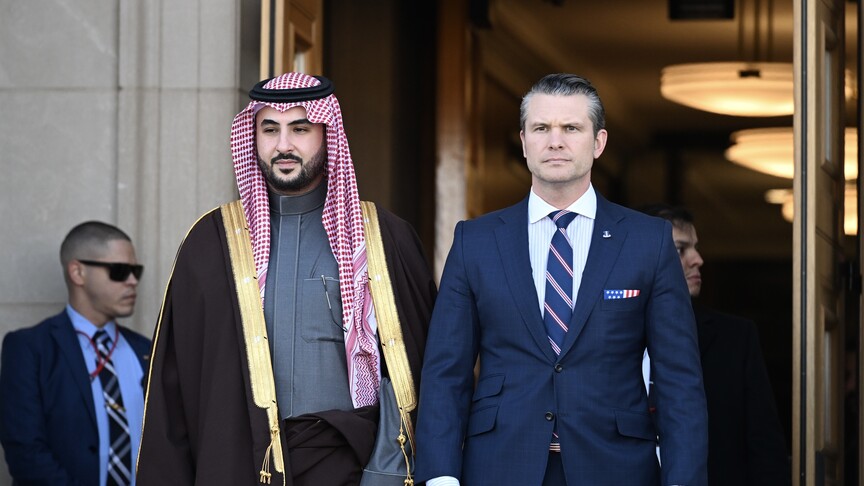
On Monday, Saudi Arabia’s defense minister, Prince Khalid bin Salman, spoke by phone with the United States’ defense secretary, Pete Hegseth, in a discussion that underscored the growing concerns about Houthi attacks and broader regional tensions.
The call was reported by the Anadolu Agency on November 3, 2026, which described the conversation as a review of bilateral defense cooperation and a response to escalating security concerns in the Middle East, including the ongoing missile and drone attacks launched by Yemen’s Houthi group against Saudi territory.
According to the Anadolu piece, Prince Khalid said the two leaders examined the strategic defense relationship between their nations, with a particular focus on how to counter the Houthi militia’s continued acts of violence. He added that the discussion covered “regional and global developments, including efforts to de‑escalate tensions in the region and the continued Houthi terrorist attacks against the Kingdom.”
“We also discussed regional and global developments, including efforts to de‑escalate tensions in the region and the continued Houthi terrorist attacks against the Kingdom.”
—Prince Khalid bin Salman on X
The Saudi Press Agency echoed many of Anadolu’s points in its own November 3 release, stating that the call reviewed prospects for strategic defense cooperation and the progress in regional de‑escalation efforts. The SPA’s version frames the conversation as an “earlier phone call” that “focused on regional and international developments, particularly efforts to de‑escalate tensions in the region and the terrorist Houthi militia’s continued attacks on Saudi Arabia.” The agency’s language emphasizes the ongoing threat posed by the Houthi militia to Saudi sovereignty and the importance of partnership between the two countries.
The Al Jazeera report, published a short time after the call, mirrored the same facts but highlighted the discussion in the context of a broader U.S.-Saudi initiative to curb Houthi influence in Yemen. While Al Jazeera did not provide direct quotations, it did note that the conversation took place on Monday and that the two officials were “focused on the need to address the Houthi threat and promote regional stability.”
Context of the Houthi Threat
Since the Houthi takeover of Sana’a in 2014 and the subsequent Saudi‑led intervention in 2015, Yemen has become a focal point of regional power dynamics. The Houthi group has repeatedly used drones and missiles to strike Saudi commercial and civilian sites, prompting the Saudi government to launch retaliatory air attacks against Houthi positions.
The Saudi defense ministry has repeatedly highlighted that these attacks “constitute a terrorist act” that undermines the stability of the Kingdom. In the recent call, Prince Khalid reiterated that prevention of future attacks remains a priority. The United States, through the missile defense system called “MUSC”, has been cooperating with Saudi Arabia to intercept incoming rockets and drones.
Strategic Cooperation and De‑Escalation Efforts
The dual reporting from Anadolu and SPA underscores a consistent narrative: the two nations are positioned to strengthen defense cooperation, while also pursuing diplomatic avenues to reduce the intensity of hostilities in Yemen. Both outlets noted that the call reviewed frameworks for joint exercises and intelligence sharing, and that the partners discussed supporting a “peace plan” endorsed by the United Nations for Yemen.
Notably, the Saudi‑led coalition has maintained that it only intervenes “to protect the internationally recognized government of Yemen from Houthi aggression.” In contrast, the Houthi forces claim to pursue a “political solution” and argue they are fighting for autonomy in the north. The calls thus mirror the broader standoff amid conflicting narratives.
In a broader regional context, the discussions took place amid rising tensions between Iran and the Gulf states. While neither Saudi Arabia nor the United States directly blamed Iran for the Houthi attacks, the spill‑over of influence controversies was evident in reports that the two defense chiefs spent part of their conversation on “regional and global developments.”
Following the call, Saudi Arabia reaffirmed its commitment to maintain a deterrence posture against the Houthi militia. The U.S. defense department indicated that it would continue to supply defense technology and support to Saudi forces.
With the ongoing conflict drawing international attention, the call between the two defense chiefs represents a synchronised effort to balance hardened defense strategies with calls for de‑escalation in an environment where the threat of drone and missile attacks remains high. Future statements from both ministries are likely to elaborate on any concrete steps taken since the conversation.


