In brief
In the wake of a rapidly inflating housing market, thousands of Portuguese demonstrators returned to Lisbon’s Rossio Square to call for the stripping out of a rental bill that could worsen an ongoing affordability crisis. The government, led by minority centre‑right parties, has signalled that it will consider amendments before a final vote. Protest organisers, the housing movement Casa para Viver, and opposition figures have all voiced their opposition, while authorities appeal for orderly, law‑compliant demonstrations.
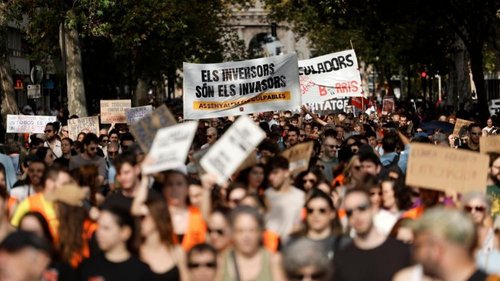
Thousands of people poured into Lisbon’s Rossio Square on Saturday, demanding the Portuguese minority centre‑right government scrap a rental bill that would ease evictions and lift rent caps, according to Reuters.
The protest peaked against a backdrop of a spiralling housing market, with house prices having more than doubled since 2017 and rents for new leases nearly doubling, a trend that has entered the mainstream narrative of the nation’s affordability crisis. The movement, led in part by housing activists from Casa para Viver, came after policymakers described the bill as a “necessary adjustment” and indicated an openness to changes ahead of a final parliamentary vote.
“People are showing enormous perseverance, strength and determination,” Rita Silva, a spokesperson for Casa para Viver, told public broadcaster RTP. “We are not seeing any willingness from the government to listen … the demonstrations will continue.”
In contrast, Interior Minister Luis Neves noted that while the government respected the protesters’ “legitimacy”, his ministry expected the demonstrations to be “with order, civility” and “in compliance with the law.”
The bill in question passed its first parliamentary reading, effectively abandoning rent caps on new leases, with the far‑right Chega party’s abstention allowing passage. Prime Minister Luis Montenegro stated that scrapping the bill was out of the table but that amendments would be considered that could “move parties closer” while keeping the government’s programme in focus.
Opposition voices also added pressure. Socialist Party leader Jose Luis Carneiro urged the government to engage in talks with protestors and opposition parties, cautioning against “arrogantly imposing its views, sometimes even with authoritarian overtones.”
These tensions unfolded against a wider series of European housing‑cost protests flagged by Reuters as part of a broader wave across Spain, France and Germany, where citizens are pushing back against landlords and rising living expenses. The protests in Lisbon have followed previous clashes between demonstrators and police, who have been criticised for baton‑charging protestors and arresting dozens during a similar tent‑camp clearing a week ago in the same square.
While the government remains committed to presenting final votes with a “programme‑linked” stance, the demonstrators have said they will continue on the streets in Rossio Square until a comprehensive solution to Portugal’s affordability crisis is found.