In brief
Texas has long been a battleground for Republican gains, driven by a hard‑line stance on immigration and a promise to secure the US‑Mexico border. The story follows Father Roy Snipes of the La Lomita Catholic Chapel, who historically opposed the construction of Trump’s border wall near his parish. In recent weeks, he has spoken out against the erosion of the refugee and immigrant community, citing increasing ICE detentions. Surprising shifts in Hispanic voter sentiment now pose a challenge for Republicans ahead of the 2026 mid‑terms, with polls indicating a swing toward Democrats and a vulnerability in several Senate races.
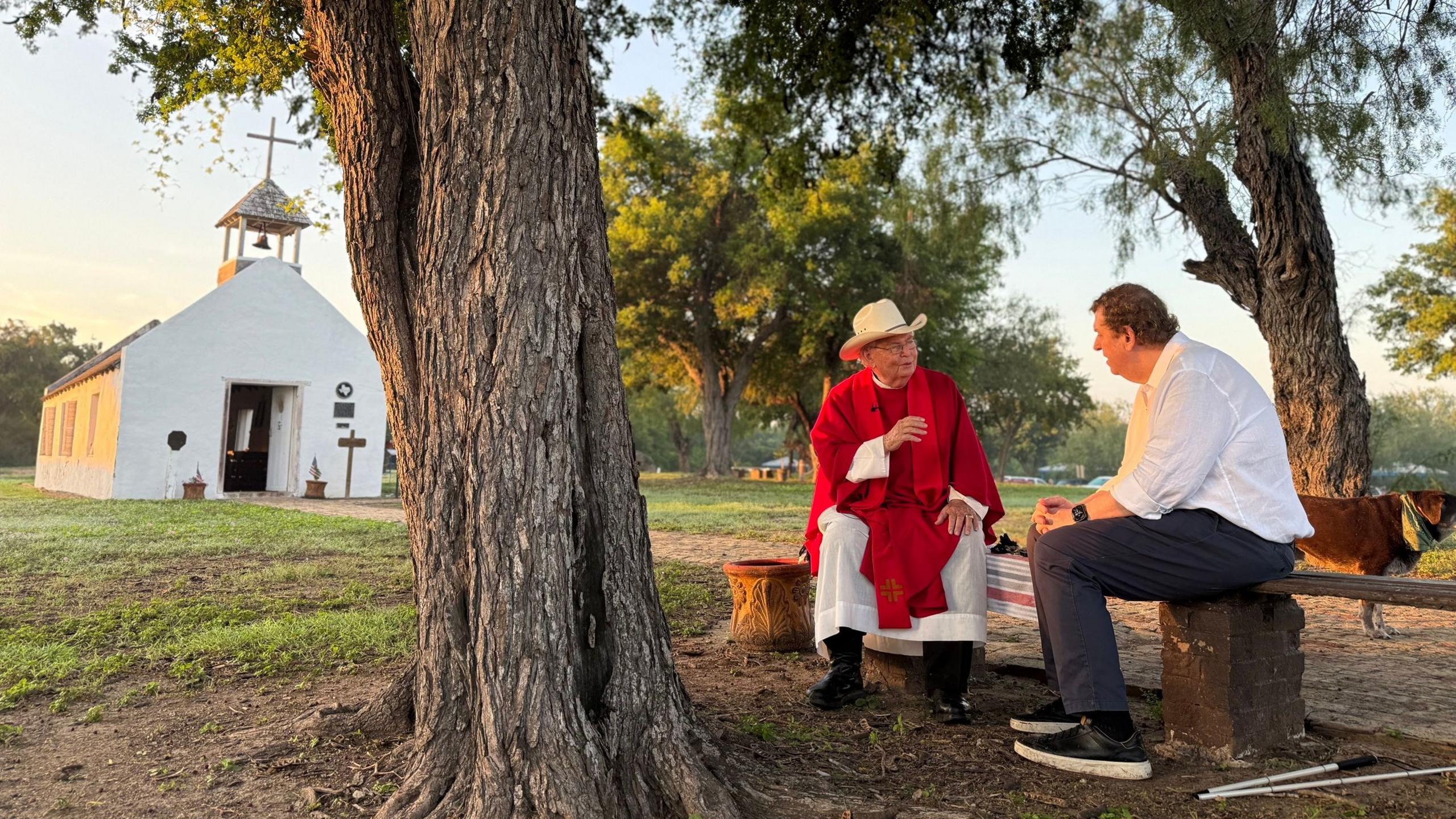
In the quiet hush of a Texas dawn, the small La Lomita Catholic Chapel in the Rio Grande Valley comes to life as parishioners gather for the Friday service. This historic white‑washed building, standing for almost a century and located just 200 yards from the Rio Grande, is shepherded by Father Roy Snipes – a man who has earned the nickname “Cowboy Priest” for his Stetson and his keen sense of community.
During the early 2010s, Snipes stood firm against the Trump administration’s plan to seize the chapel’s surrounding land for a border wall. Now, at the 2026 mid‑term campaign trail, he has shifted his focus to the broader issue of ICE detentions and the impact on the people who call this valley home.
“There’s no good excuse to detain, incarcerate, and deport poor, good folks who are our neighbours,” Snipes told the 30‑strong congregation, many of whom are Hispanic. He spoke sharply of ICE’s “worst of the worst” and the everyday humiliation many Venezuelan and Mexican migrants endure on the border.
The Archbishop’s words echo the wider frustration that has been simmering in Texas. Despite Trump’s earlier promise to tighten immigration, state officials report that Texas accounts for roughly a third of all ICE arrests nationwide this year – the largest share of any state.
Texas political dynamics are changing. Recent polling shows a noticeable swing of Hispanic voters from Republican to Democratic support. While the Trump administration’s hard‑line on the border previously drove a record 55% of Hispanic votes, today many of those voters express disapproval of current enforcement tactics.
One illustrative voice is Mario Guerrero, a Mexican‑American business owner who served as a delegate for the South Texas Builders Association. He voted for Trump in 2016, 2020, and 2024, citing immigration as an urgent problem. Though he now plans to vote Democrat in November, he stresses that this shift reflects disapproval of the crass enforcement methods rather than a wholesale party allegiance.
Beyond individual stories, the political landscape in the Rio Grande Valley is testing the limits of gerrymandering. The 15th congressional district was redrawn in 2025 to give Republicans an 18‑point advantage, yet polls now show a Democratic lead of five or six points. Bobby Pulido, celebrated Tejano singer and former two‑time Latin Grammy winner, is the Democratic candidate attempting to capitalize on that momentum by focusing on local economic concerns rather than national party dogma.
As the November ballots approach, turnout and voter sentiment remain the major variables. Republican volunteers note that the “mid‑terms are purely a game of turnout,” though the current discontent among Hispanic voters threatens their numbers. If Democrats maintain their lead in the key Latino demographic, it could flip Senate seats and shift the balance of power in Washington.