In brief
At a G20 foreign ministers’ meeting in Atlanta, Turkey’s Hakan Fidan warned that the Russia‑Ukraine war is no longer sustainable and must be ended through substantial sacrifices from both sides. He highlighted the economic fallout from the Strait of Hormuz closure and disrupted Black Sea grain shipments, stressing the need for a deeper reconciliation between Russia and Europe. Turkey is actively pursuing diplomatic efforts to restore grain trade amid growing food‑security concerns.
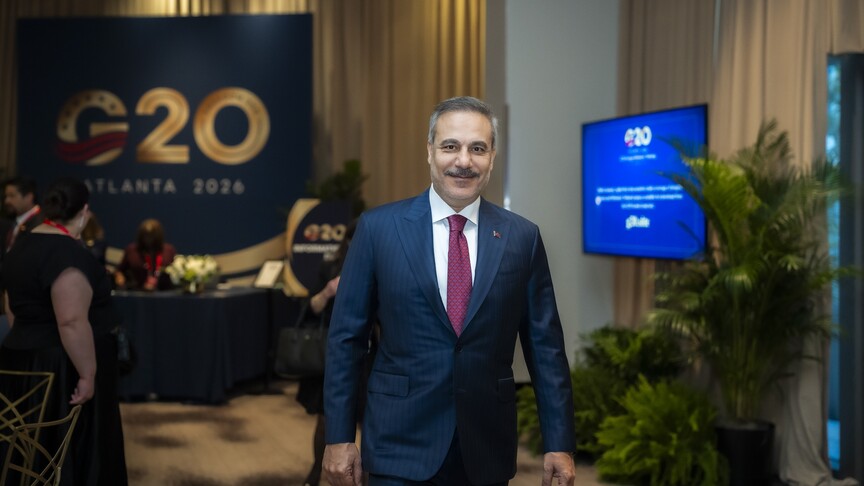
On Saturday, Turkish Foreign Minister Hakan Fidan addressed the G20 foreign ministers’ meeting in Atlanta, urging Russia and Ukraine to make ‘significant sacrifices’ to achieve a lasting peace and warning that the conflict, now in its fifth year, could ignite a wider regional war.
Fidan stated that the war’s economic and social costs have become increasingly difficult to ignore, particularly for European nations that depend on inexpensive Russian energy and stable trade flows. He framed the conflict as unsustainable and called for an agreement that would require both parties to forego concessions to bring an end to the hostilities.
"These wars are no longer sustainable. Therefore, Russia and Ukraine must reach an agreement that entails significant sacrifices," he said.
He further emphasized that a durable settlement is not just a bilateral matter between Moscow and Kiev, but also demands a redefined relationship between Russia and the broader European community. He argued that any peace accord would affect European interests and security, and a constructive partnership must be reshaped in its aftermath.
"A constructive relationship between Europe and Russia needs to be redefined in the aftermath of peace. This is because any peace agreement that Ukraine reaches with Russia will not be limited to those two countries alone. In a sense, Europe also needs to reconcile with Russia and restart certain aspects of their relationship. This is important," he stressed.
Fidan linked the war’s broader economic repercussions to the recent closure of the Strait of Hormuz, which has disrupted energy supplies and intensified global trade frictions. He noted that the intricate ties of the global economy make calculating the full financial impact difficult, pointing out how European industries have long relied on Russian energy to support manufacturing, exports, and financial activities.
"The closure of the Strait of Hormuz has significantly compounded the economic consequences of the Ukraine war, further disrupting energy supplies and international trade," he said.
In addition, he highlighted the grave impact of the conflict on food security arising from halted commercial shipping in the Black Sea. The stoppage of Russian and Ukrainian grain flows to international markets has raised concerns about shortages, prompting Turkey to intensify diplomatic contacts and take substantial steps to restore grain trade routes.
"Food security, in particular, is an incredibly problematic issue. It needs to be brought to a halt as soon as possible," Fidan remarked. "Turkey is continuing intensive diplomatic contacts and making substantial efforts to facilitate trade."
By coinciding with the G20 gathering, Fidan sought to underscore the multilateral dimension of the crisis and the necessity for coordinated international action. His remarks echo a broader trend of states urging both Russia and Ukraine to prioritize civilian well‑being and a comprehensive reconciliation with Europe, amid concerns that continued fighting would strain global supply chains and potentially trigger a broader conflict in the region.